Types of packing materials needed: checklist for London moves
For a London move, you need mixed double-walled boxes (small, medium and large), packing paper, bubble wrap, void fill, heavy-duty 50mm tape with a dispenser, marker pens, labels, furniture blankets, stretch wrap, mattress covers and wardrobe boxes. That covers the vast majority of homes and offices. If you have a large number of boxes to fill, many fragile items, or a tight deadline, booking Metro city moves’ professional packing service is the faster and safer route.
When to call in the professionals: if you are moving a 3-bed or larger property, have antiques, artwork or high-value electronics, face access difficulties (narrow stairs, no lift, parking restrictions), or simply cannot afford the time, Metro city moves’ packing service removes the guesswork entirely.
Table of Contents
- What does each packing material actually do?
- How do you choose the right box size and construction?
- How many boxes and rolls of tape do you actually need?
- Step-by-step packing technique for boxes and fragile items
- How do you protect furniture and large items during a move?
- When should you hire professional packers instead of doing it yourself?
- Key takeaways
- What professional packing experience actually teaches you
- Metro city moves’ packing service: what you get when you book
- Useful sources
- FAQ
What does each packing material actually do?
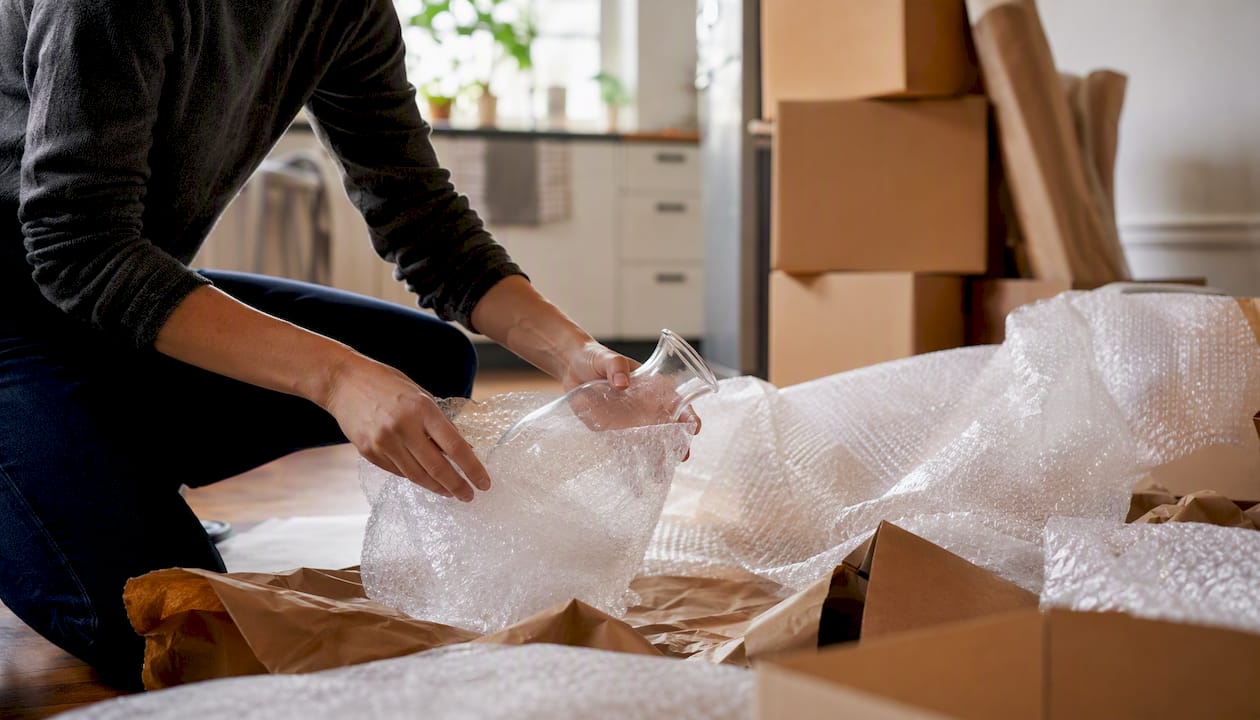
Every material in your kit has a specific job, and substituting one for another tends to cause damage. The Box Warehouse’s UK moving guide frames it well: the box is the outer shell, bubble wrap cushions impact, packing paper prevents scratches, and void fill stops internal movement. Those are four distinct roles, not one.
| Material | Primary job | Best used for |
|---|---|---|
| Double-walled box | Structure and stacking strength | All general packing |
| Acid-free packing paper | Surface protection, scratch prevention | Crockery, polished surfaces, glassware |
| Bubble wrap (small bubble) | Shock absorption | Stemware, ornaments, small electronics |
| Bubble wrap (large bubble) | Impact cushioning | Lamps, vases, larger fragile items |
| Void fill / crumpled paper | Gap filling, prevents movement | Any box with empty space |
| Furniture blanket | Surface protection for large items | Sofas, wardrobes, dining tables |
| Stretch wrap | Securing blankets, binding drawers | All furniture |
| Mattress cover | Dust and moisture protection | All mattresses |
| Foam edge protectors | Corner and edge impact protection | Glass panels, picture frames, table corners |
Schott Removals’ material guide adds an important nuance: electronics need anti-static options, and artwork requires acid-free tissue rather than standard packing paper. The surface finish and fragility of an item should drive your material choice, not habit.
Pro Tip: Never wrap items in newspaper. The ink transfers onto surfaces and is particularly damaging to porcelain, silverware and light-coloured upholstery. Acid-free packing paper is the correct choice for anything with a polished or painted finish.
For kitchen packing specifically, Metro city moves has a dedicated kitchen packing guide that covers fragile cookware in more detail.
How do you choose the right box size and construction?
Box size and wall construction matter more than most people realise. The rule is simple: small boxes for heavy or dense items, large boxes for light and bulky ones. A large box packed with books will be too heavy to lift safely and risks the base failing mid-carry.
| Box size | Approximate dimensions | Pack with |
|---|---|---|
| Small (book box) | Small (book box) | Books, tins, tools, wine bottles |
| Medium | Medium | Kitchen items, small appliances, toys |
| Large | Large | Duvets, pillows, lampshades, clothing |
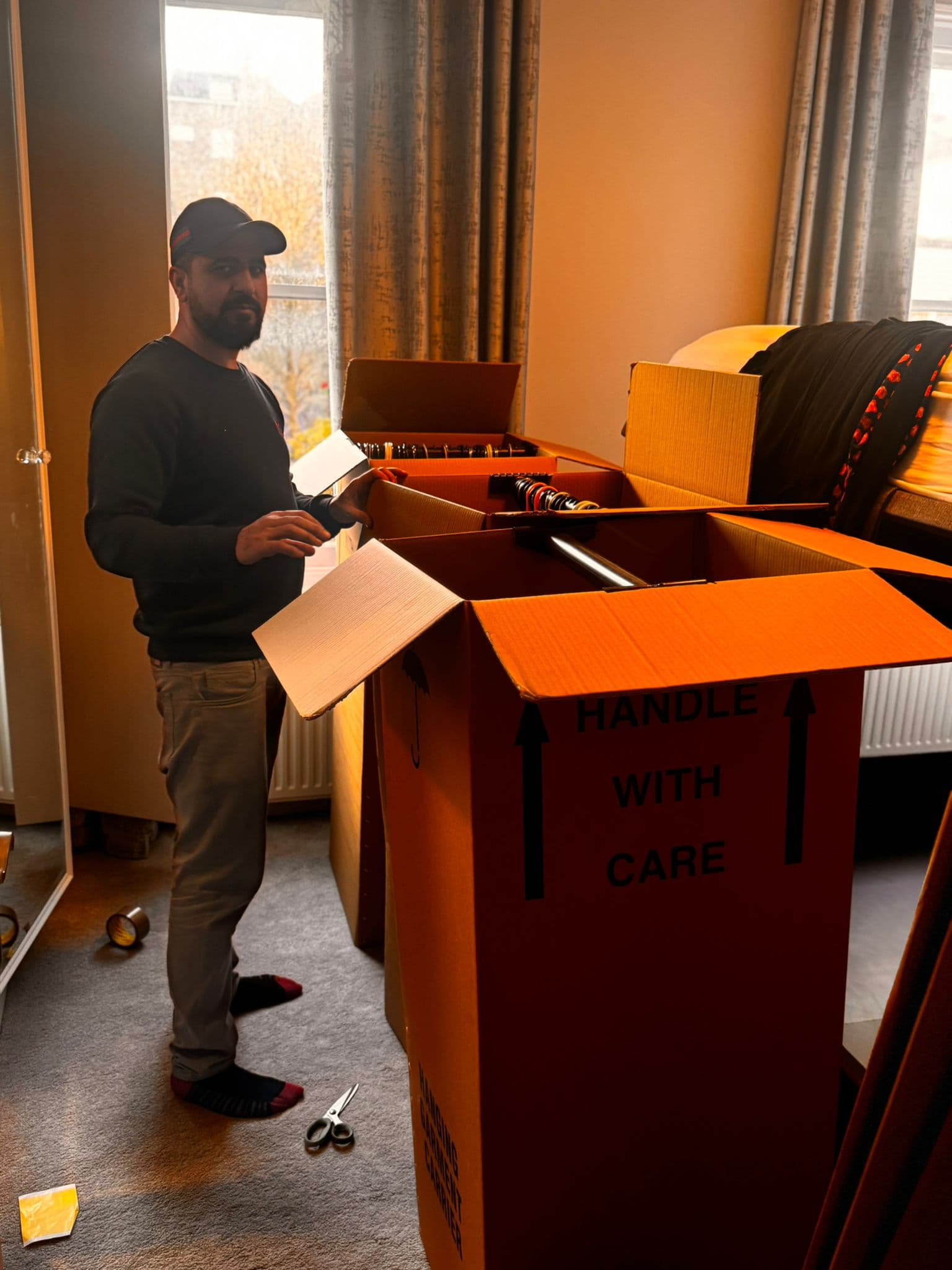
| Wardrobe box | Wardrobe box | Hanging clothes, coats, suits |
| Picture/mirror box | Adjustable | Framed artwork, mirrors, canvases |
On construction: single-wall boxes are fine for light items and short moves, but double-wall cartons are the right choice whenever boxes will be stacked, stored, or contain anything moderately heavy. A2B Moving’s UK guide confirms double-walled cardboard as the standard recommendation for house moves. The Edge Crush Test (ECT) rating tells you how much vertical compression a box can withstand before the walls buckle. A higher ECT means safer stacking, which matters when boxes are loaded three or four high in a removal van.
Metro city moves recommends: invest in double-wall boxes for all rooms except linen and clothing. Wardrobe boxes and proper mattress covers are worth every penny — they prevent damage that would cost far more to repair or replace.
Metro city moves’ blog on why packing quality matters explains this in more depth if you want the full reasoning.
How many boxes and rolls of tape do you actually need?
Quantity estimates vary by how much you own, but the table below gives a reliable starting point for typical London properties. Add a buffer on top of your estimate to avoid running out of boxes on moving day, a common and avoidable problem, as Metro city moves’ moving checklist advises.
Typical property sizes require a mix of small, medium, and large boxes along with an appropriate number of tape and bubble wrap rolls; exact counts depend on individual needs and can vary widely.
Adjust upward if you have a large book collection (add small boxes), a kitchen with extensive glassware (add bubble wrap rolls), or a home office with multiple screens and peripherals. For studio and one-bed moves, Metro city moves has a small-move guide with more targeted advice.
Pro Tip: Order your boxes and tape at least two weeks before your move date. Suppliers can run low on double-wall cartons during peak moving season (late spring and summer), and last-minute purchases from supermarkets rarely meet the strength standards you need.
Step-by-step packing technique for boxes and fragile items
Good packing technique prevents breakage more reliably than careful driving. Purdie Worldwide’s packing checklist groups the process into protection, structure, securing and labelling — a useful frame.
For a standard box:
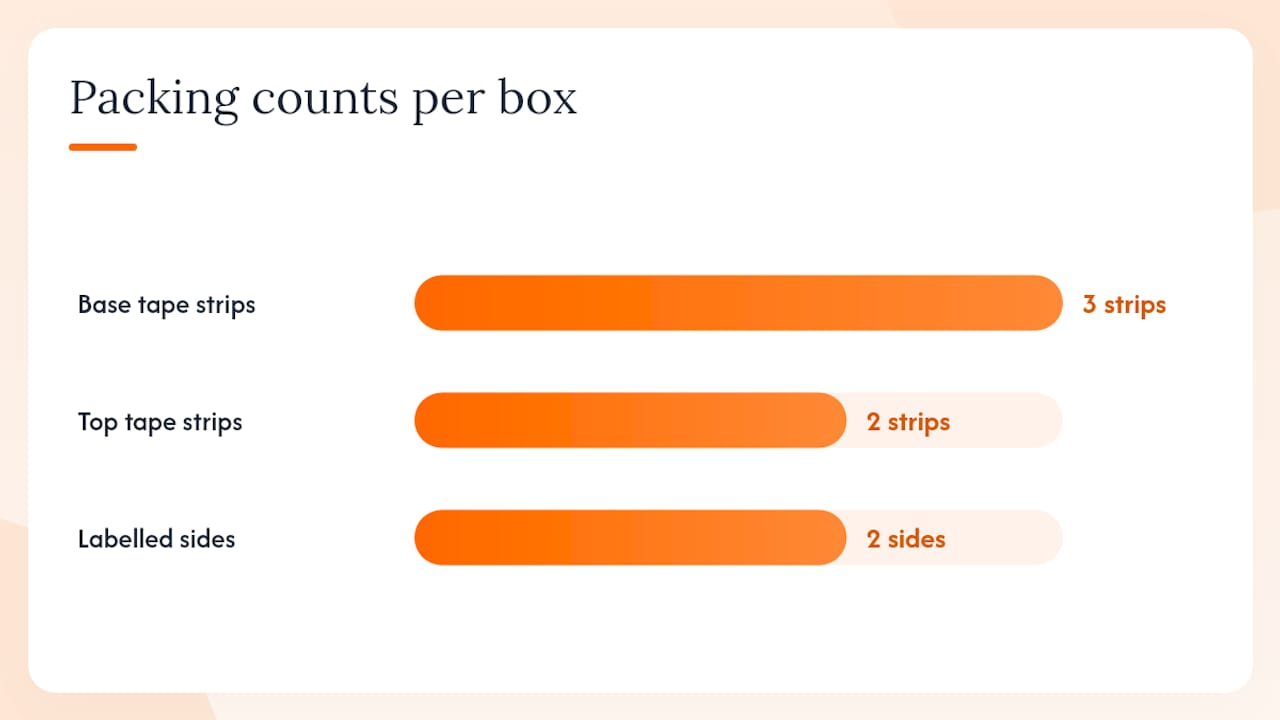
- Tape the base with two strips of 50mm tape running lengthways and one across the centre.
- Lay a base cushion of crumpled packing paper (roughly 5 cm deep).
- Wrap each item individually in acid-free packing paper, then add a layer of bubble wrap for anything fragile.
- Pack heavier items at the bottom, lighter ones on top.
- Stand plates vertically (like records in a crate) rather than flat — vertical packing dramatically reduces the risk of cracking under load.
- Fill every gap with crumpled paper or void fill so nothing shifts in transit.
- Seal the top with two lengthways strips of tape, then label clearly on two sides.
Label every box on at least two sides with the destination room and a brief contents note. A box labelled only on the top becomes unreadable once it is stacked. Add “FRAGILE — THIS WAY UP” in large letters for anything delicate.
For fragile items specifically — stemware, glass decanters, ornaments — wrap each piece individually, paying particular attention to stems, necks and corners. Nest wrapped glasses inside each other only after each is fully wrapped. Metro city moves’ fragile packing guide covers this in detail, including how to handle particularly delicate pieces.
For electronics: remove batteries, bag cables and accessories in labelled sealable bags, and pack screens upright with an anti-static inner layer between the screen and any wrapping material. Metro city moves’ electronics packing guide covers cable management and screen protection thoroughly.
How do you protect furniture and large items during a move?
Furniture protection follows a clear sequence: blanket first, secure second. ASP Removals’ guide confirms this as standard professional practice — removal blankets go on first to protect the surface, then stretch wrap holds the blanket in place and keeps drawers and doors closed.
- Apply a furniture blanket over the entire surface, tucking it into corners and around legs.
- Wrap stretch wrap over the blanket in overlapping passes to secure it firmly.
- Add foam edge protectors to table corners, glass panel edges and any protruding hardware.
- Fit mattress covers before the mattress leaves the bedroom — they protect against dust, moisture and scuffs during loading and transit.
- Use wardrobe boxes for hanging clothes rather than folding everything into suitcases; garments arrive crease-free and ready to rehang.
Pro Tip: Before disassembling flat-pack furniture or bed frames, photograph the assembly from multiple angles. Place all screws, bolts and fixings into a labelled sealable bag and tape it directly to the item or place it in a dedicated hardware box. This one step saves significant time on unpacking day.
A note on partial disassembly: removing legs from sofas and dining tables makes them far easier to manoeuvre through London doorways and stairwells. Keep disassembly simple — only remove what genuinely helps with access, and keep the fixings with the item.
When should you hire professional packers instead of doing it yourself?
The honest answer is: sooner than most people think. Metro city moves’ moving checklist recommends booking packing services well in advance of your move date, particularly for larger properties or complex access situations.
Book professional packers if any of the following apply:
- You are moving a 3-bedroom property or larger.
- You have a significant number of fragile, antique or high-value items.
- The property has narrow stairs, no lift, or restricted parking.
- You need Goods in Transit insurance to cover high-value contents.
- Your timeline is tight and packing yourself would take more than two days.
Professional packers supply all materials, including specialist dish packs, wardrobe boxes and mirror cartons. They label systematically, handle fragile crating, and work to a timed schedule that keeps your move on track.
Questions to ask any packing service before you book: Do they carry Goods in Transit cover? What ECT rating are their boxes? How do they handle high-value or antique items? Do they provide a written inventory? A reputable company will answer all of these directly.
When comparing quotes, be aware that the cheapest option often uses single-wall boxes and minimal wrapping. The cost of replacing a damaged piece of furniture or a set of antique crockery will exceed any saving on packing materials.
Key takeaways
A London move goes smoothly when you match the right packing material to each item, use double-walled boxes throughout, and add a 10% buffer on quantities across the board.
| Point | Details |
|---|---|
| Use double-walled boxes | Single-wall cartons are not reliable for stacking or heavy items during a move. |
| Small boxes for heavy items | Books, tins and tools go in small boxes to keep weights manageable and safe. |
| Wrap, fill, seal | Wrap individually, fill every void with paper or foam, then tape the base and top with 50mm tape. |
| Protect furniture with blankets first | Apply a removal blanket before stretch wrap to protect surfaces, then secure with stretch wrap. |
| Order early with a 10% buffer | Buy supplies at least two weeks out and add 10% to your estimated quantities to avoid shortfalls. |
| Metro city moves for professional packing | For larger or fragile-heavy moves across London, Metro city moves provides materials, labour and insurance in one booking. |
What professional packing experience actually teaches you
There is a gap between what most moving guides recommend and what actually prevents damage on a real London move. The guides say “wrap fragile items carefully.” What that means in practice is wrapping every single piece individually, standing plates vertically, filling every cubic centimetre of void space, and labelling boxes on two sides before they leave the room. Most people wrap the obvious things and leave gaps everywhere else. Those gaps are where breakages happen.
The other thing most guides understate is furniture protection. A sofa that travels without a blanket will arrive with scuffs, regardless of how carefully the van is driven. London moves often involve tight stairwells, narrow doorways and multiple lifts, and unprotected furniture picks up damage at every contact point. Blankets and stretch wrap are not optional extras for a professional move; they are the baseline.
Since Metro city moves was established in 2010, the team has handled moves across all 32 London boroughs, from studio flats in Hackney to large family homes in Richmond and commercial offices in the City. The consistent lesson is that preparation time spent on materials and technique pays back many times over on move day. If you are uncertain about any part of the process, the professional packing service exists precisely to remove that uncertainty.
Metro city moves’ packing service: what you get when you book
Packing yourself is entirely achievable for a small, straightforward move. For anything larger or more complex, Metro city moves offers a full packing service that covers materials, labour and specialist cartons in a single booking.
When you book Metro city moves’ packing service for a house removal or flat removal, the team arrives with double-walled boxes in all sizes, acid-free packing paper, bubble wrap, wardrobe boxes, mattress covers, furniture blankets and stretch wrap. Everything is labelled systematically by room, fragile items are packed to professional standards, and the whole process is covered by Goods in Transit insurance. For office relocations, the service extends to IT equipment, filing systems and specialist commercial cartons.
Packing packages range from a small flat pack (studio or one-bed) through to a full-pack service for larger properties. Request a packing quote early — availability fills quickly during peak moving season, and booking in advance gives you the best choice of dates.
Useful sources
The following sources informed this guide and are worth reading for deeper detail:
- House moving supplies: Your complete UK buying guide (2026)
- Munro house & office moving kit — Sustainable Packaging Scotland
- The best packing materials for moving house (UK guide) — A2B Moving
- Reliable packing materials – Safeguarding your move - Schott Removals
- Moving packing supplies | What you need when moving — Purdie Worldwide
- Best packing materials for house removals - ASP Removals
- How to pack fragile items for moving | Expert Guide | Metro City Moves
- Moving house checklist — Metro City Moves
FAQ
What are the most important packing materials for a London move?
Double-walled boxes in three sizes, acid-free packing paper, bubble wrap, 50mm packing tape, void fill, furniture blankets, stretch wrap and mattress covers cover the vast majority of moves. Add wardrobe boxes and foam edge protectors for hanging clothes and furniture corners.
How many boxes do I need for a 2-bedroom flat?
Quantity estimates vary by how much you own, but typical property sizes require a mix of small, medium, and large boxes along with tape and bubble wrap rolls; add a 10% buffer to all quantities to avoid running short on moving day.
Should I use single-wall or double-wall boxes for moving?
Double-wall boxes are the right choice for any move involving stacking, heavy items, or storage. Single-wall cartons are only suitable for very light items and short, same-floor moves.
When should I book a professional packing service?
Book professional packers if you are moving a 3-bedroom property or larger, have fragile or high-value items, face access difficulties, or cannot dedicate two or more days to packing. Metro city moves recommends booking at least two to three weeks before your move date.
Can I use newspaper instead of packing paper?
No. Newspaper ink transfers onto surfaces and can permanently stain porcelain, silverware and light-coloured items. Acid-free packing paper is the correct alternative and is widely available from removal suppliers.