How to move one room of stuff: London guide
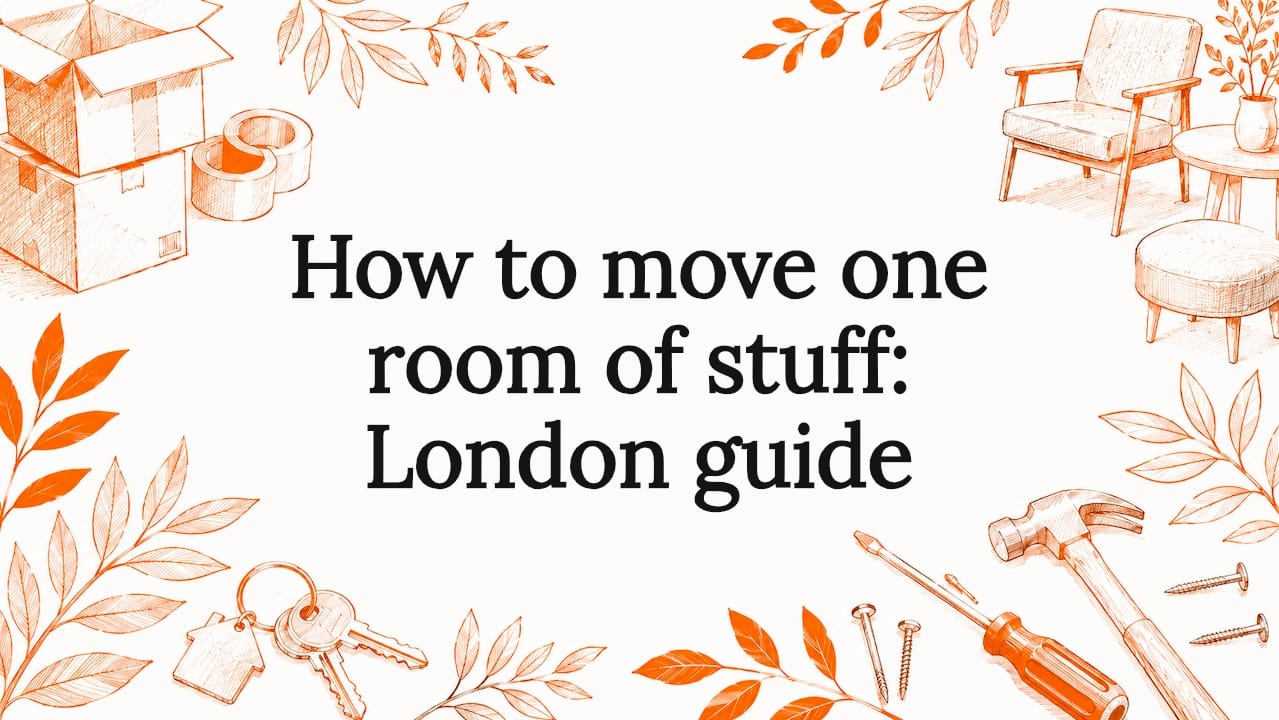
Moving one room of stuff is a fully manageable task when you approach it with a clear plan, the right materials, and an honest understanding of your options. The industry term for this type of job is a “single-room removal,” and it sits at the smaller end of the professional removals scale. That does not make it simple. Furniture, fragile items, and awkward access points in London properties all create real risk. This guide covers every stage: what to gather before you start, how to pack a room properly, which transport option suits your budget, and how to handle moving day without damage or delays.
What do you need before you move one room of stuff?
Preparation is the single biggest factor in whether a single-room removal goes smoothly or not. Before you lift a single box, you need the right materials and a clear inventory of what you are moving.
Packing materials: what to buy and what to reuse
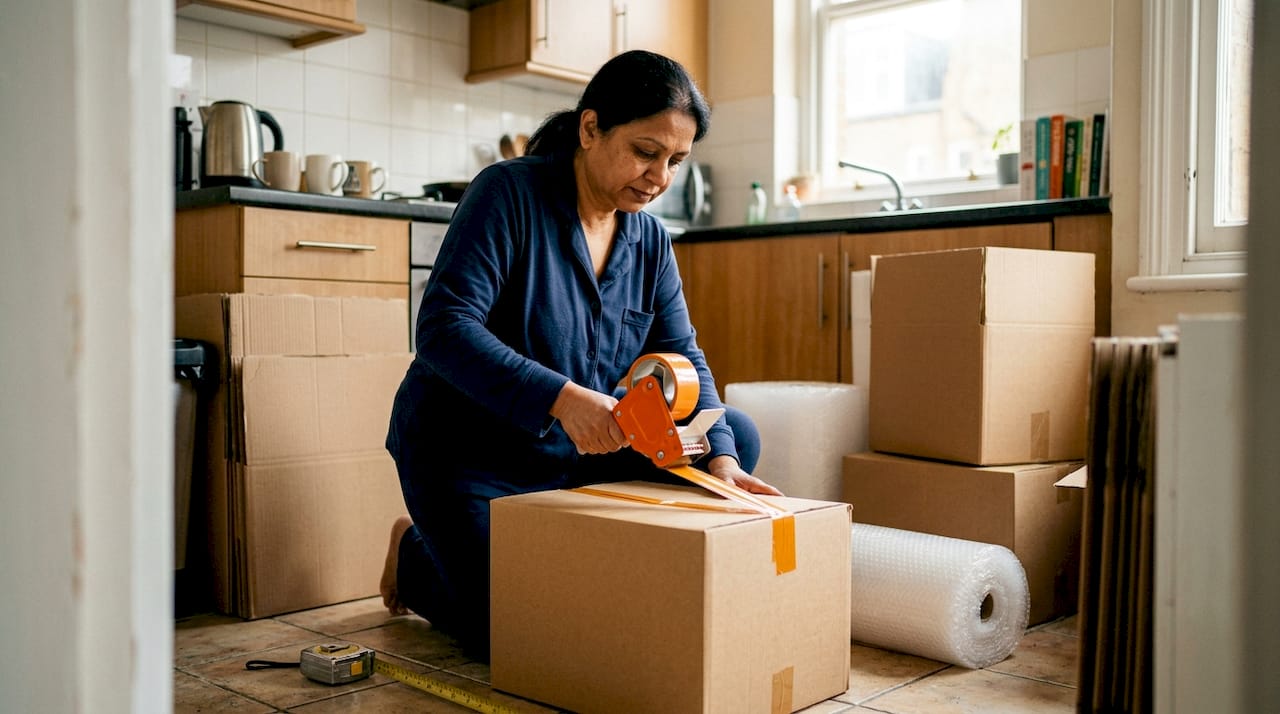
The core materials for any room relocation are double-walled cardboard boxes, packing tape, bubble wrap, packing paper, and furniture blankets. Double-walled boxes are worth the extra cost for heavy items like books or kitchenware. Bubble wrap protects fragile items, while packing paper fills void space and prevents shifting in transit.
| Material | Best use | Reusable? |
|---|---|---|
| Double-walled boxes | Books, kitchenware, heavy items | Yes, if undamaged |
| Bubble wrap | Glassware, ceramics, electronics | Yes |
| Packing paper | Void fill, wrapping soft items | Yes |
| Furniture blankets | Protecting surfaces during transit | Yes |
| Packing tape | Sealing boxes securely | No |
| Furniture sliders | Moving heavy pieces across floors | Yes |
Measuring your furniture before moving day is non-negotiable. Check doorway widths, stairwell clearances, and lift dimensions if you live in a flat. A wardrobe that fits your bedroom may not fit through a narrow Victorian hallway. Taking measurements in advance prevents the most common and most avoidable problem in London flat removals.
Pro Tip: Supermarkets, off-licences, and bookshops often give away sturdy boxes for free. Ask at the service desk rather than waiting for them to appear on the shop floor. You can also reuse suitcases, laundry bags, and storage crates to reduce the number of boxes you need to buy.
How do you pack a single room effectively and safely?
Packing a room well is about sequence as much as technique. Phased packing timelines improve efficiency: start with storage items and low-use belongings three to four weeks before your move, then tackle non-essential items one to two weeks out, and leave daily essentials for the final three to five days. This approach keeps your room functional for as long as possible.
Wrapping fragile items and disassembling furniture
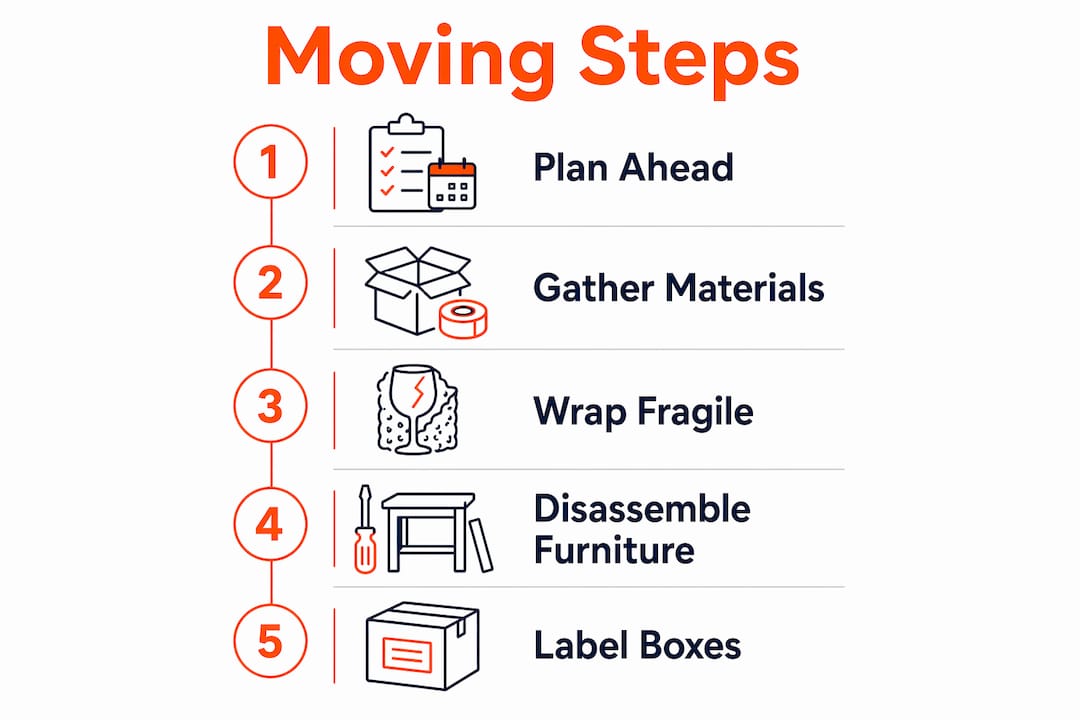
Fragile items need individual wrapping. Plates should stand vertically in boxes rather than lying flat. Stacking plates vertically prevents the vast majority of breakage during transit. For detailed guidance on protecting delicate belongings, Metrocitymoves has a dedicated guide on packing fragile items that covers glassware, mirrors, and artwork specifically.
Furniture disassembly reduces bulk and protects both the item and your property. Remove legs from beds and tables where possible. Keep screws and fixings in a labelled zip-lock bag taped to the furniture piece itself. Reassembly is far quicker when every component stays together.
Labelling and grouping
Label every box on the top and on two sides. Write the destination room and a brief contents description. Grouping by category (clothing, books, bedding) rather than by where items currently sit makes unpacking logical rather than chaotic.
Common packing mistakes to avoid:
- Overfilling boxes so they cannot be safely lifted
- Using single-walled boxes for heavy items
- Leaving void space in boxes, which causes contents to shift and break
- Packing liquids without sealing them in plastic bags first
- Forgetting to label boxes as “fragile” when they contain breakables
- Packing items you no longer need, adding unnecessary weight and volume
Clearing low-frequency items early generates visible progress and keeps motivation high throughout the process. Seasonal décor, spare linens, and rarely used equipment should be the first things packed.
Pro Tip: Packing in 30–60 minute sessions rather than one long day reduces fatigue and produces better results. Set a timer, pack one category, then stop. You will make fewer mistakes and feel less worn out on moving day.
What are the best options for moving one room of stuff in London?
The right transport method depends on your budget, the volume of items, and how much physical risk you are comfortable taking on yourself. London residents have three realistic options: a professional man and van service, a small removals firm, or a DIY approach using a hired vehicle.
Professional man and van or small removals service
A professional man and van service is the most practical choice for relocating a single room in London. Professional movers provide insurance coverage, expertise in stair navigation and furniture cornering, and the physical equipment to handle heavy or awkward items safely. DIY is cheaper on paper but regularly underestimates the real risks involved with heavy furniture and fragile belongings.
Flat removals and small room moves in London typically start from around £199 for smaller volumes. Pricing rises with the number of items, access difficulty, and whether same-day booking is required. Many services charge a premium for same-day or next-day slots, so booking at least a week in advance saves money.
For insurance considerations when hiring any professional service, the Metrocitymoves guide on insurance in house moves explains what Goods in Transit cover means in practice and what to check before you sign.
DIY moving: when it makes sense
DIY moving suits you if you have very few items, access to a suitable vehicle, and at least one other person to help. Hiring a van and doing the work yourself cuts costs but removes insurance protection and increases the risk of personal injury or property damage. If your room contains a large wardrobe, a mattress, or any item over 30kg, professional help is the safer and often more cost-effective choice once you factor in van hire, fuel, and the cost of replacing anything damaged.
| Transport option | Approximate cost | Speed | Risk level |
|---|---|---|---|
| Professional man and van | £199 and above | Fast | Low |
| Small removals firm | £250 and above | Fast | Low |
| DIY van hire | £50–£120 per day | Variable | Higher |
| Borrowed vehicle | Minimal | Slow | Highest |
Book your preferred service on a weekday where possible. Weekend slots in London carry premium pricing and are booked up faster, particularly during the end of the month when tenancy agreements typically change over.
What should you expect on moving day?
Moving day runs smoothly when everything is packed, labelled, and ready before the crew or your helpers arrive. Arriving unprepared costs time and, with professional services, money.
Moving day checklist
- Confirm arrival time with your movers or helpers the evening before
- Clear all walkways, hallways, and stairwells of obstacles
- Protect floors with floor runners or old blankets before any furniture moves
- Pad door frames with blankets or foam padding to prevent scuffs
- Disassemble any remaining flat-pack furniture before the crew arrives
- Have your labelled boxes stacked near the exit point, not scattered around the room
- Keep a “last out, first in” box with essentials you will need immediately on arrival
- Do a final walk-through of the empty room before leaving
Professional in-home furniture moving services typically involve protective wrapping, floor protection, and furniture disassembly and reassembly, carried out by a two-person crew in 1.5–3 hours. That timeline assumes everything is ready when they arrive.
Safety is the priority when handling heavy or bulky items. Furniture sliders, floor runners, door jamb padding, and blanket wrapping are the standard protective tools used by professional crews. If you are moving without professional help, use the same approach: never drag furniture directly across floors, and always lift with a straight back and bent knees.
Pro Tip: Photograph the condition of walls, floors, and door frames before the move begins. This protects you in rental properties and gives you a clear record if any dispute arises with a landlord or letting agent.
Clear communication with your movers is as important as any physical preparation. Tell them in advance about narrow staircases, parking restrictions, or any items that need special handling. Surprises on moving day slow everything down.
Key takeaways
Relocating a single room in London requires phased packing, the right protective materials, and a clear choice between professional and DIY transport based on your budget and the complexity of your items.
| Point | Details |
|---|---|
| Pack in phases | Start with low-use items weeks ahead; leave daily essentials for the final few days. |
| Protect fragile items properly | Stand plates vertically and wrap each item individually to prevent breakage in transit. |
| Choose transport carefully | Professional man and van services start from around £199 and include insurance cover. |
| Prepare before movers arrive | Clear walkways, pad door frames, and have all boxes stacked and labelled at the exit point. |
| Book early to save money | Weekday bookings and advance scheduling avoid same-day premium charges in London. |
What I have learned from watching people move one room
The most common mistake I see is treating a single-room move as too small to plan properly. People assume that because the volume is low, the risks are low too. That is not true. A single wardrobe dropped on a staircase, a mirror cracked in transit, or a scratched hardwood floor can cost more to fix than the entire move would have cost with professional help.
The second thing I have noticed is that people consistently underestimate how long packing takes. One room sounds quick. In practice, a bedroom with a wardrobe, chest of drawers, bedside tables, and miscellaneous items takes a full afternoon to pack properly. Rushing produces damaged goods and disorganised boxes that make unpacking miserable.
The psychological side matters too. Breaking packing into short sessions is not just a time management tip. It genuinely reduces the stress that causes people to cut corners. When you are tired and frustrated, you stop wrapping items carefully. You overfill boxes. You skip labelling. All of that creates problems later.
My honest advice: budget realistically, start packing earlier than you think you need to, and do not dismiss professional help because the job seems small. The value of professional movers is not just in the lifting. It is in the accountability, the equipment, and the experience that prevents the small mistakes that turn a simple move into an expensive one.
— Far
Metrocitymoves: professional support for your single-room move
Metrocitymoves has been handling London removals since 2010, covering all 32 boroughs and every postcode within the M25. Single-room moves are a regular part of the work, and the team brings the same fully insured, fixed-price approach to a bedroom relocation as to a full house move.
Whether you need a man and van for a straightforward job or a full packing and removal service for something more complex, Metrocitymoves offers professional house removals with Goods in Transit cover included as standard. If you are moving into or out of a flat, the flat removals service is built specifically for London’s high-rise and apartment properties. Get in touch for a free, no-obligation quote and clear pricing before you commit to anything.
FAQ
How long does it take to move one room of stuff?
A professional two-person crew typically completes a single-room move in 1.5–3 hours, depending on access and the volume of items. DIY moves with untrained helpers generally take longer.
What is the cheapest way to move one room in London?
DIY van hire is the lowest upfront cost, but professional man and van services start from around £199 and include insurance, which DIY does not. For high-value or fragile items, professional services are the more cost-effective choice overall.
Do I need to disassemble furniture before the movers arrive?
Disassembling flat-pack and large furniture before your crew arrives saves time and reduces the risk of damage. Keep all screws and fixings in a labelled bag attached to the relevant piece.
How far in advance should I book a man and van in London?
Book at least one week in advance for standard slots. Same-day and next-day bookings are available but carry a premium charge. Weekday bookings are generally cheaper than weekend slots.
What packing materials do I actually need for one room?
Double-walled boxes, packing tape, bubble wrap, packing paper, and furniture blankets cover the majority of a single-room move. Furniture sliders are worth adding if you have heavy pieces to move across hard floors.