How to store furniture between moves: a practical guide
Storing furniture between moves is the process of placing household items into temporary storage when a gap exists between your move-out and move-in dates. The two main options are storage-in-transit (SIT), managed entirely by your removal company, and self-storage, where you rent a unit independently. Both solve the same problem. They differ significantly in cost, handling risk, and convenience. Whether your move has stalled due to a chain break, a delayed completion, or a downsizing transition, knowing how to store furniture between moves correctly protects your belongings and your budget.
What are the best ways to store furniture between moves?
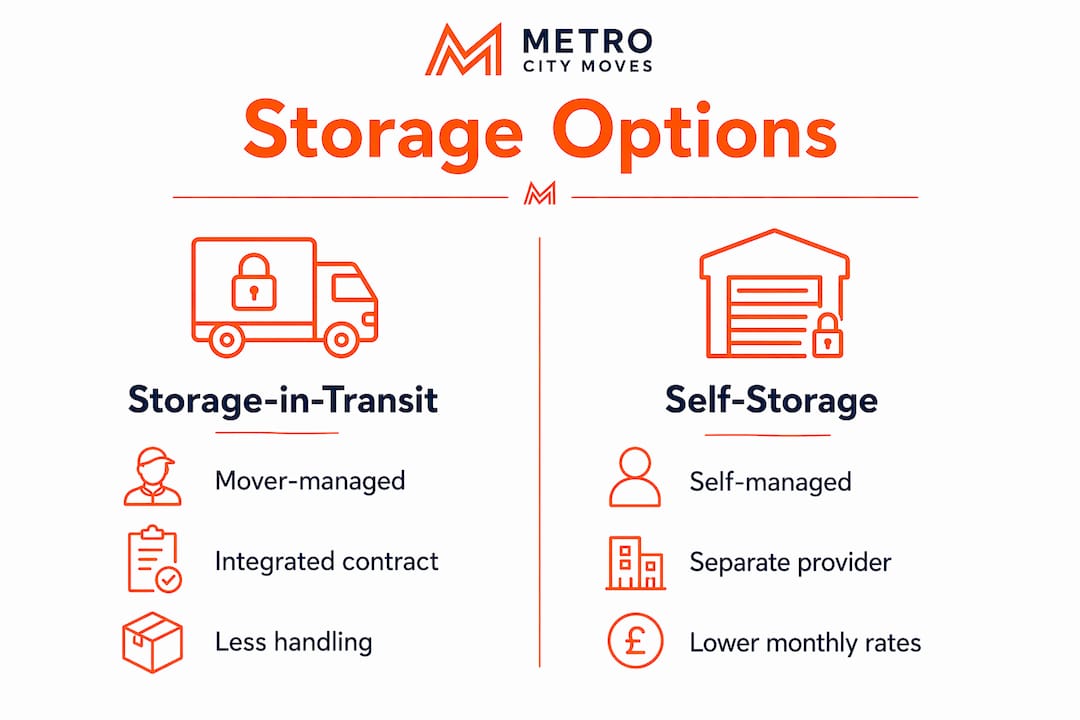
The two recognised options for temporary furniture storage are storage-in-transit and self-storage. Understanding how they differ is the most important decision you will make during a moving gap.
Storage-in-transit (SIT) is a carrier-managed service. Your removal company collects your furniture, stores it in a secure facility, and delivers it to your new address under a single contract. SIT typically covers 7–90 days, making it well suited to the short gaps that arise from delayed completions or broken chains. Because one company handles every touchpoint, the risk of damage during loading and unloading is lower.

Self-storage means renting a unit from a separate provider and arranging your own transport. Monthly rates are often lower on paper, but self-storage adds extra transport and labour costs that close the gap quickly. You also handle two separate moves: one into the unit and one out. Each additional loading and unloading increases the chance of damage to your furniture.
Storage acts as a buffer for mismatched moving dates, giving you time to vacate your current property without needing immediate access to your new one. That flexibility has real value when completions slip.
| Feature | Storage-in-transit (SIT) | Self-storage |
|---|---|---|
| Who manages it | Your removal company | You, independently |
| Typical duration | 7–90 days | Flexible, often monthly |
| Transport required | Included in contract | Separate hire needed |
| Handling touchpoints | One integrated process | Two separate moves |
| Best suited for | Short moving gaps | Longer or open-ended gaps |
| Overall cost | Higher day rate, lower total | Lower day rate, higher total |
Pro Tip: Ask your removal company for a combined quote covering the move and SIT storage before comparing it against a self-storage monthly rate. The all-in figure is almost always closer than you expect.
How to prepare furniture properly for storage
Preparation is the single biggest factor in whether your furniture survives a storage period undamaged. The UK’s humid climate makes moisture the primary threat, so every step below addresses both physical protection and ventilation.
- Disassemble where possible. Remove table legs, bed frames, and shelving units. Smaller components are easier to wrap, stack, and protect. Disassembling furniture and labelling hardware reduces joint stress and prevents parts from being lost during the move-storage cycle.
- Bag and label all hardware. Place screws, bolts, and fittings into clearly labelled zip-lock bags. Tape each hardware bag directly to the corresponding furniture piece so nothing goes missing between storage and reassembly.
- Clean and dry everything thoroughly. Any moisture or food residue left on furniture will cause mould or attract pests during storage. Wipe down all surfaces and allow items to dry completely before wrapping.
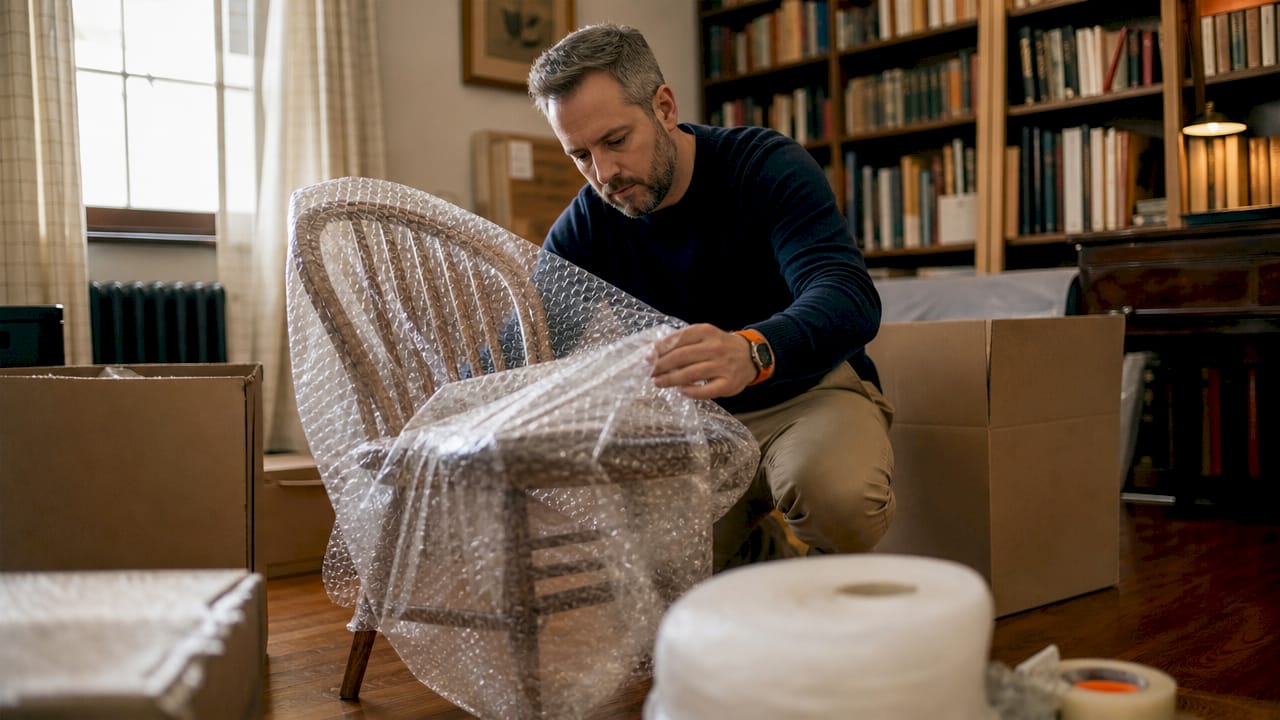
- Use breathable wrapping materials. Furniture blankets, moving pads, and breathable bubble wrap protect surfaces without trapping moisture. Avoid standard plastic sheeting directly against wood or upholstery, as it seals in condensation.
- Elevate items off the floor. Place furniture on wooden pallets or boards. This improves airflow underneath and protects against any minor water ingress at floor level.
- Leave small gaps between items. Airflow around wrapped furniture prevents damp conditions from developing inside wrapping materials, even over short storage periods. Tight packing looks efficient but accelerates moisture damage.
- Store mattresses upright. Laying a mattress flat under heavy items compresses the springs and distorts the structure. Stand it on its side against a wall with a breathable cover.
- Empty all drawers. Packed drawers add unnecessary weight and stress the frame. Box the contents separately and label them clearly.
Pro Tip: Place silica gel sachets inside wrapped upholstered furniture and inside drawers before sealing. They absorb ambient moisture and cost very little compared to the damage they prevent.
What practical steps should you follow when organising temporary storage?
Good organisation before items go into storage saves significant time and stress at the other end. These steps cover the full process from booking through to retrieval.
Book storage early. Coordinate your storage dates with your removal company as soon as your move timeline becomes uncertain. Last-minute bookings limit your options and increase cost. If you are using SIT, confirm the storage period in writing and clarify the daily rate for any extension.
Create an inventory and condition report. Photograph each piece of furniture before it goes into storage. Note any existing scratches or marks. This record protects you if a dispute arises over damage and helps you track what is in storage.
Plan your load order carefully. Place heavier, less delicate items at the back of the storage unit and lighter or frequently needed items at the front. This layout protects fragile pieces and means you are not dismantling the entire unit to retrieve one item.
Maintain an access pathway. Leave a clear walkway through the centre of your storage unit. You may need to inspect items, retrieve something unexpectedly, or check for moisture during a longer storage period.
Here is a summary of the key process steps:
- Confirm storage dates and contract terms in writing before moving day
- Photograph all furniture and note existing condition
- Disassemble, wrap, and label items before loading
- Load heavy items to the back, fragile items to the front
- Leave a clear walkway through the unit
- Schedule a mid-storage check if storing for more than four weeks
- Confirm delivery date with your removal company at least one week before move-in
Avoiding the double-move trap. The biggest practical advantage of SIT is that one integrated contract covers pickup, storage, and delivery, removing the need for a second hire. If you use self-storage, budget for two full removal jobs, not one.
What mistakes should you avoid when storing furniture temporarily?
The most common and costly mistakes in short-term furniture storage are preventable. Knowing what to watch for saves both money and damaged belongings.
Damp and condensation are the leading causes of furniture damage in UK storage. The climate here means even a few weeks in a poorly ventilated unit can cause mould on upholstery and warping in solid wood. UK storage advice is clear: keep furniture dry, raised off the floor, and spaced to allow airflow. Avoid units on exterior walls where temperature fluctuations are greatest.
Lost hardware is the second most common problem. A sofa reassembled without the right bolts, or a bed frame missing two screws, becomes a costly repair job. The fix is simple: bag, label, and tape hardware to the item it belongs to before anything leaves your home.
Overcrowding the unit feels like good use of space but creates two problems. It prevents airflow, accelerating moisture damage, and it means items at the back are inaccessible without moving everything in front. Rent a unit that is slightly larger than you think you need.
Unexpected cost increases catch many people off guard. SIT extensions beyond the agreed period often carry a daily rate that adds up quickly. Self-storage contracts may include admin fees, insurance add-ons, and access charges. Read the contract in full before signing and ask directly about the cost of extending your period.
Here is a quick reference for what to do and what to avoid:
- Do clean and dry all furniture before wrapping
- Do use breathable materials rather than plastic sheeting
- Do elevate items off the floor on pallets or boards
- Do label every hardware bag and attach it to the relevant item
- Do read the full contract and ask about extension rates
- Don’t pack items tightly against exterior walls
- Don’t leave drawers loaded with heavy contents
- Don’t assume a lower monthly rate means lower total cost
- Don’t skip the inventory and condition photographs
Moisture is the silent threat in UK furniture storage. A breathable wrap and a small gap between items costs nothing but prevents the kind of damage that no insurance claim fully covers.
For guidance on protecting specific fragile items alongside your furniture, the Metrocitymoves guide on packing fragile items covers wrapping techniques in detail.
Key takeaways
Choosing storage-in-transit over self-storage reduces handling touchpoints, lowers total cost, and is the most reliable way to store furniture between moves without damage.
| Point | Details |
|---|---|
| SIT vs self-storage | SIT covers 7–90 days under one contract; self-storage adds transport and labour costs. |
| Preparation prevents damage | Clean, dry, disassemble, and wrap furniture before storage to avoid moisture and scratches. |
| Hardware management | Bag, label, and tape fixings to each furniture piece to prevent loss during the move cycle. |
| Load order matters | Place heavy items at the back and keep a clear walkway for access and inspection. |
| Read the contract | Confirm extension rates and any additional charges before signing a storage agreement. |
What I have learned from watching moves go wrong at the storage stage
After 15 years of working with customers across London, the storage stage is where I see the most avoidable problems. Not during the move itself. Not during packing. At the point where furniture sits in a unit for three weeks and someone assumed it would be fine.
The most consistent mistake is treating temporary storage as a passive pause. You pack things in, close the door, and expect to find them exactly as you left them. That assumption ignores the UK climate. A unit that feels dry in september can be noticeably damp by october, particularly in older facilities near the Thames or in basement-level storage. Breathable wrapping and airflow gaps are not optional extras. They are the difference between furniture that comes out in good condition and furniture that smells of mould.
The second thing I would push back on is the idea that self-storage is always cheaper. The monthly rate looks attractive until you add a second van hire, a second day of labour, and the time cost of coordinating two separate moves. For most London moves with a gap of under 60 days, SIT works out more cost-effective when you count everything. The customers who regret choosing self-storage almost always say the same thing: they did not price the second move properly.
My honest advice is to treat storage as part of the move, not separate from it. Book it at the same time, with the same company if possible, and confirm the extension terms before you sign. The moves that go smoothly are the ones where storage was planned, not improvised.
— Far
Secure furniture storage in London with Metrocitymoves
Metrocitymoves has been handling London removals and secure storage since 2010, covering all 32 boroughs and every postcode within the M25. If you are facing a gap between your move-out and move-in dates, the team offers climate-controlled storage in London integrated directly with your removal, so your furniture moves once and arrives safely.
For customers who need a full end-to-end service, Metrocitymoves’ house removals London packages include the option to add short-term storage without arranging a separate contract. You get a single point of contact, fixed pricing, and fully insured handling from collection through to delivery. Get in touch for a free quote and confirm your storage dates before your move-day pressure builds.
FAQ
What is storage-in-transit and how long does it last?
Storage-in-transit is a mover-managed service where your removal company stores your belongings between pickup and delivery under a single contract. SIT typically covers 7–90 days, making it suited to short gaps caused by delayed completions or chain breaks.
Is self-storage cheaper than storage-in-transit?
Self-storage monthly rates are often lower, but the total cost rises once you add a second van hire and labour for two separate moves. For gaps under 60 days, SIT is frequently cheaper overall when all costs are counted.
How do I protect furniture from damp in a UK storage unit?
Clean and dry all items before wrapping, use breathable materials rather than plastic sheeting, elevate furniture off the floor on pallets, and leave small gaps between pieces to allow airflow. Avoid placing items against exterior walls where condensation is most likely.
Should I disassemble furniture before putting it in storage?
Disassembling furniture reduces joint stress, makes items easier to wrap and stack, and lowers the risk of damage during handling. Bag and label all hardware, then tape each bag to the corresponding furniture piece to avoid losing fixings.
How do I organise a storage unit for easy retrieval?
Place heavy and less frequently needed items at the back of the unit and lighter or priority items at the front. Keep a clear walkway through the centre so you can inspect items or retrieve something without moving everything else.