How to organise a small move efficiently: studio and one-bed guide
Start with three things today: pack a first-night box, set up four declutter zones, and confirm your moving date. That single sequence, done before anything else, is how you organise a small move efficiently without the chaos that catches most people out. Metrocitymoves has handled thousands of small flat removals across London since 2010, and the pattern is consistent: the moves that go smoothly are the ones where the planning started early and the volume was cut before a single box was taped shut.
Two next steps you can do right now, in under 30 minutes: grab four bags or boxes and label them Keep, Sell, Donate, and Bin.
Then find a shoebox or tote bag and set it aside as your first-night kit. Everything else in this guide builds from those two actions.
Table of Contents
- How do you organise a small move efficiently, step by step?
- How do you declutter quickly before a move?
- What packing materials do you need for a studio or one-bed flat?
- Which rooms are hardest to pack, and what actually works?
- How should you label boxes and plan your unpacking?
- What is the right loading order for a small move?
- Should you hire professionals or do it yourself?
- Key takeaways
- The thing most small-move guides get wrong
- Metrocitymoves: practical help for small London moves
- Useful sources
- FAQ
How do you organise a small move efficiently, step by step?
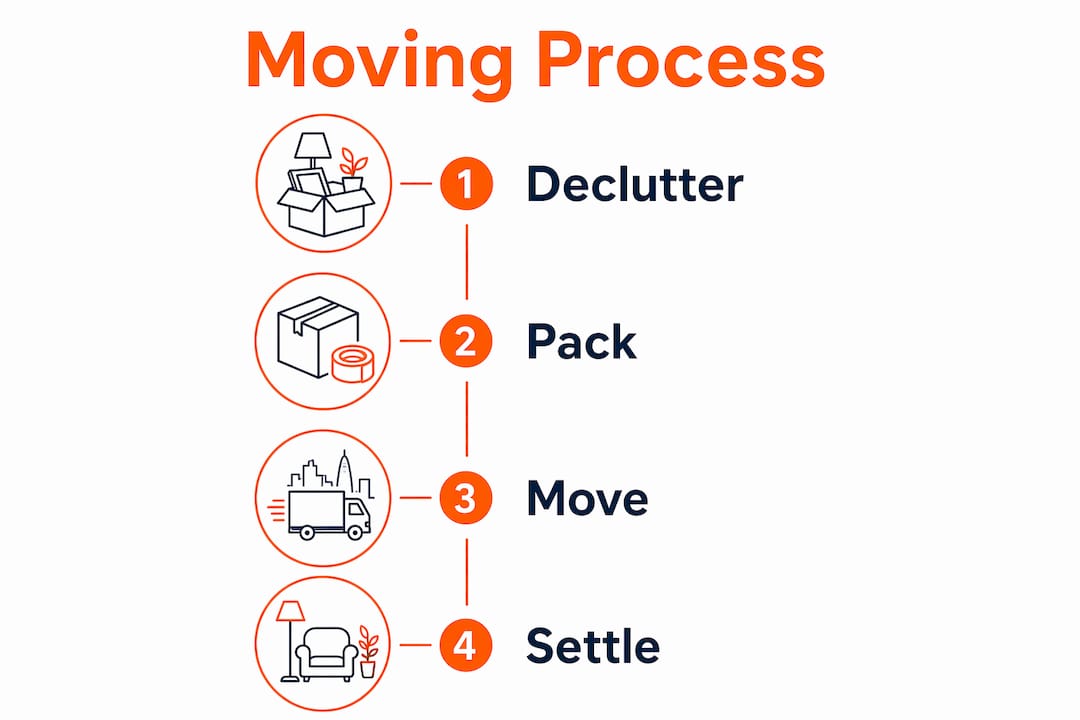
The most practical way to think about a small move is in four phases: declutter, pack, move, settle. The timeline below compresses that into two tracks depending on how much time you have.
Comfortable track: 4–8 weeks out
Movesmith recommends starting several weeks ahead to secure removal slots and avoid premium last-minute costs. Eight weeks is the comfortable window that lets you handle admin, declutter without panic, and book the van or crew you actually want.
- Weeks 7–8: Confirm your moving date. Book removals or van hire. Start decluttering loft, garage, and spare rooms first.
- Weeks 5–6: Order packing materials. Pack non-essentials: books, seasonal clothes, decorative items. Begin change-of-address notifications (DVLA, HMRC, bank, subscriptions).
- Weeks 3–4: Pack room by room. Arrange Royal Mail redirection (allow up to five working days to process). Apply for any parking suspension permits needed at either address.
- Week 2: Confirm removal crew arrival time and payment. Defrost fridge and freezer two to three days before. Pack your first-night box last.
- Moving day: Take meter readings at both properties (photograph them). Brief your crew on access, lift availability, and any fragile items. Keep your first-night box in your own car, not the van.
Compressed track: 2 weeks or less
Two weeks is tight but workable for a studio or one-bed flat. Cut the selling phase entirely. Donate or box items to sell after the move rather than losing days to marketplace listings. Prioritise ruthlessly: if it hasn’t been used in a year and won’t fit the new space, it goes.
Quick moving-day checklist:
- First-night box loaded into your car
- Valuables and important documents with you, not in the van
- Meter readings photographed at both addresses
- Crew briefed on parking, lift, and any access codes
- Keys handed over as agreed with agent or solicitor
How do you declutter quickly before a move?
Start decluttering the moment you decide to move. Every item you do not move is money saved on van space, packing materials, and time. For a studio or one-bed flat, even a modest cull of 15–20 boxes’ worth of unwanted items makes a measurable difference to your removal cost.
The 4-Box Method keeps decisions simple: label four zones Keep, Sell, Donate, and Bin/Recycle, then work through each room without revisiting decisions. Every item must land in one category. “Maybe” piles are where the method breaks down, so ban them outright.

Practical decision rule for borderline items: if you would not bother unpacking it in the new home, it does not come with you.
Work in short sessions of 25–30 minutes per zone rather than marathon days. Kitchen and loft are the hardest rooms and take longest; tackle them first when your energy is highest. For UK disposal, charity shops and furniture reuse schemes (British Heart Foundation, Emmaus) will often collect larger items. Your local council tip handles the rest. If you are short on time, rubbish removal services can clear a flat’s worth of unwanted items in a single visit.
Pro Tip: When time is short, only sell high-value, easy-to-post items before the move. Box everything else to sell after you have settled in. Rushing sales creates stress and rarely recovers meaningful money.
Short-term storage works well as a temporary decision buffer: move packed non-essentials out of your living space early so you are not tripping over boxes for weeks before the move date.
What packing materials do you need for a studio or one-bed flat?
Most people underestimate packing materials, particularly for wardrobes, kitchens, and books. Buy a small overage rather than making a second trip mid-pack.
Essential materials list:
- Double-wall boxes (small, medium, large)
- Wardrobe boxes with hanging rail (1–2 per wardrobe)
- Mattress cover (1 per mattress)
- Packing tape and dispenser
- Bubble wrap and packing paper
- Permanent marker pens (at least two)
- Sticky labels or coloured dot stickers
- Scissors
Quantity estimates by property size:
| Material | Studio flat | One-bed flat |
|---|---|---|
| Small boxes | 8–10 | 15 |
| Medium boxes | 6–8 | 10 |
| Large boxes | 3–4 | 5–7 |
| Wardrobe boxes | 1 | 2 |
| Mattress covers | 1 | 1–2 |
| Rolls of tape | 3 | 4–5 |
| Rolls of bubble wrap | 1–2 | 2–3 |
Where to buy in the UK: removal companies often sell part-packs at competitive prices. Supermarkets (Tesco, Sainsbury’s) carry basic box ranges. Specialist suppliers such as Rajapack or your local removal firm offer double-wall boxes that hold up far better than single-wall alternatives for books and breakables.
Which rooms are hardest to pack, and what actually works?
The kitchen and the loft or garage consistently take the longest. The kitchen has the highest breakage risk; the loft has the highest volume of forgotten items. Tackle both early.
Core packing techniques:
- Heavy items in small boxes. Books, tins, and tools go in small boxes only. A large box of books will either break or injure someone.
- Use towels, tea towels, and clothing as padding. Wrap plates in tea towels, glasses in socks. It saves on bubble wrap and reduces the total box count.
- Vacuum storage bags for duvets and bulky textiles. A king-size duvet compresses to a fraction of its size.
- Pack plates vertically, not flat. They travel far better on their edge, the same way a record sits in a sleeve.
- Wardrobe boxes for hanging clothes. Folding suits, dresses, or coats into regular boxes creates creases that take days to drop out.
Pro Tip: Before dismantling any flat-pack furniture or shelving unit, photograph it from two angles. The photo takes ten seconds and saves 20 minutes of puzzling at the other end. Store the photo in a dedicated album on your phone labelled “Assembly.”
For single-room moves or studio flats, the room-by-room approach works best: finish one room completely before opening boxes in another. It keeps the process visible and prevents the demoralising feeling of half-packed chaos everywhere at once.
How should you label boxes and plan your unpacking?
A good label takes five seconds and saves ten minutes of rummaging at the other end. Use this template on every box: Room destination / three-word contents / priority (for example: Kitchen — cups, mugs, kettle — HIGH). Write it on the top and at least one side so the label is readable however the box is stacked.

For inventory, a phone photo index is the simplest system: photograph the open box before sealing it, then number the box to match. A basic spreadsheet or a free app such as Sortly works for anyone who wants a searchable list. The real value of an inventory shows up when something goes missing or when you need to find a specific item before you have fully unpacked.
Unpack in this order:
- Beds and bedding first — you need to sleep on day one.
- Bathroom essentials.
- Kitchen basics (kettle, mugs, one set of plates and cutlery).
- Everything else in priority order, leaving archived or seasonal boxes until last.
Your first-night box should contain: kettle, mugs, tea and coffee, phone chargers, toilet roll, a change of clothes, any medication, important documents, and a basic toolkit (screwdrivers, Allen keys). Keep it in your own car throughout the move.
What is the right loading order for a small move?
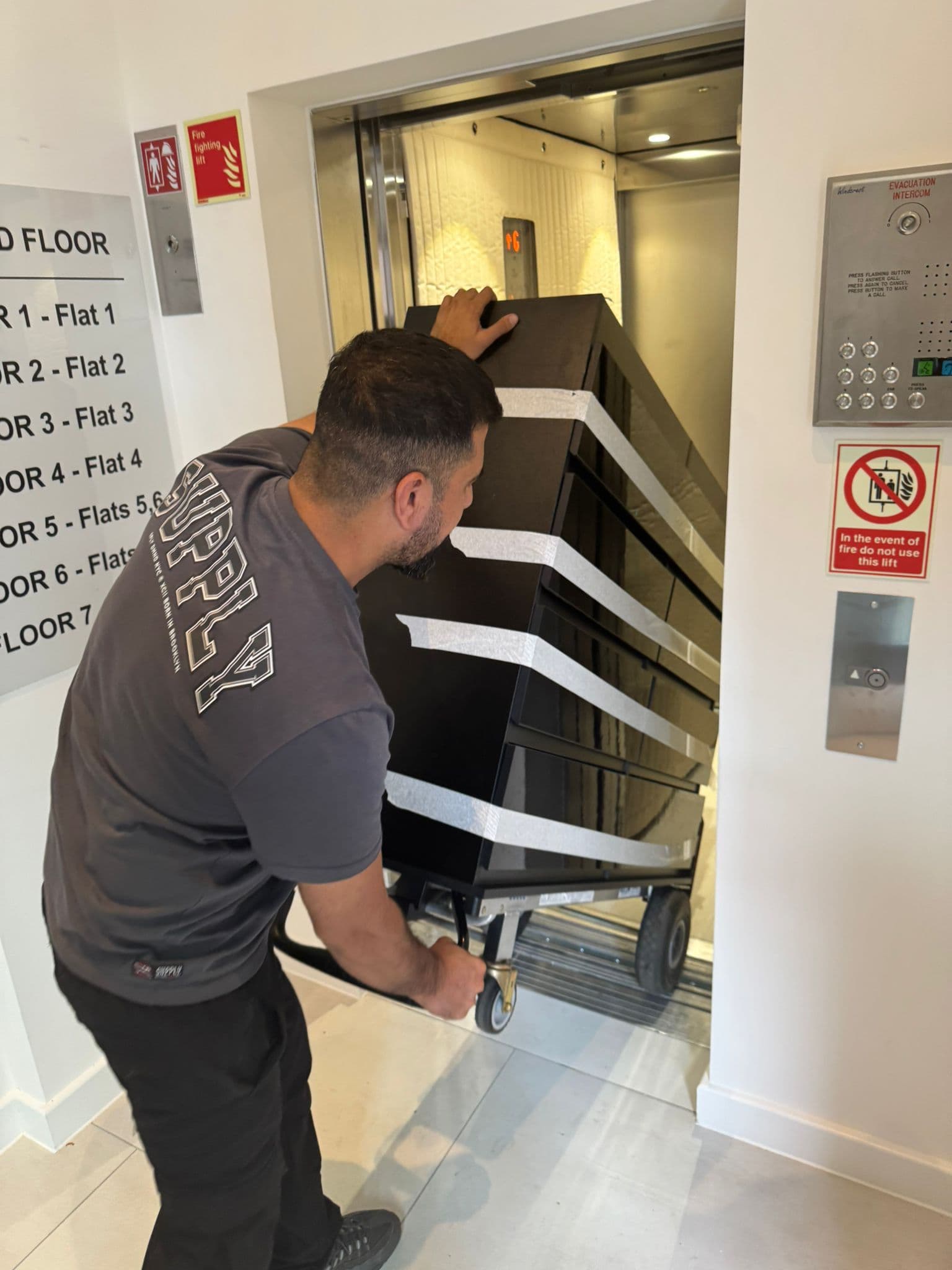
The golden rule of van loading is: last on, first off. Whatever you need first at the new address goes into the van last. That means your first-night box stays out of the van entirely, and large furniture goes in first against the van walls.
Suggested loading sequence:
- Large furniture (sofas, wardrobes, bed frames) loaded flat against the van sides and back wall.
- Heavy boxes (books, kitchen equipment) stacked low in the centre.
- Medium boxes on top of heavy ones, lighter boxes on top of those.
- Fragile boxes clearly marked and loaded last, wedged so they cannot shift.
- First-night bag and valuables travel in your car.
Pro Tip: Secure tall items such as wardrobes and bookcases with removal straps or ratchet straps. Even a short journey can shift unsecured furniture enough to damage both the item and whatever is next to it.
For basic safety: bend your knees, not your back, for anything over 10 kg. Boxes should not exceed 20 kg for safe single-person lifting. For stairs, always have one person above and one below, and never rush.
UK parking practicalities: parking suspensions in London and other cities require 5–7 working days’ notice to your local council. Apply early. For flats, book the lift for your moving slot in advance and let the building manager know the date. Failing to do either is one of the most common causes of delay on moving day.
Should you hire professionals or do it yourself?
For a studio or one-bed flat, the honest answer depends on three things: how much you own, how many stairs are involved, and how much your time is worth.
| Option | Best for | Trade-off |
|---|---|---|
| Self-drive van hire | Minimal belongings, ground floor, flexible schedule | Physical effort, fuel, insurance excess |
| Man-and-van service | One to two rooms, tight budget, flexible timing | Less cover than a full removal firm |
| Part-packing service | Kitchen and breakables only, rest self-packed | Moderate cost, significant time saving |
| Full removal service | Whole-flat move, stairs, fragile items | Higher cost, lowest effort and risk |
When choosing a van size for a self-move, a Luton van typically handles a one-bed flat in a single load; a Transit-sized van suits a studio. Factor in fuel, insurance, and the cost of a second person to help lift.
Key cost drivers for small moves: volume and weight, floor level and lift access, weekend or month-end timing (always more expensive), and whether packing is included. Booking at least two to four weeks ahead secures better availability and avoids premium rates. For small moves, part-packing for kitchen and breakables often delivers the best return: professionals handle the highest-risk items while you pack everything else yourself.
Questions to ask any removal firm before booking:
- Is Goods in Transit cover included, and up to what value?
- Do you sub-contract, or is the crew directly employed?
- What is your policy on delays or access problems?
- Is the quote fixed-price or subject to change on the day?
Key takeaways
A small move done efficiently comes down to one principle: move less, plan earlier, and protect what matters most.
| Point | Details |
|---|---|
| Declutter before you pack | Use the 4-Box Method to cut volume before a single box is taped shut. |
| Follow a compressed timeline | Two to eight weeks is realistic; book removals at least two to four weeks ahead to avoid premium rates. |
| Buy enough materials | Buy a small overage. |
| Protect documents and valuables | Keep important documents, medication, and valuables in your own car throughout the move. |
| Metrocitymoves for small London moves | Metrocitymoves covers all 32 London boroughs with man-and-van, part-packing, and storage services suited to studio and one-bed moves. |
The thing most small-move guides get wrong
Most moving guides treat a small move as a scaled-down version of a large one. It is not. A studio or one-bed flat move has a completely different pressure point: the problem is rarely volume, it is decision fatigue. When everything fits in one room, it is tempting to pack it all and sort it out at the other end. That instinct costs you twice: once in van space you did not need, and again in unpacking time at a new address where you are already tired.
The guides that tell you to “start early and stay organised” are technically correct but miss the practical reality of a small move in London. The real lever is ruthless pre-move decluttering, not better labelling systems. A well-labelled box of things you did not need is still a box you paid to move.
The other thing worth saying plainly: parking and lift access cause more moving-day delays in London than any packing failure. Sorting a parking suspension and booking a lift slot are administrative tasks that take ten minutes each and save hours on the day. Do them the moment you have a confirmed date.
Metrocitymoves: practical help for small London moves
For a studio or one-bed flat move, Metrocitymoves offers exactly the services that make a small move faster and less stressful, without paying for a full-scale removal operation you do not need.

The relevant options for small moves include man-and-van for single-room or studio relocations, flat removals for one-bed and high-rise properties, part-packing for kitchen and breakables, secure storage for items you are not ready to move yet, and rubbish removal to clear unwanted items before the van arrives. Metrocitymoves covers all 32 London boroughs and every postcode within the M25, with Goods in Transit cover included as standard and fixed-price quoting so there are no surprises on the day.
Booking two to four weeks ahead is recommended for small moves, particularly for weekend or month-end dates. Get a free quote directly at metrocitymoves.co.uk/house-removals and confirm your slot before the date fills.
Useful sources
- Movesmith: Moving House Complete UK Checklist — practical UK moving timeline and cost guidance, including booking lead times and admin tasks.
- Marley Moves: 8-Week Moving House Checklist — week-by-week countdown covering parking suspensions, Royal Mail redirection, and utility transfers.
- Good Housekeeping UK: How to Declutter When Moving — expert advice on starting early and matching belongings to your new space.
- Hold Storage: 1-Bed Property Moving Guide — packing material estimates and box-sizing rules for one-bedroom flats.
- MG Exeter: How to Declutter Before Moving House — explains the 4-Box Method and storage as a decision buffer.
- Metrocitymoves: Moving House Checklist — week-by-week London-specific checklist covering admin, parking, and packing.
- Metrocitymoves: Small Moves in London Guide — local guidance on booking, van sizing, and access for small London moves.
FAQ
How do you organise a move quickly when time is short?
Work in this order: declutter first (use the 4-Box Method), pack room by room starting with non-essentials, and handle admin (Royal Mail redirection, parking suspension) in parallel. Two weeks is workable for a studio or one-bed flat if you cut the selling phase and donate instead.
Is it better to put clothes in bags or boxes when moving?
Hanging clothes travel best in wardrobe boxes, which keep them crease-free and upright. Folded clothes can go in suitcases or large boxes lined with a bin bag for protection. Avoid bin bags alone for anything you care about, as they offer no structural support and tear easily.
What is the hardest room to pack when moving?
The kitchen is consistently the hardest: it has the highest concentration of breakables, the most awkward shapes, and items used right up to moving day. Pack it last among the main rooms, and consider a part-packing service for breakables if time or confidence is limited.
How do you organise a lot of stuff in a small space before moving?
Use short-term storage as a staging area: pack non-essentials early and move them out of your living space so you can function normally until moving day. Metrocitymoves offers flexible storage across London for exactly this purpose.
How far ahead should you book a removal company for a small move?
Two to four weeks ahead is the recommended minimum for a small move, and longer for weekend or month-end dates, which fill quickly. Booking early also avoids premium last-minute rates.