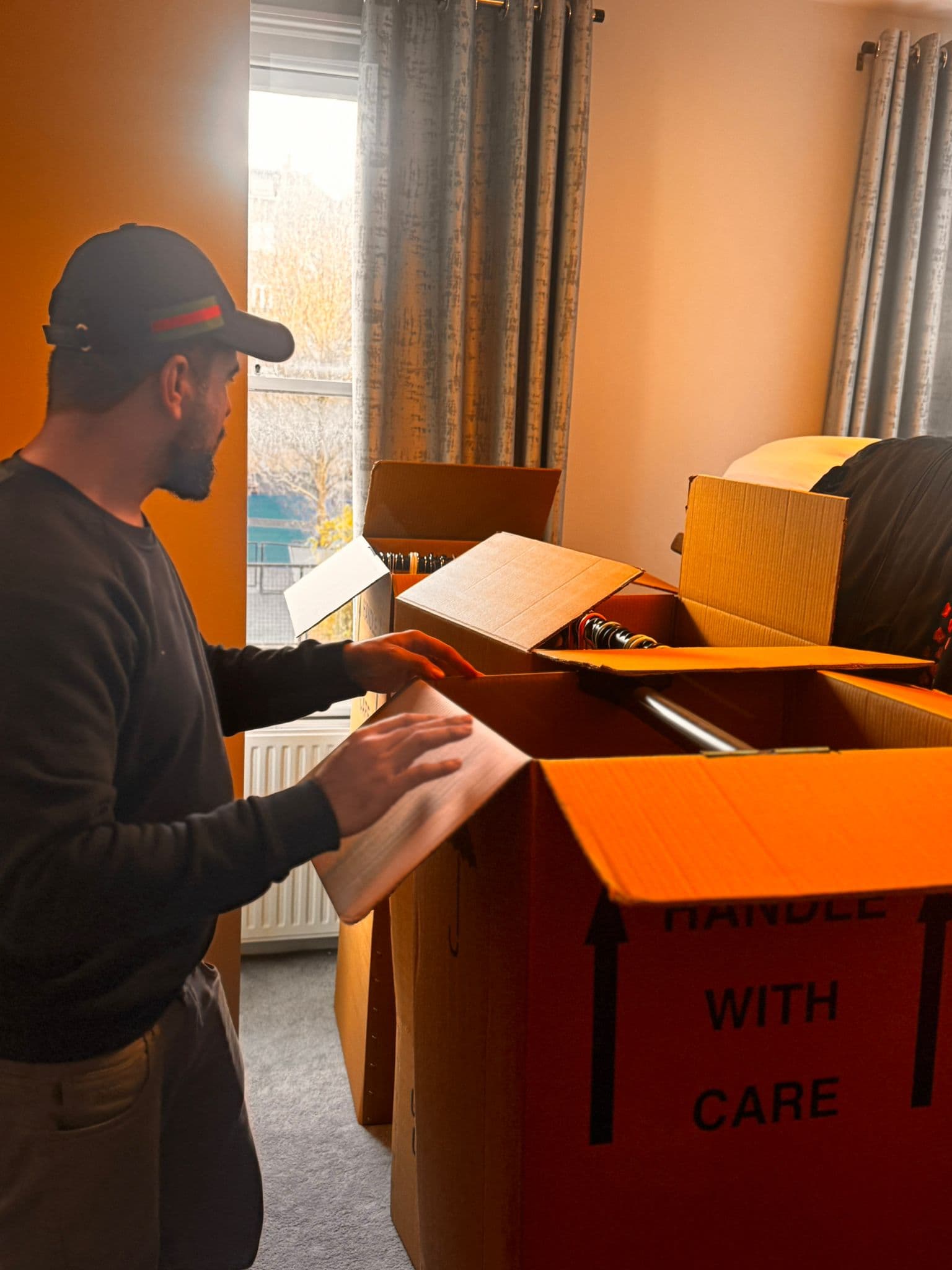
What is a single room move? Your practical guide
A single room move is defined as the relocation of one room’s worth of belongings, or a limited set of items, from one address to another. It sits in a different category from full household removals and requires its own planning approach. Students moving into halls, professionals relocating to a new flat, and share house residents changing rooms all fall into this bracket. Metrocitymoves has handled thousands of these smaller relocations across London since 2010, and the consistent lesson is this: a single room move is simpler than a full house move, but it is never as straightforward as people assume.
What qualifies as a single room move?
A single room move is the industry’s informal term for what removal companies formally classify as a “small move.” Small moves are defined as relocations involving fewer rooms or items, typically under 2,000 pounds in total weight. That classification matters because it determines the vehicle size, crew requirement, and pricing tier a company applies to your job.
Scenarios that qualify include:
- A student clearing a university bedroom and moving to a new term address
- A professional relocating a single furnished room within a shared flat
- Someone moving a studio apartment’s contents to a new building
- A single large item, such as a wardrobe or bed frame, being transported across the city
- A room move within the same building, such as from the second floor to the fourth
The difference between a within-building move and a between-building move is significant. Within-building moves still require careful coordination of lifts, loading bays, and corridor access. Between-building moves add vehicle logistics on top. Neither is automatically simple, and treating them as such is where most problems begin.
Vehicle choice is the clearest indicator of move category. A single room typically fits into a small van or a transit-sized vehicle. A crew of one or two people is usually sufficient. If your belongings spill into a second vehicle, you are no longer in single room territory and your quote will reflect that.

How to prepare for a single room move
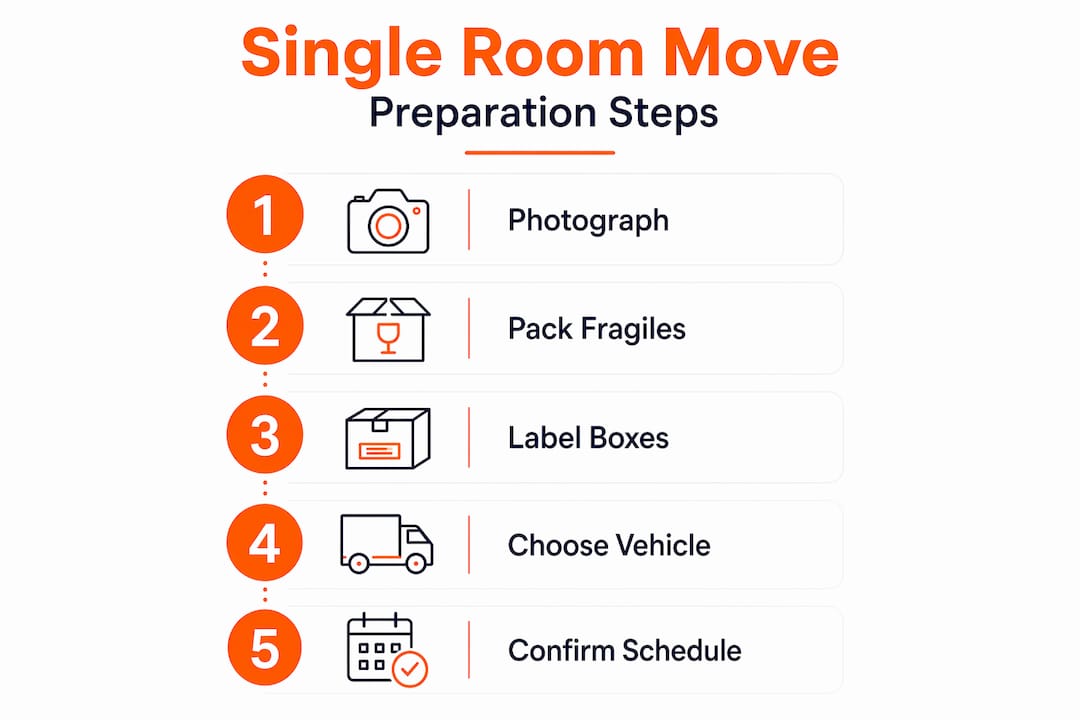
Preparation is the single biggest factor separating a smooth move from a stressful one. A structured approach to single room relocation reduces damage risk and organisational stress significantly. Follow these steps in order:
- Declutter before you pack. Go through every item in the room and decide what genuinely needs to move. Fewer items means a faster move and a lower cost.
- Measure your furniture and your route. Pre-measuring large furniture and all access points is critical to avoid items that cannot fit through doorways or stairwells on moving day. Measure the sofa, the wardrobe, and the mattress. Then measure the hallway, the door frames, and the lift if there is one.
- Pack an “open first” bag. This is a single bag containing everything you need for the first night: phone charger, toiletries, a change of clothes, and any medication. Keep it with you, not on the van.
- Label every box clearly. Write the contents and the destination room on the top and one side of each box. This saves time at both ends of the move.
- Use the bin bag wardrobe technique for clothes. The bin bag wardrobe method keeps clothes on their hangers inside a bin bag, tied at the top. You hang them straight into the new wardrobe without unpacking a single item.
- Book the lift and loading bay in advance. In shared buildings, lifts and loading bays are shared resources. Contact building management at least a week before your move date to reserve access.
- Perform a final room check. Walk through the empty room before the van leaves. Check inside wardrobes, under the bed, and behind doors.
Pro Tip: Take photos of your room before and after packing. This protects you if there is any dispute about the condition of the property at the end of your tenancy.
For fragile items such as mirrors or electronics, read Metrocitymoves’ guide on packing fragile items safely before you start boxing things up.
What do professional single room moving services include?
Professional single room moving services cover more than simply driving a van from A to B. A typical service includes packing assistance, loading, transport, unloading, and furniture reassembly at the destination. The scope depends on what you book, and reputable companies price each job based on your specific requirements rather than a flat rate.
Professional single room moves typically start at £250–£450, with the final figure shaped by several factors:
- Volume of items: More boxes and larger furniture push the price up.
- Building access: Narrow staircases, no lift, or restricted parking all add complexity and time.
- Distance: A cross-London move costs more than a move within the same postcode.
- Additional services: Packing, disassembly, reassembly, and storage each carry their own cost.
- Timing: Weekend and end-of-month slots are in higher demand and may cost more.
The DIY route looks cheaper on paper, but hidden costs of DIY moves including van hire, fuel, parking charges, and the cost of any damage often close that gap quickly. Professional movers carry Goods in Transit insurance, which covers your belongings during transport. A DIY hire van does not include that cover by default.
Moving heavy or delicate furniture without proper equipment and assistance carries a genuine risk of injury and property damage. A professional crew brings the right tools, including furniture dollies, straps, and protective blankets, and they know how to manoeuvre a mattress around a tight staircase landing without scratching the walls.
The most common misconception about single room moves is that they are always quick and cheap. Logistical complexity in multi-tenant buildings such as high-rises and purpose-built student accommodation can make a single room move as demanding to coordinate as a small flat removal. Transparent, personalised quoting is the only way to get an accurate price.
Expert tips for a smooth single room relocation
The goal of any single room move is to complete it in one trip. Choosing the right vehicle size and aiming for a single run minimises disruption to housemates and building staff, and it keeps your costs predictable. Booking a van that is too small and needing a second trip is one of the most avoidable mistakes in small moves.
Key tips from experienced movers:
- Plan your route inside the building. Walk the path from your room to the loading point before moving day. Identify any tight corners, low ceilings, or steps that could cause problems.
- Disassemble large furniture before the crew arrives. Beds, flat-pack wardrobes, and desks are far easier to move in parts. Have the tools ready and the pieces stacked neatly.
- Communicate with your housemates. Give them advance notice of the moving date and time. A clear corridor and a propped-open front door saves everyone time.
- Protect your floors and walls. Use old blankets or cardboard sheets on the floor of high-traffic routes. This prevents scuffs and protects your deposit.
- Check van size guidance before booking. Choosing the wrong vehicle is a costly mistake that a quick read can prevent.
Pro Tip: If you are unsure whether your belongings will fit in a single van load, photograph the room and send the images to your removal company when requesting a quote. A good company will give you an honest assessment.
If you need somewhere to store items temporarily while your new room is being prepared, short-term furniture storage is a practical option worth considering early in your planning.
Key takeaways
A single room move requires the same disciplined planning as a larger removal, with the added complexity of shared building logistics and the temptation to underestimate the job.
| Point | Details |
|---|---|
| Define your move category | Small moves involve fewer items, typically under 2,000 pounds, and use smaller vehicles with one or two crew members. |
| Measure everything first | Check furniture dimensions and all access points before moving day to avoid items that will not fit through doorways or lifts. |
| Use the bin bag wardrobe | Keep clothes on hangers inside tied bin bags for instant hanging in the new room, saving significant packing time. |
| Account for hidden DIY costs | Van hire, fuel, parking, and damage risk often make professional services more cost-effective than a self-managed move. |
| Book building access early | Reserve lifts and loading bays at least one week in advance to avoid delays on the day. |
Single room moves: what I have learned from the ground up
People consistently underestimate single room moves. I have seen it repeatedly. A client assumes the job will take an hour because there is “only one room,” and then the reality of a sixth-floor flat with a small lift and a narrow corridor sets in. The move takes three hours and costs more than expected, not because anything went wrong, but because the planning did not account for the building.
The detail that catches people out most often is furniture measurement. A wardrobe that fits perfectly in a room does not automatically fit through the door frame or around the staircase landing. Physical manoeuvrability is different from simple dimension calculations, and that difference only becomes obvious on moving day if you have not checked in advance.
My honest advice: treat a single room move with the same respect you would give a full flat removal. Write a checklist. Measure your furniture. Book your lift access. Choose a vehicle that fits your load in one trip. And if you have any doubt about handling heavy or awkward items safely, bring in professionals. The cost is lower than you think, and the risk of injury or damage is higher than most people realise.
— Far
Planning a single room move in London? Metrocitymoves can help
Metrocitymoves has been handling single room relocations across all 32 London boroughs since 2010. Whether you are a student moving between term addresses or a professional relocating to a new flat, the team brings the right vehicle, the right crew, and the right experience to get the job done without disruption.

Services available for single room moves include professional packing, furniture disassembly and reassembly, same-day delivery, and secure storage in London for items that need a temporary home. Every quote is fixed-price and based on your specific move, with no hidden charges. For professional flat and house removals across London, get in touch with Metrocitymoves for a free, no-obligation quote today.
FAQ
What is a single room move exactly?
A single room move is the relocation of one room’s worth of belongings, or a small number of items, from one address to another. It is classified as a small move by removal companies and typically requires a small van and a crew of one or two people.
How much does a single room move cost?
Professional single room moves typically start at £250–£450, with the final price depending on item volume, building access, distance, and any additional services such as packing or storage.
Is a single room move always quick and easy?
Not necessarily. Multi-tenant buildings such as high-rises and student accommodation add logistical complexity, including lift bookings and loading bay scheduling, that can make a single room move as demanding as a small flat removal.
Should I hire professionals for a single room move?
Professional help is worth considering for any move involving heavy, bulky, or delicate items. Professionals carry Goods in Transit insurance and bring the right equipment, reducing the risk of injury and damage that DIY moves carry.
What is the bin bag wardrobe technique?
The bin bag wardrobe technique involves keeping clothes on their hangers and placing them inside a bin bag tied at the top. This preserves garment condition and allows immediate hanging in the new room, eliminating the need to fold, pack, and re-hang clothing.