How antique furniture removals work: a complete guide
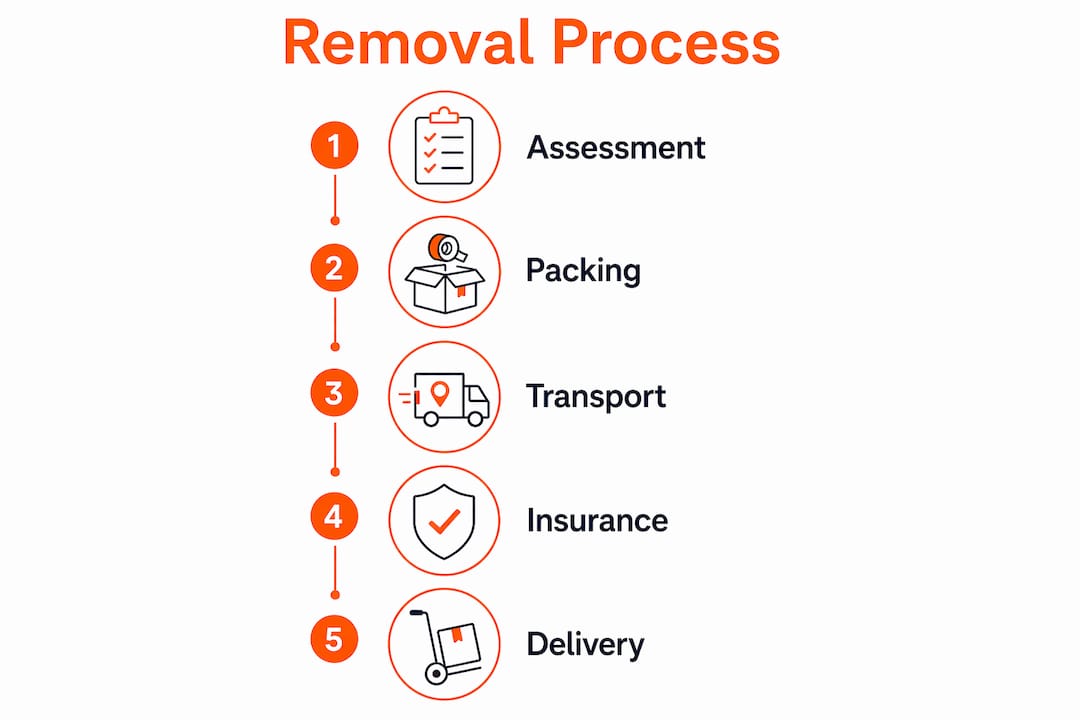
Antique furniture removal is the specialised process of assessing, packing, transporting, and insuring valuable and delicate furniture to prevent damage and preserve its condition. Unlike standard house moves, antique removals demand a different discipline entirely, one built around conservation-grade materials, trained crews, and tailored insurance. Understanding how antique furniture removals work protects your investment at every stage, from the initial survey through to final placement. This guide covers the full process so you can make informed decisions, ask the right questions, and avoid the costly mistakes that catch many people out.
How do antique furniture removals differ from general removals?
Antique furniture removals require a fundamentally different approach to standard moves. General removals prioritise speed and volume. Antique removals prioritise preservation above all else.
The physical construction of antique furniture creates specific risks. Older pieces often feature delicate veneers, marquetry inlay, gilt work, glass panels, and stone tops. These elements are vulnerable to pressure, vibration, and temperature change in ways that modern flat-pack furniture simply is not. A Georgian chest of drawers, for example, may have hand-cut dovetail joints that are centuries old. Any lateral stress during lifting can split them.
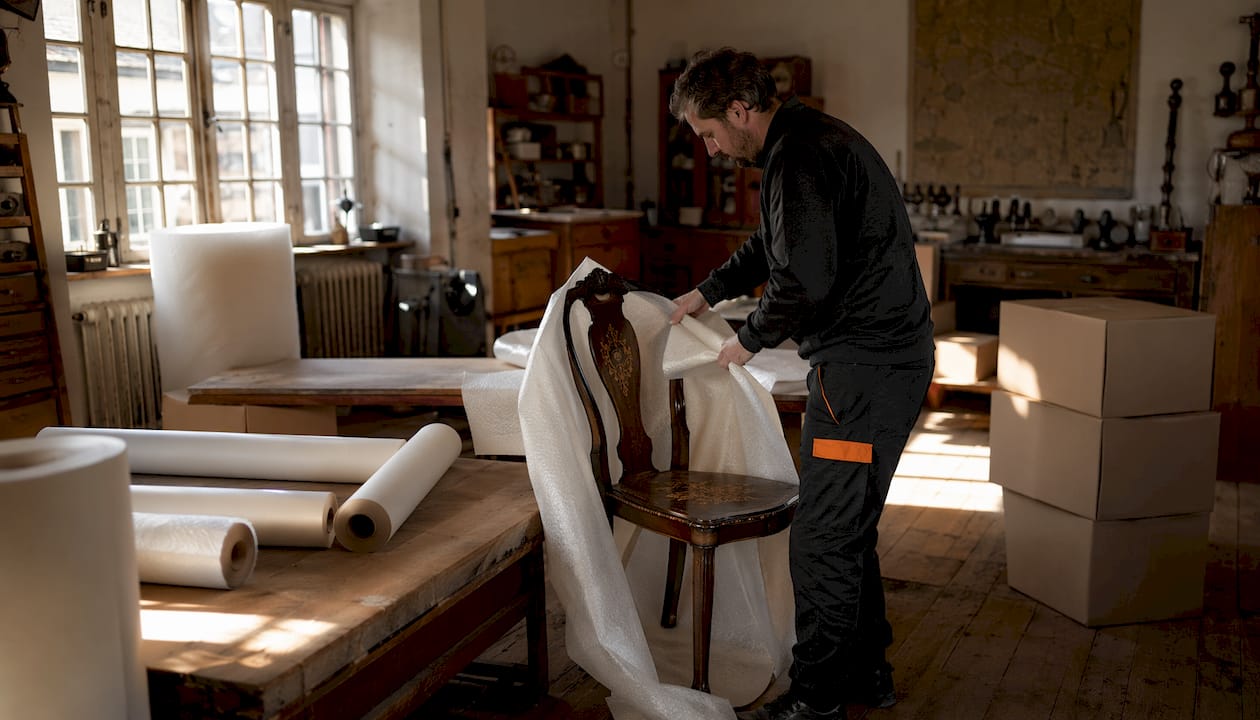
The materials used in antique removals reflect this. Conservation-grade packing includes acid-free tissue, soft cotton cloth, and pad-wrap. No tape should ever touch a delicate surface. Even painter’s tape can lift a finish or leave residue that degrades lacquer over time. Webbing straps and cotton padding replace adhesive entirely.
Crew training matters as much as materials. A specialist team knows how to read a piece before touching it, identifying structural load points, fragile projections, and areas where pressure must never be applied. This is not a skill that transfers automatically from general removal work.
- Antique pieces require slower, more deliberate handling than standard furniture
- Veneers, gilt, marquetry, and glass panels each need specific protection methods
- Acid-free tissue and soft cotton replace standard bubble wrap and packing tape
- Crews must be trained specifically in antique handling, not just general removals
- Route planning at origin and destination is assessed before any item is moved
Pro Tip: Ask any removal company directly whether their crew has handled antiques before. If they cannot name specific techniques or materials, they are likely out of their depth with high-value pieces.
How are antiques assessed and prepared for removal?
The assessment stage is where professional antique removals earn their value. A thorough pre-move survey sets the foundation for everything that follows.
A specialist survey for antique moves typically takes 60–90 minutes for a significant collection. During this time, the crew photographs each piece, notes its condition, records dimensions, and identifies any pre-existing damage. This photographic record is not just good practice. It is your primary evidence if an insurance claim becomes necessary later.
The preparation steps follow a clear sequence:
- Photograph every item from multiple angles before any packing begins. Note scratches, chips, and loose joints in writing.
- Remove drawers, shelves, and loose components. These travel separately, wrapped individually, to prevent internal movement that can crack joints.
- Identify structural lifting points. Antiques must be lifted from their base frames, never by arms, legs, or decorative elements.
- Apply pad-wrap and corner boards to protect edges and protruding details during transit.
- Plan the removal route through the property. Measure doorways, stairwells, and tight corners at both origin and destination before moving anything.
- Commission custom crates for the most fragile or high-value pieces. Marble tops, for instance, travel separately from their bases, padded vertically and handled by a minimum of two crew members.
The table below shows how preparation requirements vary by piece type.
| Piece type | Key preparation requirement |
|---|---|
| Marble-topped tables | Top removed, padded vertically, two-person carry minimum |
| Glass-fronted cabinets | Glass secured with padding; glass-facing-glass technique applied |
| Gilt or lacquered surfaces | Acid-free tissue layer before any wrapping material contacts surface |
| Pieces with loose veneers | Veneers stabilised or noted; no pressure applied to affected areas |
| Large case pieces | Drawers and shelves removed; doors taped shut with cloth, not adhesive tape |
Pro Tip: If your antique has a loose veneer or a cracked panel, tell the crew before the survey. A good specialist will adjust their packing method. Surprises on moving day increase risk significantly.
What are the best practices for safely transporting antique furniture?
Safe transport of antiques depends on how the vehicle is loaded, how items are secured, and how the journey itself is managed. Getting any one of these wrong can undo careful packing in minutes.
Loading order matters. Heavy, stable pieces go in first against the vehicle bulkhead. Lighter, more fragile items load last and are positioned so they cannot shift. Furniture and ratchet straps secure everything, but straps must never contact bare wood or decorative surfaces. Cloth padding goes between the strap and the piece at every contact point.
For high-value antiques, the vehicle itself is part of the protection. Specialist couriers offer climate-controlled transport and air-ride suspension for fine art and antiques. Air-ride suspension reduces road vibration transmitted to the load. Climate control prevents the humidity and temperature swings that cause wood to expand, contract, and crack. These are not luxury options for very valuable pieces. They are standard requirements.
- Load heavy items first, lighter items last, with no direct contact between pieces
- Use furniture blankets and pad-wrap between all items to prevent surface abrasion
- Secure every item with webbing straps, padding all contact points with cloth
- Glass-fronted antiques must be packed glass-facing-glass with cushioned padding to absorb vibration without creating fracture-inducing pressure
- Plan the route to minimise sharp braking, tight turns, and road surfaces that cause excessive vibration
- Avoid leaving antiques in a parked vehicle in direct sunlight or extreme cold
Route planning is often overlooked. A longer route on smoother roads protects antiques better than a short route over cobblestones or speed bumps. A specialist crew plans this before departure, not during the move.
How does insurance work for antique furniture removals?
Insurance is the area where most people underestimate their exposure. Standard goods-in-transit cover has a per-item limit of £2,500. Any antique worth more than that requires declared-value or specialist transit insurance. Most antique furniture exceeds this threshold comfortably.
The right product for high-value antiques is nail-to-nail insurance. This covers the piece from the moment it leaves its original location to the moment it is placed at its destination. Nail-to-nail cover typically costs 0.3%–1.5% of declared value, which works out to roughly £100–£200 for a £20,000 piece. That is a modest cost relative to the risk.
Most home insurance policies exclude transit damage. Do not assume your household contents policy covers your antiques during a move. Check your policy wording directly, and if transit is excluded, arrange specialist cover before the move date.
| Insurance type | Typical cover limit | Best suited for |
|---|---|---|
| Standard goods-in-transit | £2,500 per item | General household furniture |
| Declared-value transit | Full declared value | Antiques valued above £2,500 |
| Nail-to-nail specialist cover | Full declared value, door to door | High-value antiques and fine art |
One critical rule: owner-packed items often void insurance claims. If you pack a piece yourself and it is damaged in transit, your insurer will likely reject the claim on the grounds that the packing was not carried out by a qualified professional. Professional packing is not just about protection. It is a condition of valid cover.
Pro Tip: Declare item values to your removal company in writing before the move date. A verbal declaration is difficult to prove. Written declaration, combined with a photographic condition report, gives you a solid basis for any claim.
What practical tips help ensure a successful antique furniture removal?
The difference between a successful antique move and a damaging one often comes down to a handful of decisions made before the crew arrives.
- Always lift antiques from their base frame or the sturdiest structural element. Never lift by legs, arms, handles, or decorative mouldings.
- Measure every doorway, corridor, and stairwell at both the origin and destination property. A piece that cannot exit the building safely cannot be moved safely.
- Use specialist movers for any item valued above £5,000 or featuring delicate inlay, gilt, glass, or stone. The expertise of professional movers is not optional at this value level.
- Never drag antiques across floors. Dragging transfers the full weight of the piece onto its legs or base edges, which can split joints or crack feet.
- Do not use any tape directly on surfaces. Use webbing straps, cloth padding, and pad-wrap exclusively.
- Photograph everything before packing begins. Record pre-existing damage in writing and share it with the removal company.
- If your antique contains ivory, tortoiseshell, or certain exotic timbers, check whether CITES documentation is required. Lacking CITES paperwork can result in legal complications and insurance rejection, particularly for cross-border moves.
Pro Tip: If you are unsure whether an item needs specialist handling, err on the side of caution. The cost of specialist packing materials is negligible compared to the cost of repairing or replacing a damaged antique.
Key takeaways
Antique furniture removals require specialist assessment, conservation-grade packing, appropriate insurance, and trained crews to protect valuable pieces throughout the entire process.
| Point | Details |
|---|---|
| Specialist handling is non-negotiable | Antiques need trained crews, acid-free materials, and no tape on surfaces. |
| Survey before every move | A 60–90 minute pre-move survey with photographs protects you if a claim arises. |
| Standard insurance is rarely enough | Items above £2,500 need declared-value or nail-to-nail specialist cover. |
| Owner packing voids claims | Professional packing is a condition of valid transit insurance for antiques. |
| Transport method affects risk | Climate-controlled vehicles with air-ride suspension reduce vibration and humidity damage. |
What I have learned from antique removals that most guides miss
The thing that surprises people most about antique removals is how much of the work happens before anything is lifted. In my experience, the moves that go wrong are almost never caused by a single dramatic accident. They are caused by skipped preparation: no survey, no photographic record, no declared value on the insurance policy, and a crew that has never handled a piece with loose veneer or a marble top.
The insurance gap is the most underestimated risk. Clients regularly assume their home contents policy covers transit. It almost never does. And the owner-packing exclusion catches people out constantly. You pack a piece yourself to save money, something shifts in the vehicle, and the insurer declines the claim because the packing was not professionally done. That is an expensive lesson.
What I find genuinely reassuring about working with a specialist is the survey process. A good pre-move survey is not a formality. It is the moment where the crew identifies every risk, every fragile point, and every access problem before they become a crisis. A 90-minute survey can prevent a £10,000 repair bill. That is not an exaggeration.
The other thing worth saying directly: packing quality determines outcomes more than any other single factor. The vehicle, the crew, the route planning all matter. But if the piece is not correctly wrapped and supported before it goes on the vehicle, none of the rest of it matters. Get the packing right first.
— Far
Antique furniture removals with Metrocitymoves
Metrocitymoves has been handling specialist removals across London since 2010, covering all 32 boroughs and every postcode within the M25. The team brings the same careful approach to antique pieces as it does to every removal: thorough pre-move surveys, conservation-grade packing materials, and fully insured transport.
Whether you are moving a single Georgian cabinet or an entire period collection, Metrocitymoves provides fixed-price quotes, transparent condition reporting, and crews trained in delicate item handling. For antiques that need secure interim storage, climate-controlled storage is available across London. For a fully insured, professional move, get a free quote through the house removals service page today.
FAQ
What makes antique furniture removals different from standard moves?
Antique removals require conservation-grade materials, specialist-trained crews, and tailored insurance that standard removal services do not provide. The fragility of veneers, gilt work, and stone tops demands a slower, more deliberate process than general household moves.
How much does specialist antique furniture removal insurance cost?
Nail-to-nail insurance for antiques typically costs 0.3%–1.5% of the declared value, which works out to approximately £100–£200 for a piece valued at £20,000. Standard goods-in-transit cover is limited to £2,500 per item and is rarely sufficient for antiques.
Can I pack my own antiques before the removal?
Owner-packed items frequently void transit insurance claims. Professional packing by a qualified crew is a condition of valid cover under most specialist policies, so self-packing is not recommended for valuable pieces.
What questions should I ask when hiring a removal service for antiques?
Ask whether the crew has specific antique handling experience, what packing materials they use, whether they carry declared-value or nail-to-nail insurance, and whether they conduct a pre-move survey with photographic condition reporting.
Do antiques containing ivory or exotic wood need special documentation?
Yes. Antique furniture containing protected materials such as ivory or certain exotic timbers may require CITES documentation. Without it, you risk legal complications and insurance rejection, particularly for international or cross-border moves.