What is a furniture pickup service? Your 2026 guide
A furniture pickup service is defined as a scheduled collection of unwanted furniture directly from your home, carried out by a charity, local council, or private removal company. You do not need to transport anything yourself. Three main routes exist in the UK: free charity collection, paid council bulky waste removal, and private professional services such as those offered by Metrocitymoves. Each route suits a different situation, and choosing the wrong one wastes time. This guide explains how each option works, what to expect, and how to prepare your furniture for a smooth collection.
What types of furniture pickup services are available in the UK?
The three main categories of furniture collection services differ in cost, speed, and eligibility. Understanding each one upfront saves you from booking the wrong service and facing a cancelled collection.
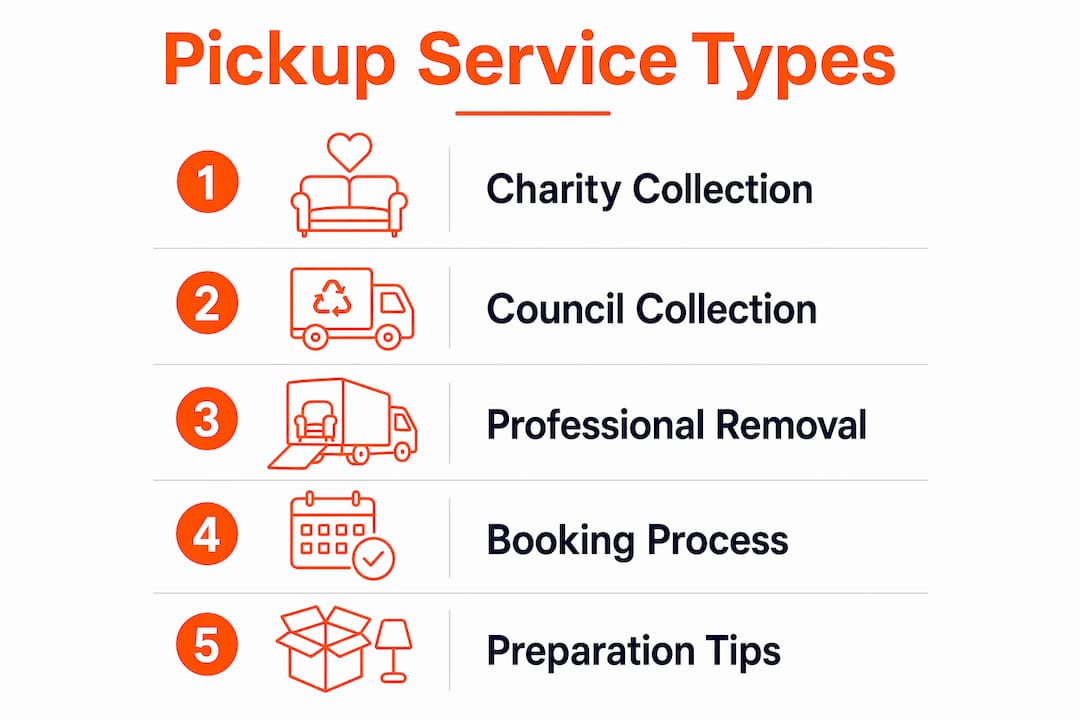
Free charity collection is available for good-quality, resaleable furniture. Organisations such as British Heart Foundation, Sue Ryder, and Emmaus collect items at no charge, then sell them in their shops to fund their programmes. Collections are typically confirmed within five working days of booking, though some charities operate within a limited radius. Shaw Trust, for example, collects within 25 miles of their shops. This option costs nothing but requires your furniture to meet strict condition and safety standards.
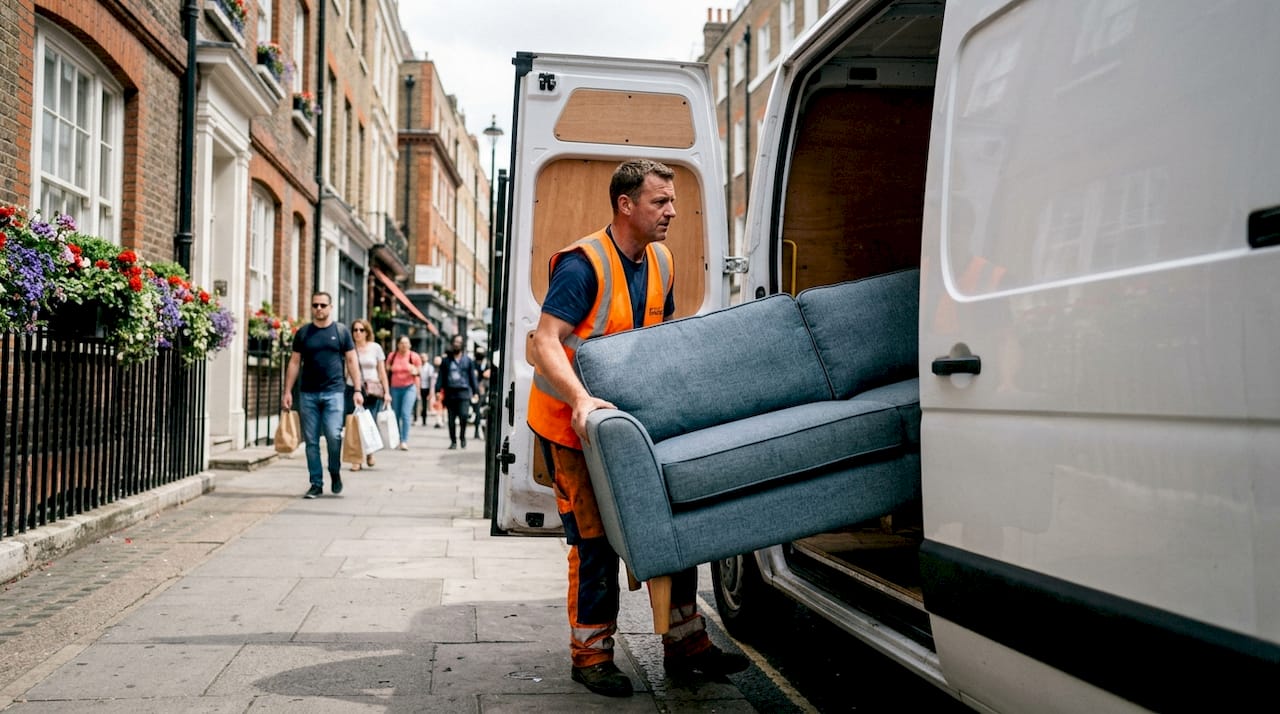
Council bulky waste collection is a paid service run by your local authority. You book online, pay a fixed fee, and the council collects on a scheduled date. Councils accept large household items such as sofas, wardrobes, and beds, but exclude mattresses, electronics, and hazardous materials. Fees and accepted items vary by borough, so check your council’s website before booking.
Private professional removal services offer the most flexibility. Companies like Metrocitymoves provide same-day or next-day collection, handle large clearances, and are fully insured. This option costs more than the other two but suits urgent timescales or situations where charity and council services are not appropriate.
| Service type | Cost | Speed | Best suited for |
|---|---|---|---|
| Charity collection | Free | 5+ working days | Good-quality, resaleable items |
| Council bulky waste | Fixed fee | Days to weeks | Items in any condition, single pieces |
| Private professional | Variable | Same day or next day | Urgent, large, or complex clearances |
How do charity furniture pickup services operate?
Charity furniture collection is free, but it comes with clear eligibility rules. Knowing these rules before you book prevents wasted time on both sides.
The most critical requirement is fire safety labelling. Upholstered furniture must carry a fire safety label to be accepted for resale. Items without this label are refused, regardless of their condition. This applies to sofas, armchairs, sofa beds, and any padded seating. Check the underside or back of the item for a permanent label before booking.
Charities also require furniture to be fully assembled and accessible at ground-floor level. Drivers cannot collect items from upstairs rooms or navigate difficult access points. Flat-pack furniture is only accepted if it is brand new and still sealed in its original packaging. Disassembled second-hand items are refused.
Booking a charity collection is straightforward. Complete an online form with details of the items, your address, and your preferred collection window. Some charities also accept phone bookings. Provide accurate descriptions and photographs where possible, because collection teams assess condition at booking and again on arrival. A mismatch between your description and the actual item can result in a cancelled collection on the day.
- Check for a fire safety label on all upholstered items.
- Confirm the furniture is fully assembled and in good, resaleable condition.
- Move the item to ground-floor level before the collection date.
- Complete the charity’s online booking form with accurate descriptions.
- Provide photographs if the charity requests them.
- Be available on the agreed collection day to grant access.
Pro Tip: If you are unsure whether your sofa qualifies, photograph the fire safety label and the overall condition of the piece, then email both images to the charity before booking. This takes two minutes and eliminates the risk of a wasted collection slot.
When should you use a paid council or professional service?
Paid services are the right choice when charity collection is not an option. Three situations make this clear: the furniture is in poor condition, you need it gone quickly, or you have multiple items to clear at once.
Council bulky waste collections handle furniture in any condition, including items that charities would refuse. You book online through your borough’s website, pay the fee, and the council collects on the scheduled date. Lead times range from a few days to several weeks depending on demand, so this is not the right choice if you need a fast turnaround. The fee structure varies by borough, so confirm costs directly with your local authority.
Private professional removals are the fastest and most flexible option. They suit large clearances, urgent timescales, and situations where access is difficult, such as flats on upper floors. Professional services typically include lifting, removal, and responsible disposal or recycling, and are fully insured throughout. For renters in multi-storey buildings, a specialist service experienced in flat removals is particularly useful, as drivers are equipped for restricted access and stairwells.
Environmental responsibility matters here too. Eco-friendly disposal prioritises reuse through donation, followed by recycling, with landfill as a last resort. Reputable private companies use licensed waste carriers and certified recycling centres, keeping your disposal legal and environmentally sound.
- Use a council collection for single items in poor condition with no urgency.
- Use a private service for large clearances, same-day needs, or difficult access.
- Always confirm that a private company holds a valid waste carrier licence before booking.
- Ask whether disposal includes recycling or just landfill.
Pro Tip: When booking a private removal, ask specifically whether the company holds a registered waste carrier licence issued by the Environment Agency. Legitimate operators confirm this without hesitation. If they cannot, book elsewhere.
How to prepare furniture for pickup and ensure smooth collection
Good preparation prevents cancellations and makes collection day straightforward for everyone involved.
Clean the furniture before collection day. Charity teams and private drivers both assess condition on arrival, and a visibly dirty item raises doubts about its overall state. A wipe-down takes minutes and signals that the piece has been cared for. For upholstered items, check the fire safety label is still attached and legible. A faded or missing label is grounds for refusal at a charity collection.
Confirm access requirements when you book. Ground-floor placement is mandatory for charity collections, and even private services benefit from clear access routes. If you live in a flat, tell the company which floor you are on and whether there is a lift. Metrocitymoves, for example, covers all 32 London boroughs and is experienced in collections from high-rise buildings, but accurate access information at the booking stage prevents delays on the day.
Communicate accurately. The single most common cause of a cancelled charity collection is a discrepancy between the booking description and the actual item. State the dimensions, condition, and any damage honestly. If the piece has a scratch or a worn arm, say so. Most charities can still accept minor wear; what they cannot accept is a surprise on the doorstep.
On collection day, be available at the agreed time, have the item in position, and clear a path from the item to the front door. For larger clearances with a private company, confirm the number of items the night before so the team arrives with the right vehicle.
Key takeaways
A furniture collection service matches your item’s condition and your timeline to the right provider: charity for good-quality pieces, council for straightforward disposal, and private professionals for urgent or complex clearances.
| Point | Details |
|---|---|
| Three service types exist | Charity, council bulky waste, and private professional removal each suit different situations. |
| Fire safety labels are mandatory | Upholstered items without a valid fire safety label are refused by charity collectors. |
| Charity collections require ground-floor access | Drivers cannot collect from upstairs rooms; move items down before the collection date. |
| Accurate booking descriptions prevent cancellations | Provide photos and honest condition notes to avoid refusal on collection day. |
| Private services offer the most flexibility | Fully insured, same-day or next-day collection suits urgent or large-scale clearances. |
What I have learned from years of furniture removal in London
The most common mistake people make is assuming that any furniture in reasonable shape qualifies for a free charity collection. It does not. The fire safety label requirement catches a surprising number of donors off guard, particularly with older sofas bought second-hand. If the label is gone, the item is gone from the charity’s list, regardless of how good it looks.
The second mistake is leaving the decision too late. Council collections in busy London boroughs can have lead times of two weeks or more. If you are moving out at the end of the month, that timeline does not work. A private service costs more, but it removes the stress entirely.
My honest advice: match the furniture condition to the service type. Good-quality, labelled, assembled pieces belong with a charity. They get a second life, you pay nothing, and the environment benefits. Worn or damaged items belong with a council or private service. Trying to push a tatty armchair through a charity booking wastes everyone’s time.
Prioritise reuse wherever possible. The eco-friendly disposal hierarchy puts donation first, recycling second, and landfill last. That order exists for good reason. When you donate a usable piece of furniture, you reduce demand for new production and keep material out of landfill. That is a straightforward win, and it costs you nothing.
— Far
How Metrocitymoves can help with furniture removal in London
When charity collection is not an option and the council’s lead time does not fit your schedule, Metrocitymoves provides a fully insured, professional alternative across all 32 London boroughs.
Metrocitymoves has handled furniture removals across London since 2010, covering everything from single-item collections to full house clearances. The team is experienced in difficult access situations, including high-rise flats and properties with narrow stairwells. Same-day and next-day slots are available, and every job is covered by Goods in Transit insurance. For straightforward furniture delivery and collection across London, get in touch with Metrocitymoves for a free, fixed-price quote. You can also book professional house removals directly online.
FAQ
What is a furniture pickup service?
A furniture pickup service is a scheduled collection of unwanted furniture from your home, provided by a charity, local council, or private removal company. You do not need to transport the items yourself.
Are charity furniture collections always free?
Yes, charity furniture collections are free, but items must meet condition and fire safety standards. Upholstered furniture without a valid fire safety label is refused.
How far in advance do I need to book a furniture collection?
Charity collections are typically confirmed within five working days. Council bulky waste collections can take days to several weeks. Private professional services often offer same-day or next-day availability.
Can charities collect furniture from upstairs rooms?
No. Charity collection drivers cannot collect furniture from upstairs rooms or navigate difficult access points. Items must be at ground-floor level and fully assembled before the collection date.
What happens to furniture that charities refuse?
Furniture refused by charities can be collected by your local council’s bulky waste service or by a licensed private removal company, which will arrange responsible disposal or recycling.
Recommended
- Furniture Delivery London | Same Day Available | Metro City Moves | Metro City Moves
- Furniture Delivery Greenwich | Any Item, Any Floor, Same Day Available | Metro City Moves
- Furniture Delivery Hammersmith & Fulham | Any Item, Any Floor, Same Day Available | Metro City Moves
- Furniture Delivery Central London | Any Item, Any Floor, Same Day Available | Metro City Moves