The role of storage in house moves: a practical guide
Storage is defined as a temporary, secure holding solution that gives you control over timing, space, and organisation during a house move. The role of storage in house moves goes well beyond renting a unit and filling it with boxes. It is a practical tool that bridges gaps between completion dates, protects belongings during renovations, and reduces the pressure of moving day itself. With average UK removal costs sitting at approximately £709, planning your storage alongside your removals budget from the start prevents expensive, last-minute decisions. This guide covers when storage is needed, which type suits your situation, and how to use it well.
What is the role of storage in house moves?
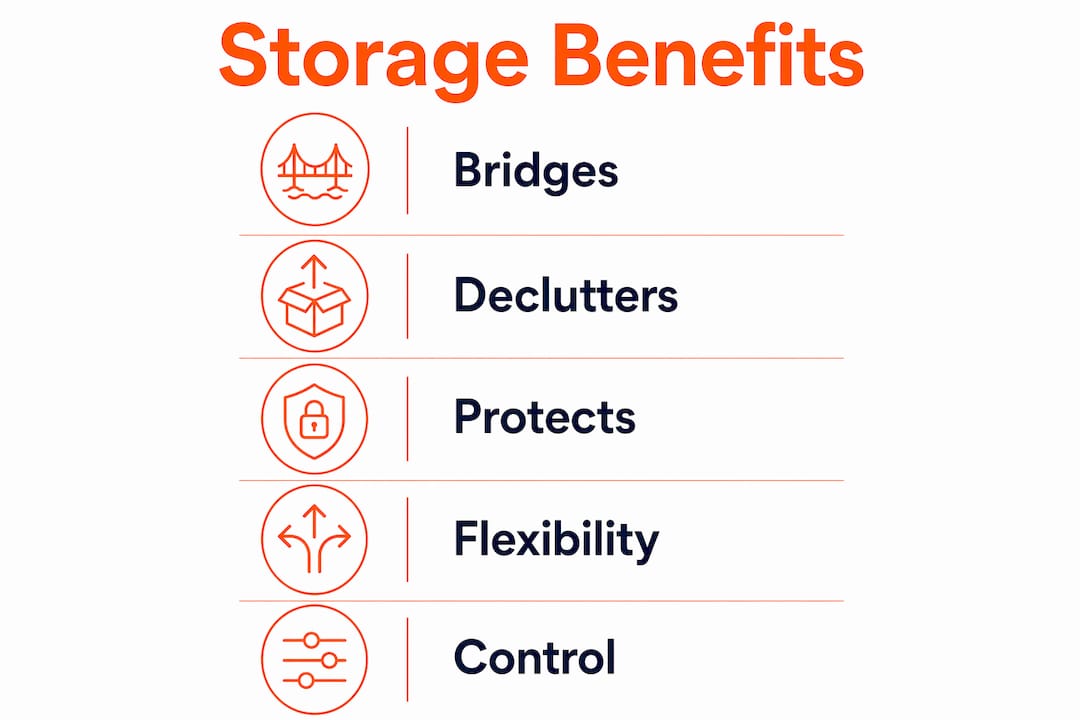
Storage solves a problem that most movers only discover once they are deep into the process: the timeline rarely lines up perfectly. Property chains break, completion dates shift, and the gap between leaving one home and entering another can stretch from days into weeks. Storage gives you a secure place to put your belongings while that gap resolves itself.

The industry term for this function is “bridging storage,” and it is the most common reason people book a unit during a relocation. Beyond chain breaks, storage also supports staged moves, where you move possessions in phases rather than all at once. This approach reduces moving-day chaos significantly.
Temporary storage solutions also serve movers who need to declutter before putting their home on the market. Estate agents consistently advise that a less cluttered property photographs better and sells faster. Placing surplus furniture and personal items into storage before viewings is one of the most cost-effective ways to improve a sale.
Why do you need storage during a house move?
Several distinct scenarios make storage not just useful but necessary. Recognising which applies to your move helps you plan the right type and duration.
- Chain delays and completion gaps. Completion dates shift frequently in UK property chains. Storage lets you vacate your current home on time without needing to move directly into the new one.
- Home renovations. If your new property needs work before it is liveable, storage protects your furniture and belongings from dust, paint, and damage during the renovation period.
- Decluttering for sale. Placing non-essential items into storage before viewings creates a cleaner, more appealing home without permanently disposing of possessions.
- Long-distance and staged moves. Moving across the country or internationally often requires a staging point. Storage acts as that midpoint, holding items securely while logistics are finalised.
- Reducing moving-day pressure. Storage creates breathing room by allowing you to move non-urgent items ahead of the main removal day, leaving only the essentials for the final push.
Each of these scenarios shares a common thread: storage gives you control over a process that would otherwise control you.
What types of storage are available and how do you choose?
Two main categories of storage suit house movers: self-storage and managed storage. Each has clear strengths, and the right choice depends on how often you need access and how long you plan to store.
Self-storage offers high accessibility and personal control. You rent a unit, hold the key, and visit whenever you need. This suits movers who expect to retrieve items regularly during the transition period. Managed storage, by contrast, involves a company collecting, warehousing, and returning your belongings on request. It offers stronger security and less physical effort, making it the better choice for longer-term or gap-bridging storage where frequent access is not needed.
| Feature | Self-storage | Managed storage |
|---|---|---|
| Access | Anytime, direct | By appointment |
| Security | CCTV, individual alarms | High-security warehouse |
| Best for | Frequent retrieval | Long-term or chain-break storage |
| Cost | Pay per unit size | Pay per volume or item |
| Effort | You load and unload | Company handles logistics |
Pro Tip: Choose a unit with ground-level or drive-up access. Drive-up units shorten carrying distances, reduce physical strain, and lower the risk of damage during loading and unloading.
Choosing the correct unit size is equally important. Overestimating unit size leads directly to wasted expenditure. Many facilities offer digital space calculators that estimate the right size based on the number of rooms you are storing. Use one before you book.
Security features matter too. Professional facilities offer 24/7 CCTV, individual alarms, and tailored insurance. Check whether your home contents insurance covers goods held in storage. Many standard home policies exclude stored items, so a specialist storage insurance policy may be necessary.
How do you plan and use storage effectively during your move?
Effective storage use starts before you pack a single box. A clear plan saves time, reduces damage, and makes retrieval far less stressful.
-
Create a detailed inventory. A well-prepared inventory separates items you will need during the transition from those going into long-term storage. Label every box clearly with its contents and destination room. This prevents you from unpacking half a unit to find one item.
-
Pack with protection in mind. Use quality packing materials: double-walled boxes for heavy items, bubble wrap for fragile pieces, and furniture covers for upholstered items. Place heavier boxes at the bottom of stacks and lighter ones on top. This protects both the items and the structure of the stack.
-
Leave a walkway in the unit. Strategic loading means placing frequently needed items near the front and leaving a clear path through the unit. You will not need to move everything to reach one box.
-
Align your storage timeline with your removals schedule. Book your storage start date to coincide with your vacating date, not your completion date. This gives you a buffer if completion is delayed.
-
Plan your unpacking pace. Do not rush to empty the storage unit the moment you get the keys to your new home. Use the unit as a controlled release point, bringing items in stages as each room is ready.
Pro Tip: If you are storing furniture between moves, disassemble large pieces where possible. Flat-packed furniture takes up less space, reduces the risk of damage, and is easier to carry.
What mistakes should you avoid when using storage during a move?
Several common errors cost movers time and money. Knowing them in advance is the simplest way to avoid them.
- Booking a unit that is too large. Overestimating your storage needs is the most frequent financial mistake. Use a digital space calculator and measure large furniture before booking.
- Ignoring access type. Ground-level access is not a luxury. Upper-floor units accessed by lifts add time and effort to every visit, and lifts are not always available for large items.
- Assuming your home insurance covers stored goods. Many home policies exclude goods once they leave your property. Verify your coverage before moving anything into storage, and arrange specialist cover if needed.
- Booking storage and removals separately. Using the same company for removals and storage reduces the number of times your belongings are handled. Every additional handling event increases the risk of damage. Bundled services also tend to be more cost-efficient.
- Leaving financial planning too late. Storage costs vary by location, size, and duration. London units command a premium. Factor storage into your moving budget from the start, not as an afterthought when costs have already escalated.
The financial case for planning early is clear. With removal costs averaging around £709 before storage is added, unplanned storage bookings can push total relocation costs well above what most movers budget for.
Key takeaways
Storage is the single most effective tool for managing timing gaps, protecting belongings, and reducing moving-day pressure during a house relocation.
| Point | Details |
|---|---|
| Storage bridges timing gaps | Use it to vacate on time when completion dates shift or chains break. |
| Choose the right storage type | Self-storage suits frequent access; managed storage suits long-term or chain-break needs. |
| Size and access type matter | Use a digital calculator to avoid overspending, and prioritise ground-level units. |
| Inventory before you pack | Label every box by contents and access priority to avoid unnecessary unpacking. |
| Bundle removals and storage | Using one company reduces handling, lowers damage risk, and often cuts overall cost. |
Storage is a timeline tool, not just a holding space
Most people think of storage as a last resort. In my experience, the movers who use it most effectively treat it as the first decision they make, not the last.
The difference is mindset. When you book storage at the same time as your removals, you build a buffer into your plan from day one. That buffer absorbs the delays, the chain collapses, and the renovation overruns that catch so many movers off guard. You are not reacting to problems. You are already ahead of them.
What I have seen repeatedly is that movers who skip storage to save money often spend more in the end. Emergency storage bookings, rushed decisions, and damaged belongings from cramped moving-day conditions all carry a cost. The modest outlay for a well-planned storage period is almost always recovered in reduced stress, fewer damaged items, and a more controlled unpacking process.
Think of storage as buying time. In a property market where completion dates are rarely guaranteed and chains are fragile, time is the most valuable thing you can have.
— Far
How Metrocitymoves supports your move with secure storage
Metrocitymoves has been helping Londoners relocate since 2010, and storage has always been part of that service. Whether you need a short-term buffer during a chain delay or a longer arrangement while renovations are completed, Metrocitymoves offers secure, insured storage across London, covering all 32 boroughs and every postcode within the M25.
Booking your house removal and storage together with Metrocitymoves means your belongings are handled by the same trained team from start to finish. That continuity reduces handling, protects your possessions, and keeps your move on schedule. Get in touch with Metrocitymoves for a personalised quote that covers both your removal and your storage needs in one plan.
FAQ
What does storage do in a house move?
Storage provides a secure, temporary space that bridges timing gaps between vacating one property and moving into another. It reduces moving-day pressure and protects belongings during chain delays or renovations.
How long do people typically use storage when moving house?
Duration varies by circumstance. Short-term use covers days to a few weeks for chain breaks, while renovation-related storage can run for several months. Book flexibly so you can extend if needed.
Is self-storage or managed storage better for a house move?
Self-storage suits movers who need frequent access to their belongings. Managed storage is the better choice for longer periods or when security is the priority and regular access is not required.
Does home insurance cover items in storage?
Many standard home contents policies exclude goods held in storage units. Verify your policy before moving items, and arrange specialist storage insurance if your existing cover does not apply.
Should I use the same company for removals and storage?
Using one company for both reduces the number of times your belongings are handled, which lowers the risk of damage and typically improves logistical efficiency throughout your move.