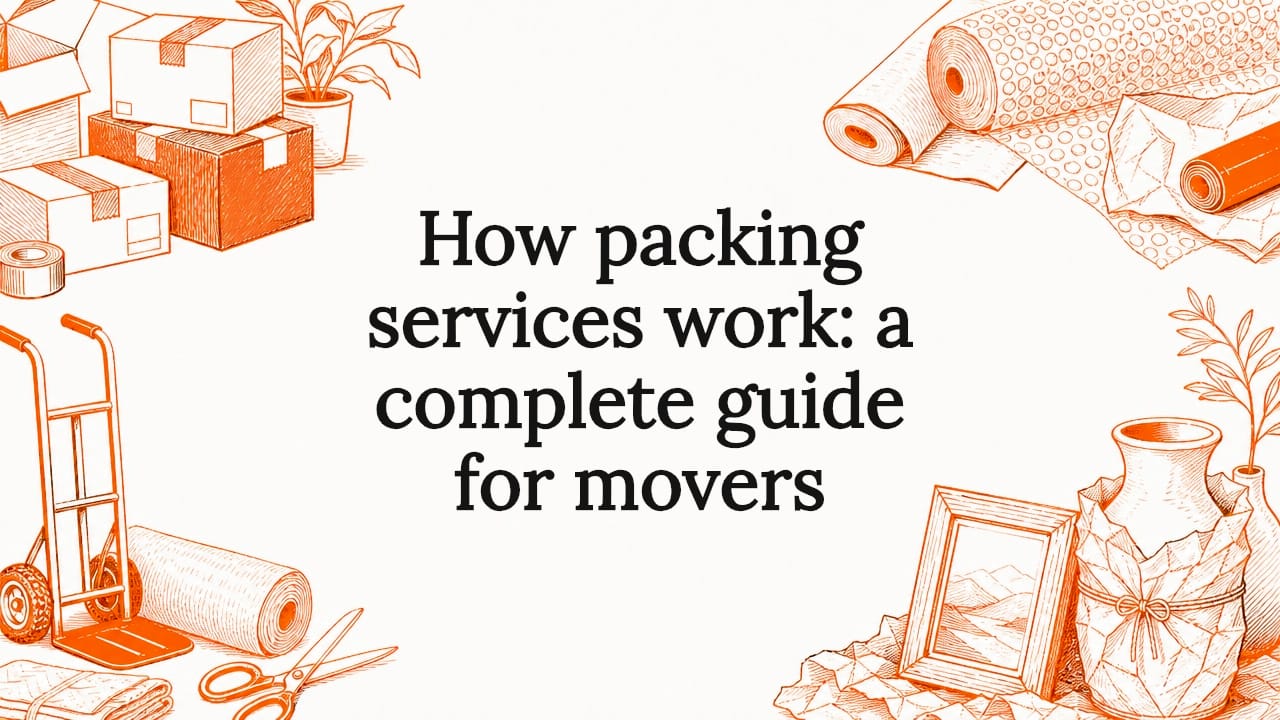
How packing services work: a complete guide for movers
Professional packing services are defined as a combination of trained labour, specialist materials, and systematic organisation designed to prepare your belongings safely for transport. Understanding how packing services work before you book removes uncertainty and helps you choose the right level of support. Whether you are moving a studio flat or a four-bedroom house in London, the process follows a clear structure. Metrocitymoves has delivered professional packing across all 32 London boroughs since 2010, and this guide draws on that experience to explain exactly what you can expect.
How does a full packing service work?
A full packing service covers every item in your home, from kitchen crockery to bedroom wardrobes, using a room-by-room method that keeps belongings organised throughout the move. Specialist materials include double-walled cartons, wardrobe boxes, bubble wrap, foam padding, and packing paper selected to match each item’s fragility. Nothing is wrapped in a one-size-fits-all approach. A wine glass gets tissue paper and a cell box; a flat-screen television gets a purpose-built carton with foam inserts.

The packing team works through each room methodically, wrapping items, filling boxes to the correct weight, and sealing them securely. Clear labelling by room and contents is applied to every box, and a written inventory is created so you know exactly what is in each carton. That inventory becomes your reference point on moving day and during unpacking.
Here is what a full packing service typically includes:
- Double-walled boxes in multiple sizes for books, kitchenware, and general household items
- Wardrobe cartons that allow clothes to travel on hangers without creasing
- Bubble wrap and foam for fragile items including glassware, ceramics, and electronics
- Furniture covers and blankets to protect upholstered pieces and wooden surfaces during loading
- Packing paper for filling void space and preventing movement inside boxes
- Room-by-room labelling with box numbers cross-referenced to an inventory sheet
Pro Tip: Ask your packing team to label the top and one side of every box. When boxes are stacked in the van or a storage unit, you can read the label without moving anything.
A full packing service for a four-bedroom home may involve 80–120 boxes and saves between one and three days of manual packing labour. That time saving alone is significant for anyone managing a job, children, or a tight completion date.
What is a partial packing service, and how does it differ?
Partial and fragile-only packing services offer a flexible middle ground between full professional packing and doing everything yourself. A partial service covers selected rooms or specific categories of items, typically those you identify as high risk or too time-consuming to pack safely on your own.
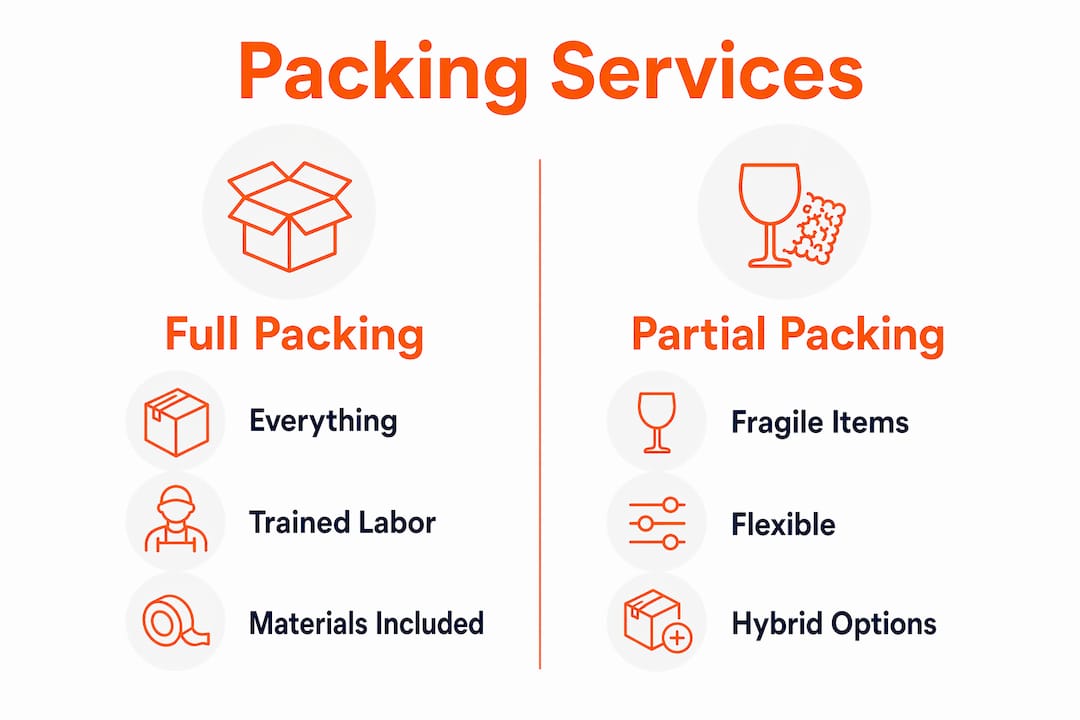
Fragile-only packing focuses exclusively on delicate objects: glassware, artwork, mirrors, antiques, and electronics. The packing team handles those items with specialist materials while you pack everything else. This is the most common entry point for movers who are confident with general packing but not with wrapping a large oil painting or a chandelier.
| Service type | What is covered | Best suited for |
|---|---|---|
| Full packing | Every item in the property | Busy households, large homes, time-poor movers |
| Partial packing | Selected rooms or categories | Movers who want help with specific areas |
| Fragile-only packing | Delicate and high-value items only | Confident self-packers with valuable possessions |
| Materials supply only | Boxes and materials delivered, client packs | Budget-conscious movers who prefer full control |
A hybrid packing model allows you to pack non-fragile items yourself while professionals handle high-risk belongings, and this approach can cut service costs significantly compared to full packing. Many households find this the most practical balance between cost and peace of mind. You handle the books and the linen; the team handles the china cabinet and the artwork.
Supply-only options are also available, where a removal company delivers boxes, tape, and packing paper to your door and you do all the packing yourself. This suits movers on a tight budget who have the time and confidence to pack correctly. The trade-off is that self-packed boxes may not meet insurer requirements for fragile item claims.
What are the benefits of using professional packing services?
Professional packing reduces damage claims compared to self-packed moves. The reason is straightforward: trained packers use double-walled boxes and correct wrapping techniques that most people simply do not replicate at home with supermarket boxes and old newspaper.
The benefits extend well beyond damage prevention:
- Time savings. A professional team packs a three-bedroom house in a single day. Most households take a week or more doing it themselves around work and family commitments.
- Organised unpacking. Labelled boxes and inventories mean your first evening in the new home is far less chaotic. You find the kettle, the bed linen, and the children’s essentials without opening every box.
- Insurance protection. Many insurers require professional packing of high-value and fragile items for a transit insurance claim to be valid. This is not small print to overlook. If a self-packed box of antiques is damaged in transit, your claim may be rejected.
- Physical relief. Packing is physically demanding. Handing it over removes the risk of injury and exhaustion before moving day even begins.
- Decision fatigue removed. Choosing what to wrap, how to wrap it, and which box size to use for hundreds of items is mentally draining. Professionals make those decisions quickly and correctly.
“Packing services are best understood as an investment in the condition of your belongings and the quality of your first week in a new home. The cost is real, but so is the value of arriving with everything intact and knowing where it all is.”
Pro Tip: Book your packing team for the day before moving day whenever possible. Packing and loading on the same day creates pressure and increases the chance of rushed decisions.
What do packing services not cover?
Professional packers operate under legal and safety restrictions that prevent them from handling certain categories of item. Knowing these exclusions before your packing day avoids last-minute problems.
The following items are excluded from professional packing services due to safety, legal, and liability restrictions:
- Hazardous materials. This includes aerosols, paint, solvents, cleaning chemicals, and anything flammable or corrosive. These cannot travel in a removal van under UK transport regulations.
- Perishable food. Fresh and frozen food cannot be packed or transported. Consume, donate, or dispose of perishables before packing day.
- Live plants. Plants are excluded because they can harbour pests, may not survive transit conditions, and create liability issues if they damage other items.
- Medications and valuables. Passports, jewellery, cash, and prescription medicines should travel with you personally. No reputable removal company will pack these.
- Pets. Pets require specialist transport arrangements entirely separate from your removal.
Your responsibility is to sort and remove excluded items before the packing team arrives. Create a separate box or bag for items you will carry personally, and label it clearly so it does not get mixed in with the rest. Communicate any unusual items to your packing coordinator in advance so there are no surprises on the day.
How to choose and prepare for a packing service
Choosing the right packing service starts with an honest assessment of your household. Consider the number of rooms, the volume of fragile items, your budget, and the time you have available before moving day.
When evaluating a packing service, check the following:
- Written quote. Get a fixed-price quote that specifies materials, labour, and the exact scope of work. Vague quotes lead to disputes.
- Insurance coverage. Verify that the company holds Goods in Transit and Public Liability insurance before signing anything. Ask directly what the per-item limit is and whether professional packing is a condition of any claim.
- Materials included. Confirm that boxes, tape, bubble wrap, and wardrobe cartons are included in the price, not charged separately on the day.
- Team size and timing. Ask how many packers will attend and how long the job is estimated to take. A two-person team packing a four-bedroom house needs a full day.
- Special item handling. If you have a piano, large artwork, or antique furniture, ask specifically whether the team has experience with those items.
Preparing your home before the packing team arrives makes a real difference. Clear access to all rooms, defrost the freezer at least 24 hours in advance, and set aside any items you are carrying personally. Communicate clearly with the team leader about priorities, for example, which boxes need to be loaded last so they come off the van first.
Pro Tip: Walk through each room with the team leader before packing begins. Point out fragile items, items you are keeping separate, and anything with sentimental value that needs extra care. Five minutes of communication prevents hours of regret.
Understanding packing quality standards before you book helps you ask the right questions and recognise a professional operation when you see one.
Key takeaways
Professional packing services combine specialist materials, trained labour, and systematic organisation to protect your belongings and reduce the physical and logistical burden of moving.
| Point | Details |
|---|---|
| Full packing covers everything | Teams use double-walled boxes, wardrobe cartons, and bubble wrap across every room. |
| Partial packing saves money | A hybrid approach cuts costs by letting you pack low-risk items while professionals handle fragile goods. |
| Insurance depends on packing method | Many insurers require professional packing for fragile item claims to be valid. |
| Exclusions apply | Hazardous materials, perishables, live plants, and valuables are not packed by removal teams. |
| Preparation matters | A written quote, confirmed insurance, and a pre-pack walkthrough prevent most moving day problems. |
Why I think most movers underestimate packing services
Most people I speak to treat packing as the part of the move they will “just do themselves.” They budget carefully for the removal van, they research insurance, and then they spend three frantic evenings before moving day surrounded by bin bags and mismatched boxes. The packing is always the part that unravels.
The insight that changes the calculation is the insurance point. Professional packing status directly affects whether insurers pay out on damaged or broken items. Most movers do not find this out until after something breaks. At that point, the money saved on self-packing looks very different.
My honest recommendation is the hybrid approach for most households. Pack your books, your clothes, and your kitchen staples yourself. Hand over the china, the artwork, the electronics, and anything irreplaceable to a professional team. You save money, you stay in control of the process, and the items that genuinely cannot be replaced are protected properly.
The other thing movers consistently overlook is timing. Packing and loading on the same day is a false economy. Book the packing team for the day before. You will arrive at your new home less exhausted, and the loading team will work faster because everything is already boxed and labelled.
For guidance on packing fragile items correctly, the detail matters more than most people expect.
— Far
Metrocitymoves packing services: what to expect
Metrocitymoves has provided professional packing services across London since 2010, working with trained teams and quality materials on every job.
Full and partial packing options are available, with materials included in every quote. The team holds Goods in Transit and Public Liability insurance, so your belongings are covered from the moment packing begins. Every job starts with a fixed-price written quote that specifies labour, materials, and scope, with no hidden charges on the day. Whether you need a full pack for a four-bedroom house or fragile-only support for a flat move, Metrocitymoves tailors the service to your situation. Get a free quote for professional house removals and packing in London, or explore the full range of packing service options to find the right fit for your move.
FAQ
What does a full packing service include?
A full packing service includes all materials (boxes, bubble wrap, wardrobe cartons, and packing paper), trained labour to pack every room, clear labelling by room and contents, and a written inventory. Teams use a room-by-room approach to keep belongings organised throughout the move.
How much does a professional packing service cost in the UK?
Professional packing services typically add £200–£600 to UK household removal costs, depending on property size, volume of items, and the quantity of fragile goods. A four-bedroom home sits at the higher end of that range.
Will my insurance cover items packed by professionals?
Many insurers require professional packing of high-value and fragile items for a transit claim to be valid. Always confirm insurance conditions with your removal company before booking.
What items will a packing service not pack?
Packing teams do not pack hazardous materials, perishables, or live plants due to legal, safety, and liability restrictions. Valuables such as passports, jewellery, and cash should always travel with you personally.
Is a partial packing service worth it?
A partial or fragile-only packing service is worth it for movers who are confident packing general items but want professional handling for delicate or high-value belongings. This hybrid approach can cut costs significantly compared to a full packing service while still protecting the items that matter most.