How to dismantle furniture before removal
Dismantling furniture before removal is the single most effective way to protect your belongings, your home, and the people carrying your things. Methodical disassembly reduces injury risk by 40% and cuts floor damage incidents, which account for 22% of all moving-related reports. That is a significant margin, and it comes down entirely to preparation. Beds, wardrobes, dining tables, and large sofas are the items most commonly requiring disassembly before a move. Getting this right before moving day saves time, reduces stress, and keeps your removal team working efficiently from the moment they arrive.
Why you should dismantle furniture before removal
The professional term for this process is furniture disassembly, and it covers everything from removing bed slats to fully breaking down a wardrobe into its component panels. Most people treat it as an afterthought. That is where things go wrong.
Most UK removal company quotes do not include furniture dismantling by default. It is typically a separately charged service that requires prior confirmation. If you assume your removal team will handle it on the day, you risk delays, unexpected costs, and a crew standing idle while you hunt for an Allen key.
Furniture that has been properly broken down is also far easier to carry through narrow hallways, down stairs, and into a van. A double wardrobe standing at full height is a liability in a tight London stairwell. Laid flat as panels, it moves in minutes. The practical difference is enormous.
What tools do you need to prepare furniture for moving?
Good preparation starts with the right tools. Using the correct tools including screwdrivers, Allen keys, cordless drills, and rubber mallets is the foundation of safe disassembly. The wrong tool forces fittings, strips screws, and damages panels that would otherwise survive the move intact.
The basic toolkit
Gather these before you start:
- Screwdrivers (flathead and Phillips, multiple sizes)
- Allen keys (metric set; most flat-pack furniture uses 4mm or 5mm)
- Cordless drill with a screwdriver bit set
- Rubber mallet for separating press-fit joints without cracking panels
- Pliers for stubborn bolts or cam locks
- Labelled zip-lock bags for screws, bolts, and small fittings
- Permanent marker and masking tape for labelling panels and bags
- Padded blankets or bubble wrap for protecting surfaces and glass panels
Organising your hardware
Labelled bags and dedicated parts boxes keep hardware organised and prevent loss during transit. Use one bag per item of furniture, label it clearly with the item name and room, and tape the bag directly to one of the panels. This one habit alone saves hours during reassembly.
Pro Tip: Before you start on any piece of furniture, empty every drawer and shelf completely. Loose items shift during disassembly and can crack panels or cause injury.
Tools by furniture type
| Furniture type | Primary tools needed | Notes |
|---|---|---|
| Bed frame | Allen keys, screwdriver | Slats and side rails first |
| Wardrobe | Cordless drill, Allen keys, rubber mallet | Remove doors and shelves before panels |
| Dining table | Screwdriver, Allen keys, pliers | Legs usually bolt directly to the underframe |
| Sofa | No tools usually required | Remove legs with a screwdriver or by hand |
| Bookcase | Screwdriver, rubber mallet | Shelves out first, then back panel |
How to take apart furniture step by step
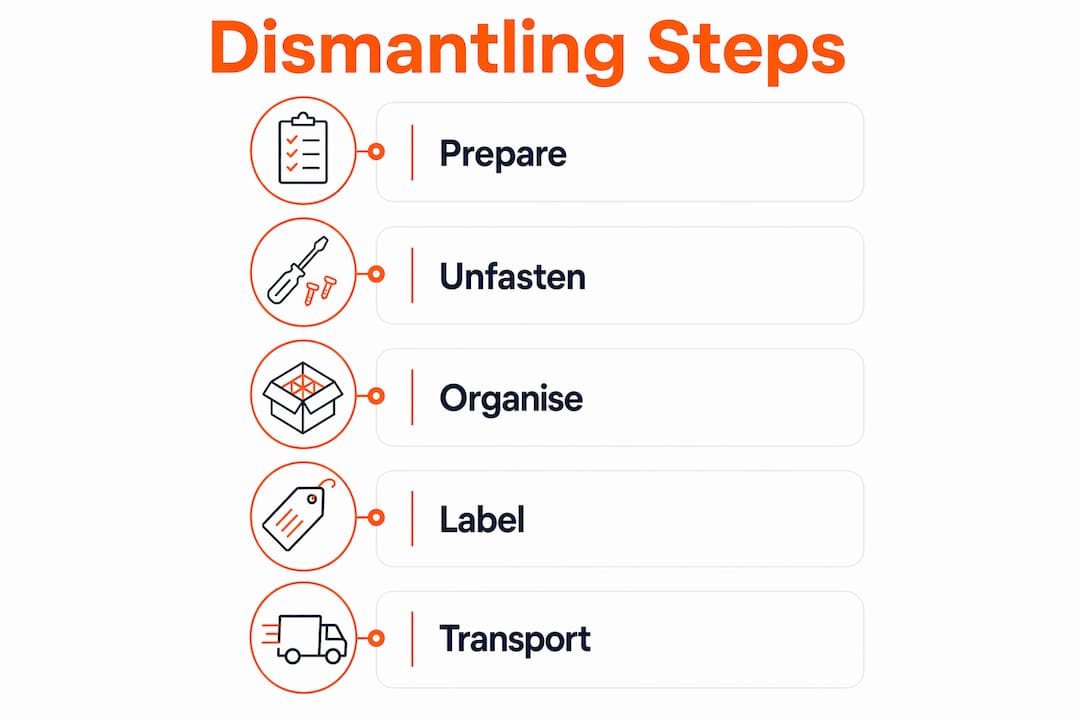
Furniture disassembly follows a consistent logic regardless of the item: remove the outermost, most detachable parts first, then work inward to the structural core. Rushing this sequence is the most common cause of damage.
Step-by-step disassembly process
-
Photograph everything first. Taking photographs before dismantling provides a visual reference that simplifies reassembly and reduces mistakes. Photograph connection points, cable routing on desks, and the arrangement of shelves inside wardrobes.
-
Remove doors and drawers. Lift doors off hinges or unscrew them fully. Pull out all drawers and stack them separately. This reduces weight and prevents swinging panels from causing injury.
-
Clear shelves and internal fittings. Remove shelf pins and store them in a labelled bag. Take out any internal rails, hanging rods, or mirror fixings.
-
Detach legs and feet. Table and sofa legs usually unscrew by hand or with a screwdriver. Keep all legs together in one bag or bundle them with tape.
-
Separate the main panels. For wardrobes and bed frames, this means disconnecting the cam locks or bolts holding side panels to the top and base. Work with a second person where possible. Panels are heavy and awkward alone.
-
Protect fragile surfaces. Wrap glass shelves and mirrored panels individually in bubble wrap. Padded covers and corner guards prevent scratches and structural damage during transport. Never use adhesive tape directly on finished wood or mirror surfaces.
-
Label every panel. Use masking tape and a marker to write the item name and panel position (e.g., “wardrobe left side”) on each piece. This is tedious but pays back every minute during reassembly.
Pro Tip: Tape the relevant hardware bag to the largest panel of each item. When reassembly starts, the screws are always exactly where they need to be.
Disassembly complexity by furniture type
| Furniture | Complexity | Typical time | Key challenge |
|---|---|---|---|
| Bed frame | Low | 15–20 mins | Slat storage and bolt count |
| Wardrobe | Medium | 30–45 mins | Panel weight and alignment |
| Dining table | Low | 10–15 mins | Stripped leg bolts on older pieces |
| Corner sofa | Medium | 20–30 mins | Identifying joining clips |
| Bespoke fitted unit | High | 60+ mins | Risk of irreversible damage |
For guidance on packing fragile items alongside dismantled furniture, the same principles of wrapping and labelling apply throughout.
When should you not dismantle furniture yourself?
Not every piece of furniture should be taken apart by a non-specialist. Recognising the limits of DIY disassembly prevents costly damage and potential injury.
Furniture that requires professional handling
- Antique and bespoke pieces. Older joinery uses techniques like mortise-and-tenon or wooden dowels that do not respond well to modern tools. Forcing these joints causes irreversible splitting.
- Fitted and built-in furniture. Removal companies typically exclude fitted or fixed furniture such as built-in shelving from standard dismantling services. These items are often fixed to walls with structural fixings and require a carpenter, not a removal crew.
- Furniture with missing fixings. If a piece is already missing bolts or has damaged cam locks, attempting disassembly risks the whole structure collapsing. Get a professional assessment first.
- Very heavy or oversized items. Items like solid oak dining tables or large corner sofas require two or more people and proper lifting technique. Attempting these alone risks back injury and panel damage.
- Furniture with integrated electrics. Desks with built-in cable management or beds with USB charging ports need the electrics disconnected safely before any disassembly begins.
“The most common mistake we see is someone forcing a panel apart because they cannot find the last fixing. There is always a last fixing. Stop, look again, and find it before applying any force. One cracked panel can write off an entire wardrobe.”
If you are unsure whether a piece is safe to dismantle, the safest decision is to ask a professional. Metrocitymoves offers a furniture assembly service covering all brands and flat-pack items, which includes dismantling as part of a managed move.
How to coordinate dismantling with your removal company
Clear communication with your removal company before moving day is the difference between a smooth operation and an expensive delay. Discovering furniture that needs dismantling only on moving day slows the move significantly and raises costs. Avoid this entirely by confirming arrangements in writing at least a week before.
Questions to ask your removal company
- Does your quote include furniture dismantling, or is it charged separately?
- Which items will your team dismantle, and which are excluded?
- Do you supply tools, or should I have my own ready?
- Is reassembly included, or is it an additional charge?
- What happens if reassembly runs over the agreed time?
The last question matters more than most people realise. Reassembly usually takes longer than dismantling because it requires precise alignment and adjustment, sometimes extending beyond working hours with extra charges possible. Building this into your budget and timeline avoids a nasty surprise at the end of moving day.
Practical steps before the team arrives
- Walk through your home and list every item that needs dismantling.
- Note which items you have already dismantled and which you need the team to handle.
- Keep all labelled hardware bags accessible, not buried in boxes.
- Confirm in writing which items the removal company will and will not dismantle.
Pro Tip: Send your removal company a simple list or photos of items requiring dismantling when you book. Advance identification of furniture needing disassembly allows the team to allocate the right people and equipment, making the whole day run faster.
Good organisation on your end also protects you if anything goes wrong. Written confirmation of what is included creates a clear record for any insurance or damage claims. Check whether your removal company holds Goods in Transit cover and whether it applies to items they dismantle themselves.
For moves involving a large number of items, consider whether a man and van or a full removal company better suits the scale of your job. The answer often depends on how much dismantling is involved.
Key takeaways
Dismantling furniture before removal reduces injury risk by 40%, prevents floor damage, and avoids the delays and extra costs that come from leaving disassembly to moving day.
| Point | Details |
|---|---|
| Disassembly reduces risk | Methodical dismantling cuts injury risk by 40% and lowers floor damage incidents significantly. |
| Quotes rarely include dismantling | Confirm with your removal company in writing whether dismantling is included or charged separately. |
| Tools and labelling are critical | Use Allen keys, screwdrivers, and labelled bags to keep hardware organised and reassembly fast. |
| Photograph before you start | Photos of connection points and shelf arrangements prevent costly reassembly mistakes. |
| Some furniture needs a professional | Fitted units, antiques, and structurally compromised pieces should not be dismantled without specialist help. |
What I have learned from watching hundreds of moves go wrong
The clients who have the smoothest moving days are almost never the ones with the least furniture. They are the ones who prepared two weeks in advance, not two hours before the van arrived.
The single most damaging habit I see is last-minute dismantling. Someone decides at 7am on moving day that the wardrobe “probably needs to come apart.” The removal team is standing in the hallway. Nobody has the right Allen key. The hardware ends up in a carrier bag with no labels. Six weeks later, the wardrobe gets reassembled with three bolts missing and a cracked side panel.
Good labelling is not glamorous, but it is the most underrated skill in the entire moving process. I have seen a well-labelled set of panels reassembled in under 20 minutes. I have seen an unlabelled wardrobe take three hours and two arguments. The difference is a permanent marker and five minutes of attention.
My honest advice: treat dismantling as a separate project with its own deadline. Give yourself at least three days before the move to work through the larger items. Start with the beds and wardrobes, as these take the longest and cause the most problems when rushed. Leave the sofa legs and dining table until the day before.
For complex or bespoke pieces, do not guess. Call a professional. The cost of a specialist visit is always less than the cost of replacing a damaged antique or a bespoke fitted unit.
— Far
Metrocitymoves: professional removal and dismantling in London
Metrocitymoves has been helping Londoners move since 2010, and furniture dismantling is one of the most common requests the team handles. Whether you need a full wardrobe broken down or just want reassurance that your removal crew knows what they are doing, the service is built around making moving day as straightforward as possible.
The team covers all 32 London boroughs and every postcode within the M25. Dismantling and reassembly can be included as part of a house removal in London, with fixed-price quoting so there are no surprises on the day. If you have a complex piece that needs specialist attention, Metrocitymoves also offers a standalone furniture assembly service covering all brands and flat-pack items. Get in touch for a free quote and confirm your dismantling requirements in writing before moving day.
FAQ
Does dismantling furniture before a move really reduce damage?
Yes. Methodical disassembly reduces on-site injury risk by 40% and floor damage accounts for 22% of moving-related incidents, making preparation one of the most effective ways to protect your home.
Do removal companies dismantle furniture as standard?
No. Most UK removal company quotes do not include dismantling by default. Always confirm in writing whether dismantling is included or charged as a separate service before booking.
What tools do I need to dismantle flat-pack furniture?
A metric Allen key set, a Phillips and flathead screwdriver, a cordless drill, and a rubber mallet cover the majority of flat-pack furniture. Add labelled zip-lock bags for hardware storage.
How long does furniture disassembly take?
A standard bed frame takes 15–20 minutes and a wardrobe takes 30–45 minutes. Bespoke or fitted units can take 60 minutes or more and are best left to a professional.
Should I dismantle furniture myself or leave it to the removal team?
Dismantle standard flat-pack items yourself in advance to save time and cost. Leave antiques, fitted units, and structurally compromised pieces to a professional removal or assembly service.
Recommended
- How to store furniture between moves: a practical guide | Metro City Moves
- How office furniture removals work: a complete guide | Metro City Moves
- What is a furniture pickup service? Your 2026 guide | Metro City Moves
- Furniture Assembly London | All Brands & Flat-Pack | Metro City Moves | Metro City Moves