How man and van handles awkward items: a practical guide
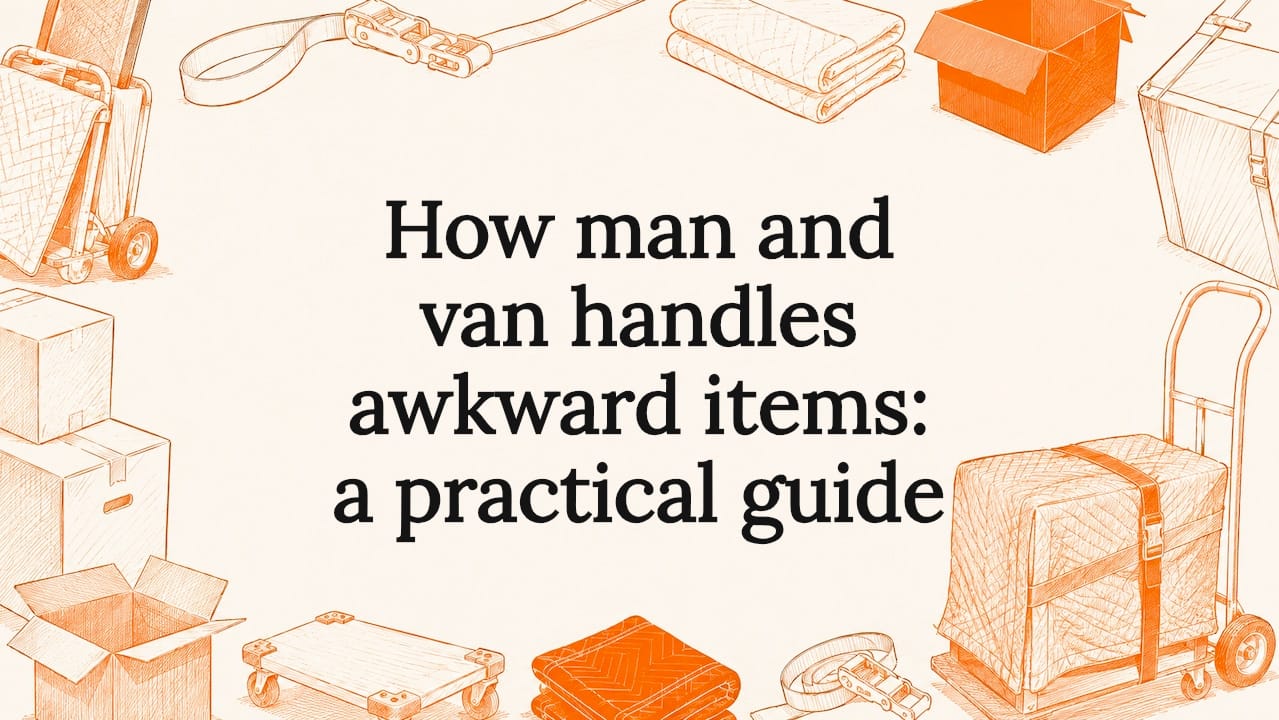
A man and van service handles awkward items by combining mechanical aids, team-lifting protocols, and professional packing techniques to move bulky or irregular loads safely. In the removals industry, “awkward items” is the working term for anything that lacks handles, exceeds standard weight thresholds, or cannot fit through a doorway without modification. This includes sofas, washing machines, wardrobes, pianos, and large appliances. Understanding how man and van handles awkward items before your move helps you prepare properly, avoid damage, and choose a crew that works to UK safety standards. Metrocitymoves has been managing exactly these challenges across London since 2010.
What challenges do man and van teams face with awkward items?
Awkward items create three distinct problems: weight, shape, and access. A standard double wardrobe can weigh over 100kg. A washing machine has no external grip points. A corner sofa will not fit through a standard doorway without being tilted or partially disassembled. Each of these requires a different response from the crew.
Weight is the most regulated challenge. HSE guidelines INDG143 set manual handling thresholds at 25kg for men and 16kg for women, but these figures apply only to ideal conditions. Anything heavier, or any item that is awkward to grip, triggers the requirement for mechanical aids or team lifting. That threshold is lower than most people expect. A single drawer unit filled with books can exceed it.
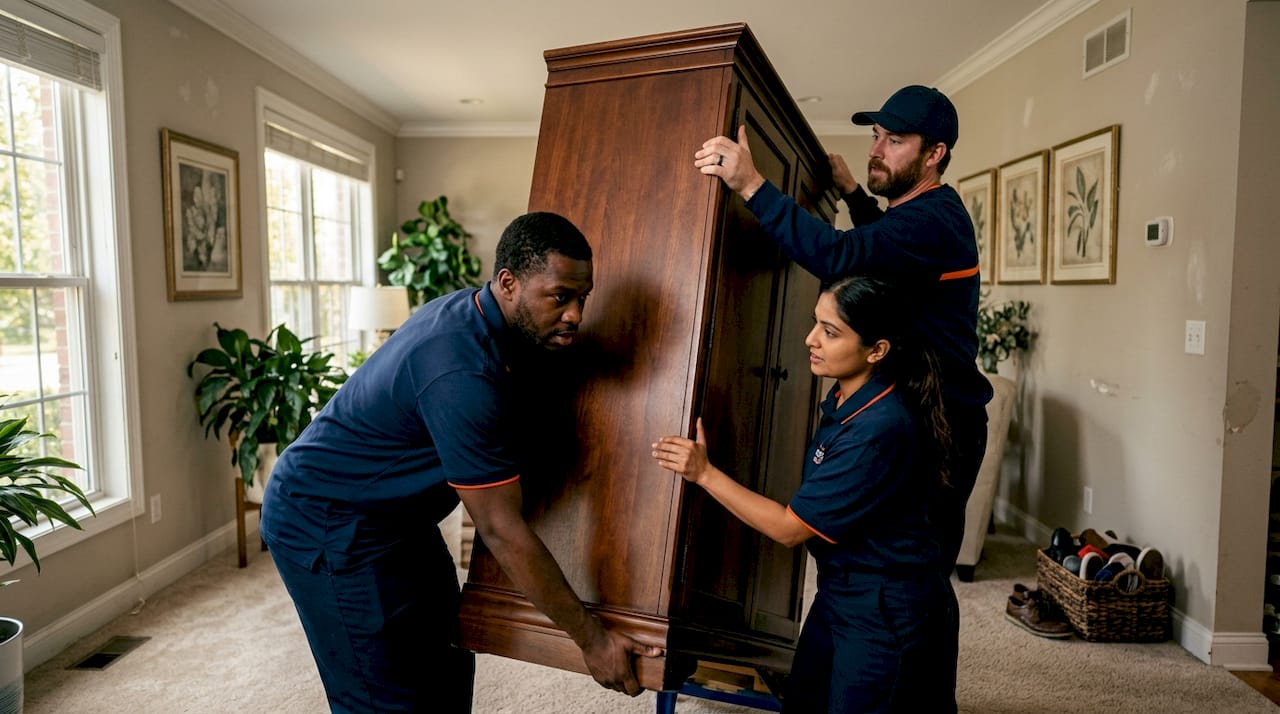
Shape compounds the problem. Items without handles force the crew to hold loads away from the body, which increases spinal forces dramatically and raises injury risk. Twisting while carrying multiplies that risk further. Professional crews are trained to recognise these risks before they lift, not after.
Access is the third variable. Narrow staircases, low ceilings, tight landings, and small lifts all restrict how a load can be carried. A professional crew plans the route before the move begins. They identify pinch points, measure doorways where necessary, and decide in advance whether an item needs to be dismantled.
Preparation steps a professional crew takes include:
- Walking the full route from the item’s current position to the van
- Selecting the correct equipment (trolley, dolly, furniture straps, or pallet truck) for each item
- Deciding which items need partial dismantling before the move starts
- Briefing the team on communication signals for coordinated lifts
- Assessing load size relative to van capacity, since what load size means in a man and van context directly affects how many trips or how large a vehicle is needed
Pro Tip: Tell your crew about every awkward item before moving day. A sofa that needs to go up a spiral staircase requires different equipment than one going up a straight flight. Surprises on the day cost time and increase risk.
How do professional crews pack and protect awkward items?
Packing awkward items is not simply a matter of wrapping them. The goal is to prevent movement, absorb shock, and protect surfaces that cannot be replaced cheaply. Thorough packing practices including bubble wrap, padding, and correctly sized boxes drastically reduce damage to fragile and awkward items during transit.
The most common packing errors that cause damage are:
- Overloading boxes. A box that is too heavy will buckle under stacking pressure. Distribute weight across multiple boxes rather than concentrating it.
- Insufficient padding. Items that shift inside a box during transit will chip, crack, or break. Fill every gap with packing paper, foam, or soft fabric.
- Mixing heavy with fragile items. A cast-iron pan placed on top of glassware will cause breakage. Keep categories separate and label clearly.
- Rushing the packing process. Common packing errors that cause damage almost always trace back to time pressure. Packing done quickly is packing done poorly.
- Skipping labelling. A box marked “Kitchen – Fragile – Glassware” tells the crew exactly how to handle and stack it. Clear box labelling reduces accidents and improves unloading efficiency at the other end.
For furniture with glass components, such as display cabinets or dining tables, each glass panel should be wrapped individually in bubble wrap and taped securely. Moving blankets go over the entire piece to protect corners and edges. Shelving units benefit from having shelves removed and wrapped flat before the carcass is moved.
For fragile deliveries specifically, the crew uses a double-box method for the most delicate items: the item sits in a snug inner box, which then sits inside a larger outer box with padding filling the gap between them. This is standard practice for packing fragile items and absorbs impact from multiple directions.
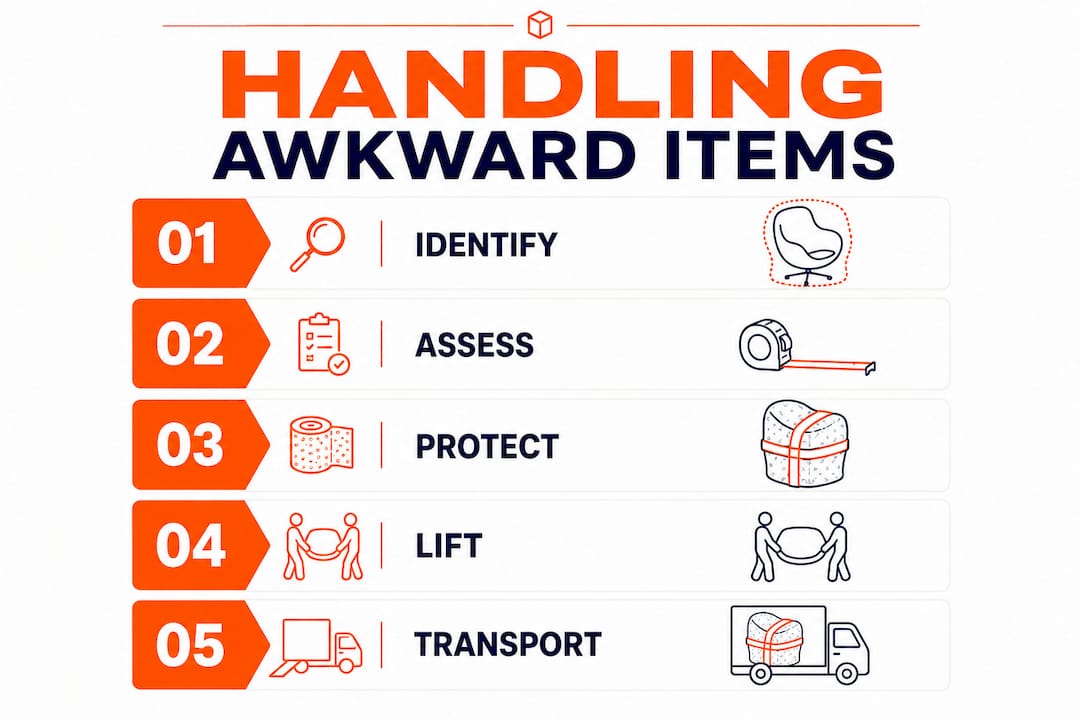
Pro Tip: Wrap items individually before placing them in a box. Two plates wrapped separately and placed together will survive a move that would destroy two plates placed unwrapped side by side.
What mechanical aids and lifting techniques do crews use?
Mechanical aids are the single biggest factor in safe handling of heavy items. Dollies, pallet trucks, and furniture straps reduce injury risk and improve efficiency when moving bulky loads. A good crew arrives with the right equipment already loaded in the van.
| Equipment | Best used for | Key benefit |
|---|---|---|
| Four-wheel dolly | Wardrobes, fridges, washing machines | Removes lifting entirely for flat-floor sections |
| Sack truck (two-wheel) | Boxes, appliances, upright items | Fast movement over short distances |
| Furniture straps | Sofas, mattresses, large tables | Distributes weight across two people evenly |
| Pallet truck | Very heavy appliances, commercial items | Handles loads well above manual thresholds |
| Shoulder dolly harness | Awkward shapes with no grip points | Keeps load close to body, reduces spinal strain |
Lifting technique matters as much as equipment. The HSE INDG143 standard is clear: keep the load close to the body, avoid twisting, and never stoop with a heavy load. When a crew member holds a load away from the body, spinal forces increase to a level that causes injury even with loads well below the 25kg threshold. Professional teams practise these techniques as a matter of routine, not as an afterthought.
Team lifting requires verbal coordination. One person calls the lift, and the team moves together on a count. This prevents one person taking the full load while another is still positioning. For very heavy items such as handling appliances like American-style fridge freezers, a three-person lift with a dolly on standby is standard.
How do crews move awkward items through tight spaces?
Tight spaces are where most move-day damage occurs. A sofa that fits through a doorway in theory can still cause damage if the crew rushes or misjudges the angle. Professional crews use a combination of sliding and pivoting techniques and planned routes to reduce this risk.
The standard approach to tight spaces includes:
- Partial dismantling before the move begins. Removing bed legs, cabinet doors, and shelves significantly reduces the risk to both the item and the crew. A wardrobe that is 220cm tall becomes manageable when the top section separates from the base.
- Measuring before committing. A crew that measures a doorway and then measures the item avoids the scenario where a sofa is halfway through a frame and stuck. This is basic preparation that separates professional crews from inexperienced ones.
- Pivoting on corners. Sofas and mattresses are moved through doorways at an angle, then pivoted once the leading edge clears the frame. This technique requires clear communication between the person at the front and the person at the rear.
- Using furniture sliders on hard floors. Sliders placed under heavy items allow the crew to reposition without lifting, which is particularly useful in tight hallways where a full lift is not possible.
- Calling for an additional crew member. Some items genuinely require three people to move safely through a tight stairwell. A professional service will tell you this in advance rather than attempting a two-person move that puts the item and the crew at risk.
Parking access also affects how awkward items are handled. A van that cannot park close to the entrance means a longer carry distance, which increases fatigue and risk. Metrocitymoves plans parking logistics as part of the pre-move assessment, particularly for London addresses where parking restrictions can complicate access significantly.
Key takeaways
Professional man and van crews handle awkward items safely by combining HSE-compliant lifting techniques, mechanical aids, and thorough preparation before any item leaves the floor.
| Point | Details |
|---|---|
| Weight thresholds matter | HSE INDG143 sets 25kg for men and 16kg for women as manual handling limits; heavier items require aids or team lifts. |
| Partial dismantling reduces risk | Removing doors, legs, and shelves before moving protects both the item and the crew in tight spaces. |
| Packing prevents transit damage | Individual wrapping, correct box sizes, and clear labelling stop breakages before they happen. |
| Mechanical aids are non-negotiable | Dollies, furniture straps, and pallet trucks lower injury risk and improve efficiency on heavy loads. |
| Route planning is preparation | Measuring doorways, planning parking, and walking the route before lifting prevents most move-day problems. |
What I have learned from watching crews handle awkward items
The single biggest mistake I see clients make is waiting until moving day to mention the difficult items. A piano in the front room, a gym-quality treadmill in the spare bedroom, or a solid oak dining table that was assembled inside the house and cannot leave without being taken apart. These are not surprises a crew can absorb on the day without consequences for time, cost, and safety.
The second mistake is underestimating what “awkward” actually means. Clients often focus on weight, but shape is frequently the harder problem. A 15kg piece of glass shelving is not heavy. Getting it down a spiral staircase without cracking it is the challenge. Professional crews think in terms of grip, angle, and clearance, not just kilograms.
What I find genuinely reassuring about working with trained removal teams is that they have seen every version of this problem before. They know that a corner sofa in a Victorian terrace will almost certainly need to go out of a window. They know that a washing machine needs to be secured with transit bolts before it moves, or the drum will be damaged in transit. That institutional knowledge is what you are paying for, and it is worth considerably more than the hourly rate suggests.
If you are planning a move with awkward items, do one thing before you book: walk through your home and list every item that is either very heavy, very large, or has no obvious grip points. Send that list to your removal company before they quote. A crew that asks follow-up questions about those items is a crew that knows what it is doing. A crew that does not ask is one to approach with caution.
— Far
Moving awkward items in London? Metrocitymoves has the right crew and kit
Metrocitymoves has handled awkward items across all 32 London boroughs since 2010, working to HSE INDG143 standards on every job. The team arrives with dollies, furniture straps, pallet trucks, and moving blankets as standard. Packing services are available for fragile and bulky items that need professional preparation before transit.
Whether you are moving a single large appliance or a full household with oversized furniture, the right crew makes the difference between a smooth move and a stressful one. For professional house removals across London, get in touch with Metrocitymoves for a fixed-price quote that accounts for every awkward item on your list.
FAQ
What counts as an awkward item in a man and van move?
An awkward item is any load that is difficult to grip, exceeds standard weight thresholds, or cannot pass through a doorway without modification. Common examples include sofas, washing machines, wardrobes, pianos, and large appliances.
How does a man and van crew handle heavy items on stairs?
Crews use furniture straps, sack trucks, and coordinated team lifts to manage heavy items on stairs. HSE INDG143 guidelines require mechanical aids for loads above 25kg, and stairwells often trigger the use of shoulder dolly harnesses to keep the load close to the body.
Do man and van crews dismantle furniture before moving it?
Yes. Partial dismantling of furniture such as removing bed legs, cabinet doors, and shelves is standard practice. It reduces the size of the load, protects the item, and makes movement through tight spaces significantly safer.
What does load size mean in a man and van context?
Load size refers to the total volume and weight of items being moved, which determines the van size and number of crew members required. A larger or heavier load may require a Luton van rather than a standard transit, and may need an additional crew member for safe handling.
How should I prepare awkward items before the crew arrives?
List every awkward item and share it with your removal company before the move date. Remove any loose parts you can safely dismantle yourself, such as shelves and drawers. Clear the route from each item to the front door, and check whether parking restrictions near your property need a suspension permit arranged in advance.