Role of man and van in office moves: 2026 guide

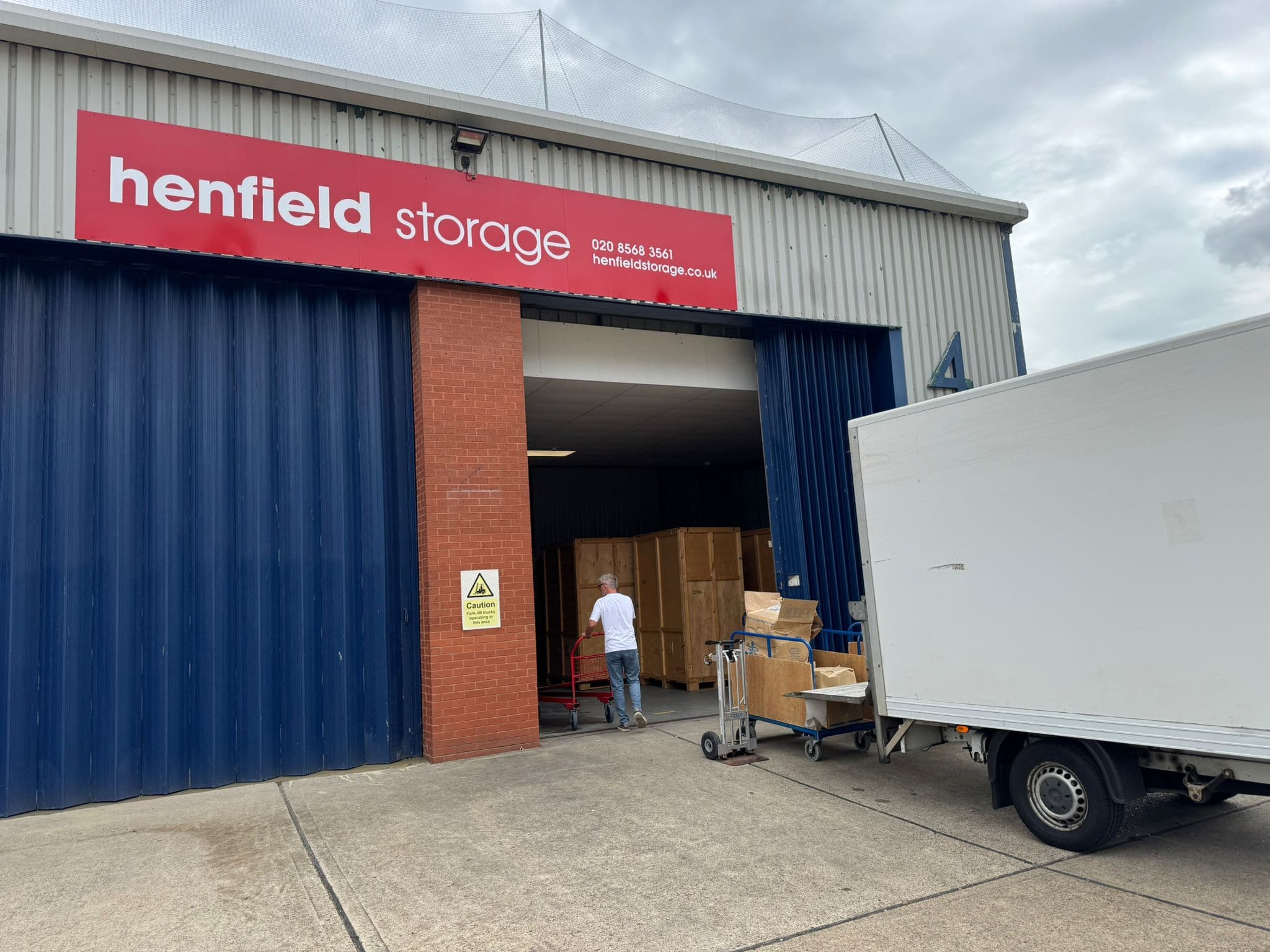
A man and van service is defined as a single driver with a van, sometimes joined by a helper for heavier or more time-sensitive loads. The role of man and van in office moves is to fill the gap between a basic courier run and a full-scale removal operation, giving businesses a practical, cost-controlled option for smaller or staged relocations. This service suits office managers who need to move a satellite location, clear a floor, or shift equipment without booking a large crew and multiple vehicles. Metrocitymoves has delivered this type of service across all 32 London boroughs since 2010, and the pattern is consistent: the right-sized service saves time, money, and disruption.
What types of office moves are best suited to man and van?

Man and van services are best suited for loads that fit into one or two van trips. That covers a wide range of real business scenarios, and understanding where this service excels helps you avoid either over-spending on a full removal team or under-resourcing a move that needs more capacity.
The clearest use cases include:
- Studio or single-room offices. A small team relocating from a serviced office or co-working space rarely generates enough volume to justify a large crew. One mover and a transit van handles the job cleanly.
- Satellite office equipment transfers. Moving monitors, docking stations, filing boxes, and compact furniture between two locations is a typical man and van job. It does not require a lorry or a four-person team.
- Staged or partial moves. Some businesses relocate in phases to keep operations running. A man and van handles each phase without the overhead of booking a full removal team every time.
- Tight access locations. Narrow streets, restricted loading bays, and multi-storey car parks with height restrictions make large vehicles impractical. A transit van fits where a lorry cannot.
- Urgent or same-day moves. When a lease ends unexpectedly or a new office becomes available at short notice, a man and van can respond quickly. The role of man and van in same day moves is precisely this: fast deployment with minimal lead time.
Man and van services work well for documents, monitors, compact furniture, and fast-turnaround projects. Where they are less suitable is in full office clearances involving large quantities of heavy furniture, server racks, or specialist equipment requiring a coordinated multi-vehicle operation.
How does man and van affect office move logistics and planning?
The logistics of a man and van office move differ from a full removal in ways that directly affect your planning. Understanding these differences helps you set realistic timelines and avoid costly surprises on the day.
-
Crew and vehicle size. The baseline setup is one mover plus van, with a helper added when the load demands it. That crew size is efficient for light to medium loads but requires honest assessment of your volume before booking.
-
Number of trips. A single transit van has a fixed capacity. If your load exceeds one trip, the total move time extends accordingly. Multiple trips can increase fatigue and the overall duration of the working day, so factor this into your schedule rather than discovering it on the day.
-
Scheduling flexibility. Man and van providers typically offer faster response and easier scheduling than larger removal companies. That flexibility is a genuine operational advantage for businesses with tight windows, such as moves that must happen outside business hours or over a weekend.
-
Minimising downtime. The smaller operational footprint of a man and van means less disruption to the building, the lift schedule, and neighbouring tenants. For office removals in London, this matters. Building managers often impose strict loading bay windows, and a single van is far easier to coordinate within those constraints.
-
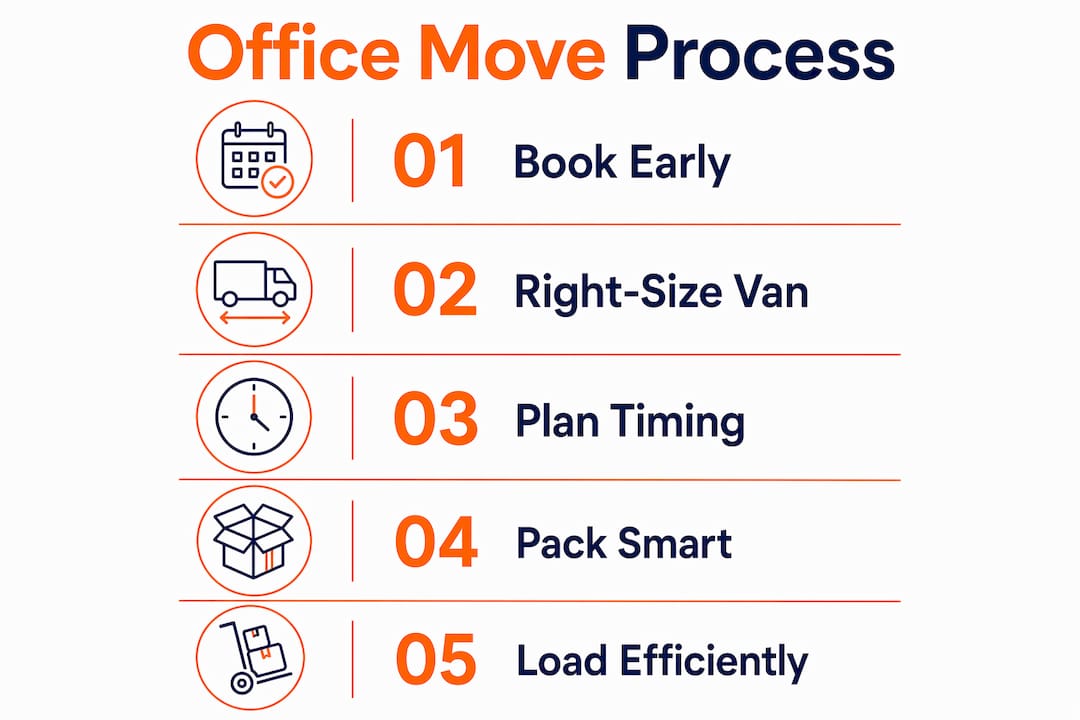
Load management. Packing items into clearly labelled boxes before the mover arrives is the single biggest time-saver. Every minute spent sorting on the day costs you money and extends the move.
Pro Tip: Book a man and van for early morning or late afternoon to avoid peak lift and loading bay congestion in commercial buildings. A 7am start often saves two hours compared to a 10am slot.
What are the health and safety considerations for office moves?
Health and safety during an office move is a legal responsibility, not a preference. Employers retain full duty under UK health and safety law to manage risks during a move, whether the work is carried out by employees or contractors. The Health and Safety Executive (HSE) sets the framework, and office move project leads are expected to apply it.
Key considerations include:
- Manual handling risks. Lifting heavy monitors, filing cabinets, and stacked boxes without proper technique causes injury. Professional movers use trolleys and dollies and receive manual handling training. If your staff are helping, they need the same briefing.
- Clear role assignment. Confusion about who is responsible for which items leads to accidents. Assign a single point of contact on your side who liaises with the mover and controls access to the space.
- Hazard control in the new premises. Employers must account for safety from the moment of occupation, including fire escape routes, asbestos awareness, and welfare facilities. Do not wait until the move is complete to check these.
- Staff involvement. If employees carry their own equipment, your duty of care still applies. Brief them on safe lifting, provide trolleys, and do not allow individuals to carry loads that require two people.
Viewing an office move as a risk-managed project rather than a logistics exercise improves both safety and efficiency. Clear role allocations and hazard controls are not bureaucracy. They are the difference between a smooth move and a reportable incident.
The HSE guidance on manual handling applies directly to office relocations. Ignoring it does not reduce your liability. It increases it.
What practical tips help you choose the right man and van provider?
Choosing the wrong provider for an office move costs more than the price difference. A provider without proper insurance or credentials can leave your business exposed to liability, damaged equipment, and wasted time. These checks take minutes and protect you from significant risk.
- Verify insurance. Properly insured and authorised providers protect your business from liability if items are damaged or an injury occurs on site. Ask directly for proof of Goods in Transit cover and public liability insurance before confirming any booking.
- Check waste carrier registration. If your office move involves disposing of old furniture, broken equipment, or general office waste, your provider must hold a registered waste carrier licence. Hiring unregistered operators for waste removal breaches your duty of care under UK environmental law and can result in fines. The role of man and van in office clearance is only legal when the provider is registered.
- Assess vehicle size against your load. A standard transit van suits most small office moves. If your load is borderline, ask the provider to confirm vehicle capacity before the day. Discovering mid-move that a second trip is needed disrupts your timeline and increases cost.
- Read verified reviews. Look for reviews that mention commercial moves specifically, not just house or flat removals. Office moves have different access requirements, timing pressures, and equipment sensitivities.
- Ask about fixed-price quoting. Hourly rates suit simple moves. Fixed-price quotes protect you when access is complicated or the job takes longer than expected. Ask directly which pricing model applies to your move.
Pro Tip: Always confirm the provider’s parking plan before the move day. In central London, a mover without a clear plan for loading bay access or a parking permit can lose an hour before a single box is lifted.
Key takeaways
Man and van services are the most practical and cost-effective option for small, staged, or urgent office relocations, provided you verify insurance, waste carrier registration, and vehicle capacity before booking.
| Point | Details |
|---|---|
| Right-size your service | Man and van suits loads fitting one or two van trips; larger moves need a full removal team. |
| Plan for multiple trips | A single van has fixed capacity; factor extra trips into your timeline and budget from the start. |
| Health and safety is your responsibility | UK law requires employers to manage manual handling risks even when contractors carry out the work. |
| Verify credentials before booking | Always confirm Goods in Transit insurance and waste carrier registration before any office clearance work. |
| Flexibility is a genuine advantage | Man and van providers respond faster and fit tighter access windows than large removal operations. |
What I have learned from watching office moves go wrong
Office managers consistently underestimate two things: the volume of their load and the complexity of the new building’s access. I have seen moves planned for a single van trip arrive on the day with twice the expected volume. The mover then faces a choice between making an unplanned second trip or leaving items behind. Neither outcome is acceptable when a business needs to be operational the next morning.
The second pattern I see repeatedly is businesses skipping the waste carrier check. They assume any man and van provider can take away old chairs and broken monitors. That assumption is wrong and legally consequential. The duty of care for business waste sits with the business, not the contractor. If your provider dumps waste illegally, you share the liability.
What actually works is treating the man and van booking as a project with a brief, not a phone call. Send the provider a written summary of the load, the access conditions at both ends, and the time window you are working within. A good provider will flag problems before the day. A poor one will not, and you will find out at the worst possible moment.
The role of man and van in small moves and partial relocations is genuinely valuable when the service is matched correctly to the job. The mistake is assuming that because the service is simpler, the planning can be too.
— Far
Metrocitymoves: professional man and van for office relocations
Metrocitymoves has been handling office removals across London since 2010, covering every borough and postcode within the M25. The man and van service is fully insured, with Goods in Transit cover and public liability insurance included as standard, not as an optional extra.
Whether you are relocating a satellite office, clearing a floor, or managing a staged move across multiple weeks, Metrocitymoves provides fixed-price quoting, flexible scheduling, and a crew that understands the access and timing demands of commercial buildings. Get in touch for a no-obligation quote tailored to your office move requirements.
FAQ
What is the role of man and van in office moves?
Man and van services handle small to medium office relocations using a single driver and van, sometimes with a helper added. The service fills the gap between courier runs and full removal operations, suited to loads fitting one or two van trips.
When does a man and van become insufficient for an office move?
A man and van is insufficient when the load requires more than two van trips, involves heavy server equipment, or demands a coordinated multi-vehicle operation. In those cases, a full office removal team is the appropriate choice.
Do man and van providers need waste carrier registration for office clearances?
Yes. Any provider removing business waste, including old furniture or broken equipment, must hold a registered waste carrier licence. Hiring an unregistered operator breaches your duty of care under UK environmental law and can result in fines for your business.
Who is responsible for health and safety during a man and van office move?
The employer retains legal responsibility under UK health and safety law, even when contractors carry out the physical work. The HSE requires move project leads to assign clear roles and control manual handling hazards throughout the relocation.
Can man and van services handle same-day or short-notice office moves?
Yes. The flexibility and smaller operational footprint of man and van services make them well suited to urgent or short-notice relocations. Providers can typically respond faster and navigate tighter scheduling windows than larger removal companies.