What is a removal company: a simple UK guide

A removal company is a professional service that plans, packs, transports and (where needed) stores your household or business belongings when you relocate. Unlike hiring a van yourself or booking a single driver, a professional removals firm provides a trained crew, appropriate vehicles, packing materials and insurance cover, all coordinated around your move date.
At a glance:
- Core services: pre-move survey, packing, loading, secure transport, unloading and placement, with optional storage and specialist handling
- UK trust signal: BAR membership means a firm has submitted to a Trading Standards approved Code of Practice, a payment guarantee scheme and free independent dispute resolution
When to hire a removal company vs alternatives: A full-service removal company suits moves with significant volume, specialist items, or tight timelines. A man-and-van works for smaller loads or single-room moves. DIY is only realistic for very light moves where you can borrow a suitable vehicle and have willing help.
Table of Contents
- What services does a removal company offer?
- How does a removal company work? The typical timeline
- How much does a removal company cost in the UK?
- What insurance and liability cover should you expect?
- How do you choose a removal company you can trust?
- What should you prepare before moving day?
- When do you need a specialist removal service?
- Is hiring a removal company worth it?
- UK removals in 2026: industry snapshot and trust signals
- Key takeaways
- The thing most people get wrong about hiring a removal company
- Moving in London? Metro city moves can help
- Useful UK sources and further reading
- FAQ
What services does a removal company offer?
Professional removal companies structure their work around three phases: pre-move planning, physical move execution, and post-move services. Within those phases, the range of services is wider than most people expect.
Core services you can expect from any reputable firm:
- Pre-move survey (in-person or video call) to assess volume, access and equipment needs
- Professional packing using appropriate materials, including double-walled boxes and specialist wrapping
- Furniture disassembly and reassembly (flat-pack and freestanding)
- Loading, secure transport and unloading with placement to room
- Short- and long-term secure storage where required
Optional and specialist services:
- Full-pack or part-pack service (company packs everything, or just fragile items)
- Fragile crating for fine art, antiques and high-value electronics
- Piano and specialist instrument moves
- End-of-tenancy cleaning and house clearance
- Long-distance removals across the UK
Service tiers run from labour-only (you supply the van) through transport-only, part-pack and full white-glove service. The right tier depends on your budget, the volume of goods and how much time you have.
Pro Tip: Always request a pre-move survey before accepting a quote. A survey lasting 30–60 minutes lets the crew assess narrow stairwells, parking constraints and any items needing specialist handling. Skipping it is the single most common reason for on-the-day surcharges.
How does a removal company work? The typical timeline
Understanding the process helps you plan properly and avoid last-minute surprises. Here is how a professional move typically unfolds.

1. Pre-move survey and quotation The company visits (or conducts a video survey) to assess volume, access and any specialist requirements. This produces an accurate, itemised written quote.
2. Booking and logistics Once you accept the quote, you confirm the date and pay a deposit. The company allocates crew, vehicles and packing materials.
3. Packing preparation (starting ~4 weeks out) Industry guidance recommends beginning packing and logistics planning up to four weeks before moving day. This covers decluttering, sourcing boxes, labelling and packing non-essentials.
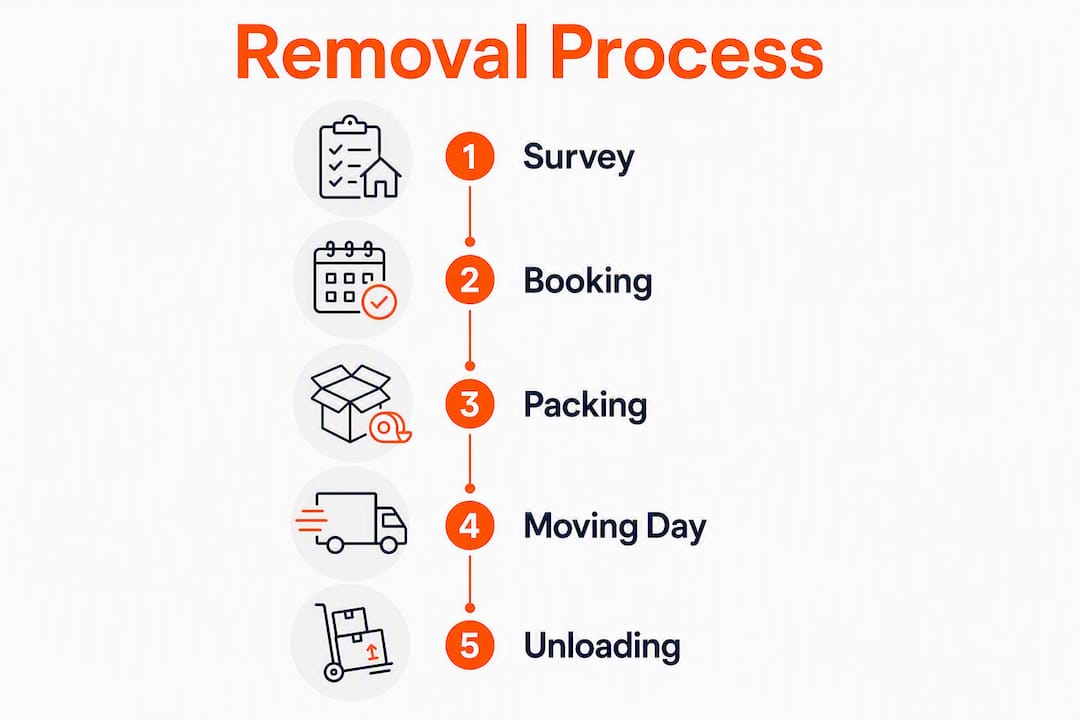
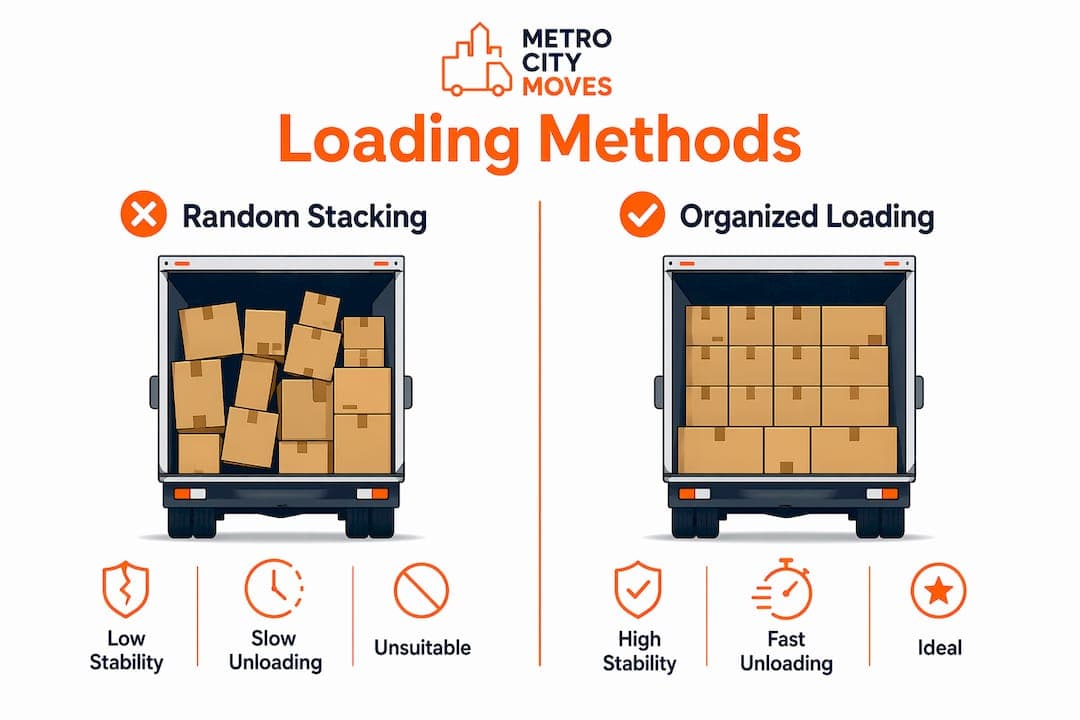
4. Moving day: arrival and loading The crew arrives at the agreed time, carries out a condition check of key items, then loads the vehicle systematically, with heavier items first and fragile goods protected.
5. Transport and unloading The vehicle travels to the new address. The crew unloads and places items in the rooms you specify, reassembles furniture where agreed and removes packing materials if included in the service.
6. Post-move services Where storage is part of the plan, goods are transferred to a secure facility. Unpacking services, if booked, follow unloading.
A note on timing: the UK removals sector carries out approximately 1.2 million household moves each year, which means reputable firms book up quickly, particularly on Fridays and at month-end. Booking four to six weeks ahead is advisable for peak dates.
How much does a removal company cost in the UK?
Costs vary considerably depending on distance, volume and service level. The figures below reflect typical UK ranges.

| Move type | Typical price range | Notes |
|---|---|---|
| 3-bed local move (under 30 miles) | £700–£1,400 | Labour, transport and basic materials |
| — | — | Transport and crew only |
| Full-service move | — | Includes packing, materials and specialist handling |
Primary cost drivers:
- Volume: more rooms and heavier items require larger vehicles and longer crew time
- Distance: fuel, tolls and crew hours increase with mileage; long-distance removals from London carry additional logistics costs
- Access: high-rise flats, narrow staircases and restricted parking all add time
- Packing: a full-pack service adds cost but reduces breakage risk considerably
- Timing: weekend and peak-season dates (summer, month-end) typically attract higher rates
- Specialist items: pianos, antiques and large appliances require additional crew or equipment
What to check in any quote: confirm whether the price includes packing materials, insurance cover, access fees, parking permits and, for London moves, ULEZ and Congestion Charge costs. A quote that omits these can look attractive but end up more expensive on the day.
What insurance and liability cover should you expect?
The UK removal market is largely unregulated, which makes understanding what cover a company carries all the more important before you sign anything.
Types of cover typically offered:
- Goods in Transit insurance: covers loss or damage to your belongings during loading, transport and unloading
- Public liability insurance: covers damage to the property (walls, floors, door frames) caused by the crew
- Declared-value or door-to-door cover: an upgraded option where you declare the full replacement value of your goods
What to check before you book:
- The excess on any claim (some policies carry a per-item excess that makes small claims uneconomical)
- Exclusions for fragile items, pre-existing damage or items packed by the owner
- The claims process and timeframe for resolution
- Whether the company holds a Certificate of Insurance (COI) you can request in writing
Items to keep with you on moving day:
- Passports, driving licences and other identity documents
- Medications and medical equipment
- Jewellery, cash and irreplaceable sentimental items
- Laptops, tablets and essential chargers
Pro Tip: A written, itemised quote and a documented condition report on collection day are your strongest tools if anything is damaged or goes missing. Firms that resist providing either are worth walking away from.
BAR members must carry adequate insurance and adhere to an audited code of practice, which gives you a clear route to independent dispute resolution if something goes wrong.
How do you choose a removal company you can trust?
With the market largely unregulated, vetting a firm properly before you commit is the most important step you can take.
Questions to ask directly:
- Are you a member of BAR or AIM, and can I see your current certificate?
- What Goods in Transit and public liability cover do you carry, and what are the excesses?
- Will you provide a written, itemised quote after a survey?
- What is your cancellation and rescheduling policy, and is my deposit protected?
- Who will be on the crew, and do you sub-contract any part of the move?
- What vehicles will you use, and are they suitable for my volume?
Red flags to watch for:
- Vague verbal quotes with no written breakdown
- Refusal to conduct a pre-move survey for anything larger than a single room
- Cash-only payment requests with no receipt
- No verifiable trade-body membership or reviews
- Pressure to pay the full amount upfront before the move date
Comparing quotes fairly: request quotes from at least two firms and ensure each covers identical service levels. A quote that excludes packing materials, parking costs or specialist handling is not comparable to one that includes them.
Where to verify reputation: check Trustpilot and Google Reviews for independent feedback, and confirm BAR or AIM membership directly on the trade body’s website. Which? Trusted Traders verification adds a further layer of consumer protection.
What should you prepare before moving day?
Starting your preparation early reduces delays, avoids extra charges and makes the day itself far less stressful. The BAR recommends beginning packing and logistics planning up to four weeks before your move date.
In the final week:
- Confirm the crew’s arrival time and your contact number with the company
- Book a parking suspension or loading bay permit if required (your local council handles this)
- Reserve lift access in your building if applicable, and notify neighbours
- Defrost the fridge and freezer at least 24 hours before the move
- Disassemble flat-pack furniture where the crew will not be doing so
- Label every box with its destination room and a brief contents note
On moving day:
- Keep an essentials box with you (not on the van): overnight clothes, toiletries, phone chargers, snacks, kettle, mugs and a basic toolkit
- Keep all important documents, valuables and medications on your person
- Do a final walk-through of every room, cupboard and loft space before the van leaves
- Confirm the inventory with the crew leader and sign off the condition report
Pro Tip: Pack an overnight essentials box the night before and load it into your own car or keep it aside. If the van is delayed or you cannot access the new property immediately, you will have everything you need without unpacking boxes.
When do you need a specialist removal service?
Some moves require more than a standard crew and a transit van. Knowing when to ask for a specialist prevents damage, delays and unexpected costs.
Common specialist moves:
- Pianos: upright and grand pianos require specialist boards, straps and trained handlers; standard crews are not equipped for them
- Antiques and fine art: bespoke crating, climate-controlled transport and declared-value insurance are standard requirements
- High-value electronics: server racks, large-screen displays and studio equipment need anti-static packaging and careful handling
- Motorcycles: require wheel chocks, tie-down straps and a vehicle with a ramp
- High-rise flat moves: lift bookings, floor protection and permit coordination add complexity that experienced flat removal specialists manage routinely
Why specialists differ from standard crews: they carry bespoke equipment, hold specific insurance for the item category and have trained handlers who understand the risks. For packing fragile items, the difference in technique and materials is significant.
When requesting a specialist service, ask for a dedicated survey rather than a phone estimate. The survey determines whether specialist equipment, additional crew members or a different vehicle type are needed, all of which affect the final price and scheduling.
Is hiring a removal company worth it?
For most moves involving more than a couple of rooms, a professional removal company saves time, reduces breakage risk and removes the logistical burden from you. Whether it is worth the cost depends on your specific situation.
Reasons to hire a professional firm:
- Trained crew reduces the risk of damage to furniture, walls and floors
- Goods in Transit insurance provides financial protection that a hired van does not
- A full-service firm handles packing, loading, transport and unloading as a single coordinated operation
- Specialist handling for pianos, antiques and high-rise access is included where needed
- You avoid the physical effort and the risk of injury from lifting heavy items
Reasons some people opt for a man-and-van or DIY:
- Lower upfront cost for very small moves (single room or studio flat)
- Greater flexibility on timing for last-minute or same-day moves
- Simpler logistics when volume is genuinely minimal
The honest trade-off: a cheap man-and-van often excludes insurance, professional packing and specialist crew time. For a full comparison, the decision usually comes down to volume, risk tolerance and how much of your own time and effort you are prepared to invest.
Decision tip: if you have more than one bedroom’s worth of furniture, any specialist items, or a tight completion deadline, a professional removal company is almost always the more cost-effective choice once you factor in the risk of damage and the time involved.
UK removals in 2026: industry snapshot and trust signals
The UK removals sector is active and competitive, but it remains largely unregulated, which means the quality gap between firms can be wide.
| Signal | What it means for you |
|---|---|
| BAR membership | Audited Code of Practice, payment guarantee and free independent dispute resolution |
| AIM membership | Voluntary standards including written quotes, adequate insurance and a complaints procedure |
| Which? Trusted Traders | Independent verification of trading standards and customer service quality |
| Google / Trustpilot reviews | Real customer feedback; look for volume and recency, not just the star rating |
UK market scale: the removals sector handles approximately 1.2 million household moves annually. That volume means reputable firms are in demand year-round, and peak dates (Fridays, summer months, month-end) book up weeks in advance.
London-specific considerations: moves within the M25 may attract ULEZ charges, Congestion Charge fees and resident permit zone costs. Experienced London removers include these in their quotes as standard. An unusually low quote for a central London move is often a sign that access costs have been omitted, not that the firm is genuinely cheaper.
Key takeaways
A removal company is a professional, insured service that manages the entire relocation process, and choosing one with trade-body accreditation is the most reliable way to protect your belongings and your budget.
| Point | Details |
|---|---|
| What a removal company is | A professional firm that plans, packs, transports and optionally stores your goods during a move. |
| Accreditation matters | BAR membership means an audited Code of Practice, payment guarantee and independent dispute resolution. |
| Start planning early | Begin packing and logistics up to four weeks before moving day to avoid last-minute delays. |
| Metro city moves | Covers all 32 London boroughs with transparent, fixed-price quotes and full insurance included. |
The thing most people get wrong about hiring a removal company
The conventional wisdom is that you should get three quotes and pick the middle one. In practice, that approach misses the point entirely.
The real question is not which quote is cheapest. It is which company has actually thought about your move. A firm that conducts a proper survey, asks about parking, checks whether the lift is bookable and flags that your piano needs a specialist is doing the job before the job starts. That is what separates a professional removal company from an operator who is simply filling a van.
London moves add another layer of complexity that many people underestimate. ULEZ charges, Congestion Charge zones, resident permit areas and building-specific lift restrictions are not edge cases. They are routine. A firm that does not ask about them upfront is either inexperienced or planning to add them to your invoice on the day.
The other thing worth saying plainly: the UK removal market is largely unregulated. Anyone can buy a van and call themselves a removal company. BAR membership is not a guarantee of perfection, but it is a meaningful filter. It means the firm has agreed to written quotes, adequate insurance and an independent complaints process. That is a floor, not a ceiling, but it is a floor worth insisting on.
Moving in London? Metro city moves can help
Metro city moves has been handling London removals since 2010, covering all 32 boroughs and every postcode within the M25. The difference from booking a generic van hire is straightforward: you get a trained crew, transparent fixed-price quotes that include insurance and access costs, and a company that has dealt with high-rise lifts, permit zones and narrow Victorian terraces thousands of times.

Services include house removals, flat and high-rise moves, professional packing, secure storage and long-distance removals across the UK. Every quote is written, itemised and based on a proper survey, so there are no surprises on the day.
Ready to get started? Request a free pre-move survey or instant quote at metrocitymoves.co.uk and a member of the team will be in touch promptly.
Useful UK sources and further reading
- British Association of Removers (BAR): the UK’s leading trade body for removal companies; use the member search to verify accreditation
- AIM (Association of Independent Movers): voluntary standards body offering a code of practice, written-quote requirements and a complaints procedure
- Which? Trusted Traders: independent verification scheme for tradespeople and service providers
- Metro city moves service pages: house removals, flat removals, office relocations, packing, storage and man-and-van services across London
- London removal costs guide: detailed price breakdowns for London moves by property size and service level
FAQ
What does a removal company actually do?
A removal company plans, packs, loads, transports and unloads your belongings when you move home or office. Most professional firms also offer storage, specialist handling and end-of-tenancy services.
How much does a removal company cost in the UK?
A 3-bedroom local move under 30 miles typically costs £700–£1,400; longer moves and full-service options vary accordingly in price depending on volume and packing requirements.
Is it worth hiring a removal company rather than doing it yourself?
For moves involving more than one bedroom’s worth of furniture, a professional removal company reduces breakage risk, includes insurance and saves significant time and physical effort, making it worth the cost for most people.
How do I know if a removal company is reputable?
Check for BAR or AIM membership, request a written itemised quote after a survey, and read independent reviews on Google or Trustpilot. Walk away from any firm that refuses a survey or asks for full cash payment upfront.
What is a removal company deposit, and is it refundable?
A deposit secures your booking date and is typically a percentage of the total quote. BAR members are required to protect customer payments, and their terms must clearly state the cancellation and refund policy before you pay.