
Home moves
Man and van in London, with the hours agreed before you book
A man and van in London is bought by the hour, and that is the whole risk in it. Book too few and you pay the overrun at whatever the rate is. Book too many and you have paid for a van sitting still. We work out how long it actually takes first, and put that in writing.
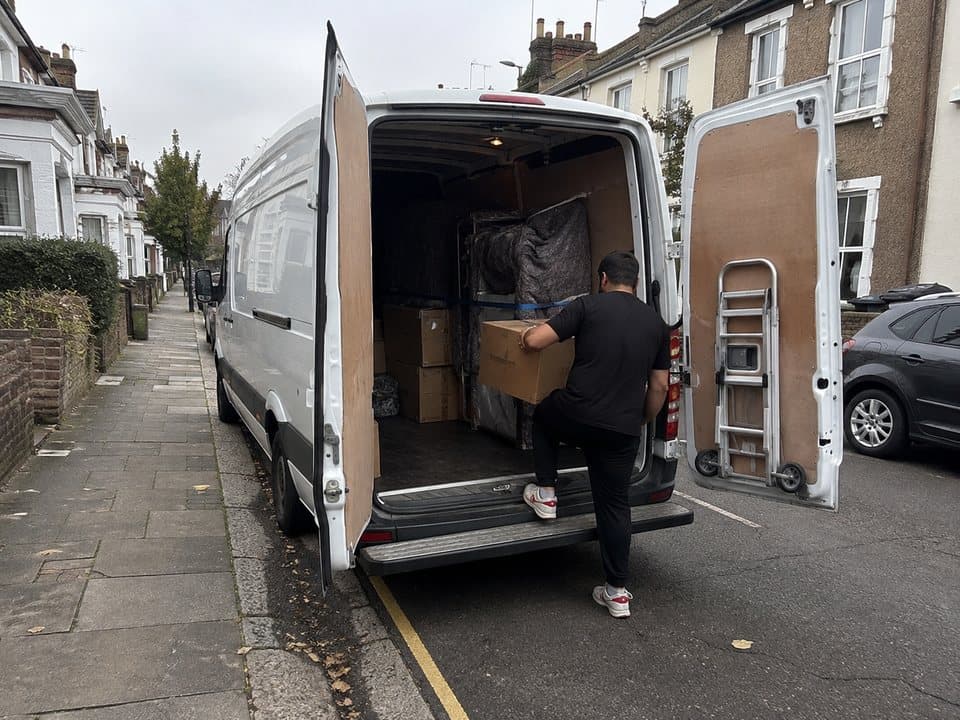
Best for
A room, a part load, one big item
You get
The hours agreed in writing
We cover
Every London postcode
What it costs
What a man and van actually costs in London
The hourly rate is the number people compare and the least useful one. What you pay is the rate multiplied by hours, and it is the hours that vary — often by double, on two jobs that look identical written down.
The carry, at both ends
This is the whole job. A van that sits outside the door and a van two streets away are the same rate and twice the hours. It is the first thing we ask about.
Stairs, and whether there is a lift
A third-floor walk-up turns a two-hour job into a four-hour one. Nobody quotes for that over the phone, because nobody asks.
Whether it is boxed and by the door
A crew waiting while you finish taping boxes is a crew you are paying for. Ready when the van arrives is the biggest saving available on an hourly job.
Whether you are helping
Plenty of people carry alongside us and it genuinely cuts the time. Say so when you book, because it changes how many of us turn up.
The time of day
Three miles across town at four in the afternoon can take longer than fifteen at nine in the morning. We plan the slot around the traffic rather than ignoring it. The slot is not limited to office hours either: crews work evenings and nights, when the roads are clearest.
How far apart the two addresses are
Mileage matters less than what is between them. Crossing the Congestion Charge zone, or a route that only works one way round a one-way system, adds time and a charge that should be in the quote rather than added afterwards.
So what would yours cost?
Ten minutes on a video call and you will have it in writing. No obligation, and no number invented over the phone.
Before the day
When a man and van is the wrong thing to book
We will tell you if it is. A man and van is a van, a crew and a booked period — not a house move with a smaller badge on it. If you have a two-bedroom flat, a wardrobe that will not come down the stairs whole and a completion time to hit, the hourly booking is the expensive way to do it.
The failure looks the same every time. The load does not fit, so it becomes two trips. The second trip lands in rush hour. What was booked as three hours finishes as six, and the bill is bigger than the fixed price would have been.
Ten minutes on a video call settles which one you actually need. We would rather quote the right job than win the cheap one and hand you a surprise at the end of it.
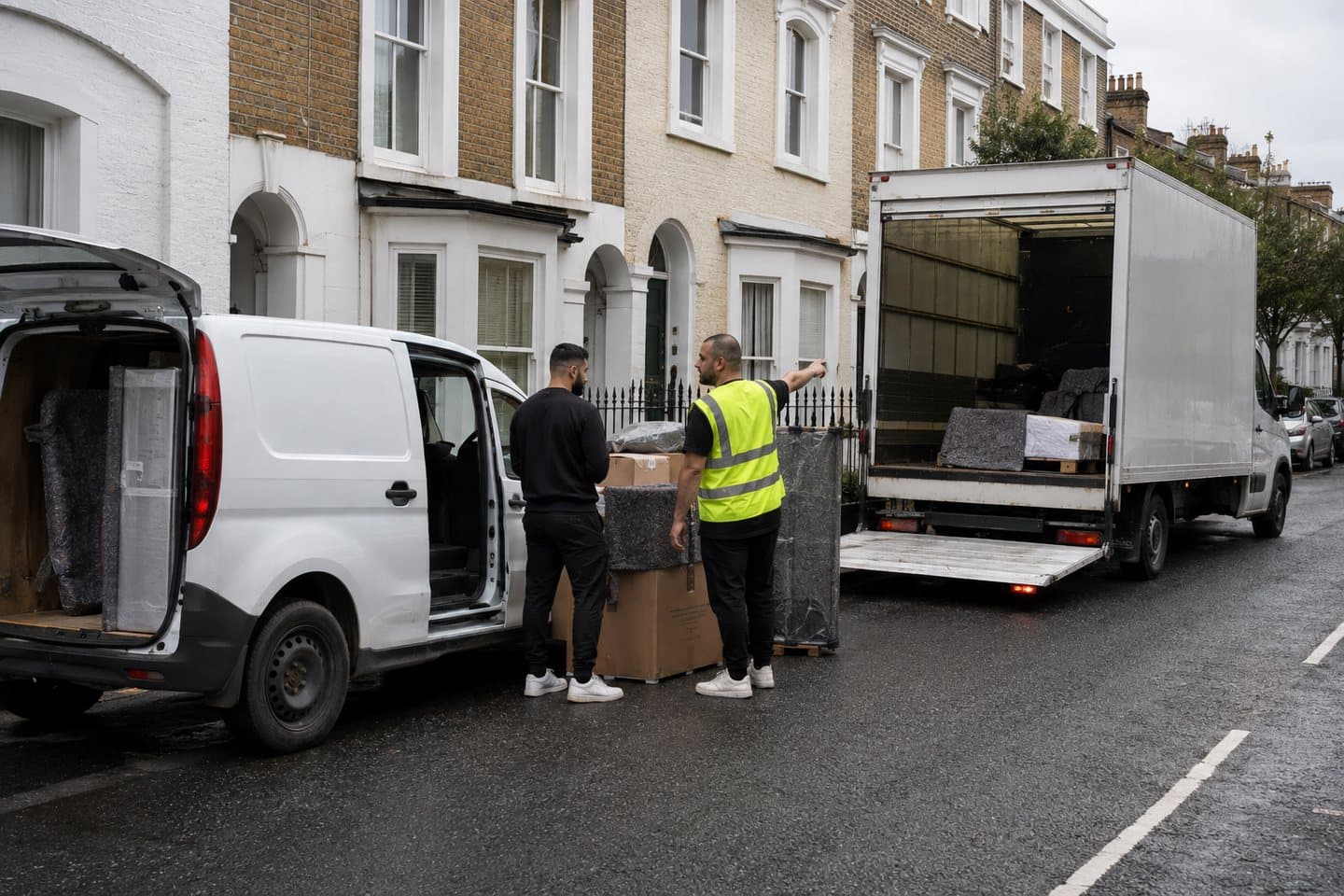
On the day
How a man and van booking runs
Three things that happen on every job, before and after the lifting.
- 01
The hours are agreed first
Based on what is going, the carry at each end and the time of day. It goes in writing with the rate, so there is no arithmetic to argue about afterwards.
- 02
The clock starts when we arrive
Not when we leave the yard. If you are ready at the door, that is the moment the useful work starts and the booking stays as short as it can be.
- 03
You hear about an overrun before it happens
If it is going to run past the booked period, you are told while there is still a choice to make — not at the end, when there is only an invoice.
The quote
What the price covers, and what it does not
Both lists go on the written quote, so there is nothing to discover afterwards.
Included
- The van, the crew and the booked period, agreed in writing beforehand
- Blankets and straps, and a trolley for anything heavy
- Loading, driving and unloading, with items put in the room you want them in
- A call before the booking overruns, rather than an invoice afterwards
Not included
- Parking suspensions or council dispensations — we tell you what is needed, you apply
- Packing. On an hourly booking, packing while we wait is the expensive way to do it
- Anything gas: a cooker or gas appliance needs a Gas Safe engineer
- Taking anything away as waste
From our Google profile
What people said about their move
Left on our Google profile. Every card links back to it, so you can read the rest — including any we would rather you did not.
Good experience with Metro City Moves. 4 bedroom house seemed bit difficult to move from London to Liverpool, but they planned well and successfully executed. Thank you.
Saqib AwanRead on Google, opens in a new tab
Before you book
Questions people actually ask
How many hours should I book?
Tell us what is going and what the carry is like at both ends, and we will tell you rather than leave you guessing. Roughly: a single room, boxed, with the van outside the door is usually a couple of hours. Add a walk-up, a long carry or unboxed belongings and it doubles.
Is it one person or two?
It depends on the job, and it is settled before the day. One is fine for boxes and light furniture with good access. Anything with a sofa, a bed frame or stairs is quicker and safer with two — and quicker usually means cheaper on an hourly booking.
Can I help carry?
Yes, and plenty of people do. Say so when you book: it genuinely reduces the hours, and it changes how many of us we send.
What if it takes longer than we booked?
You hear about it before it happens, while you can still decide. Overruns are charged at the agreed rate, which is exactly why the estimate is worth getting right at the start rather than optimistic.
Can you collect something I have bought and deliver it?
Yes — marketplace collections and single-item pickups are a common man and van job. We need the collection address, whether anybody will be there to help load it, and whether there are stairs at either end.
Is a man and van cheaper than a full removal?
For a room or a part load, usually. For a whole flat, often not — an hourly booking that overruns costs more than a job priced properly from a survey. The survey is free and it is the only way to know which is which.
Related reading
The things that catch people out
Parking, vans and packing — the rules read from the source, dated when checked.
- Guide
Moving without a removal company: the honest guide, and the hybrid
When you genuinely do not need a removals firm, when a DIY move costs more than it saves, and the hybrid option where you pack and a man and van drives.
Read it - Guide
A moving house checklist for London, built around the dates
A moving house checklist built around London's real deadlines — the parking notice your borough demands, the ULEZ check, and what to do in the last week.
Read it - Guide
Moving office in London without losing a day of trading
What moving office in London actually involves — the building's rules at both ends, booking the goods lift, out-of-hours access, and the order to do it in.
Read it - Guide
Moving out of a London flat, and what the building decides for you
What decides how a London flat move goes — whether the lift can be booked, the turn on the stairwell, and where the van is allowed to stop while you carry.
Read it - Guide
Moving to Battersea: the two completely different moves it can be
Moving to Battersea is two jobs: a Nine Elms tower where the goods lift rules, or a Victorian terrace where Wandsworth charges £43.40 to hold the kerb.
Read it - Guide
Moving to Clapham: the flat share, the terrace, and the £156 you can avoid
Moving to Clapham usually means a converted Victorian terrace and a Lambeth bay suspension, where applying a few days late can add £156.31 to the same booking.
Read it
Get it priced properly
A survey first, then the number in writing. Answered at any hour.