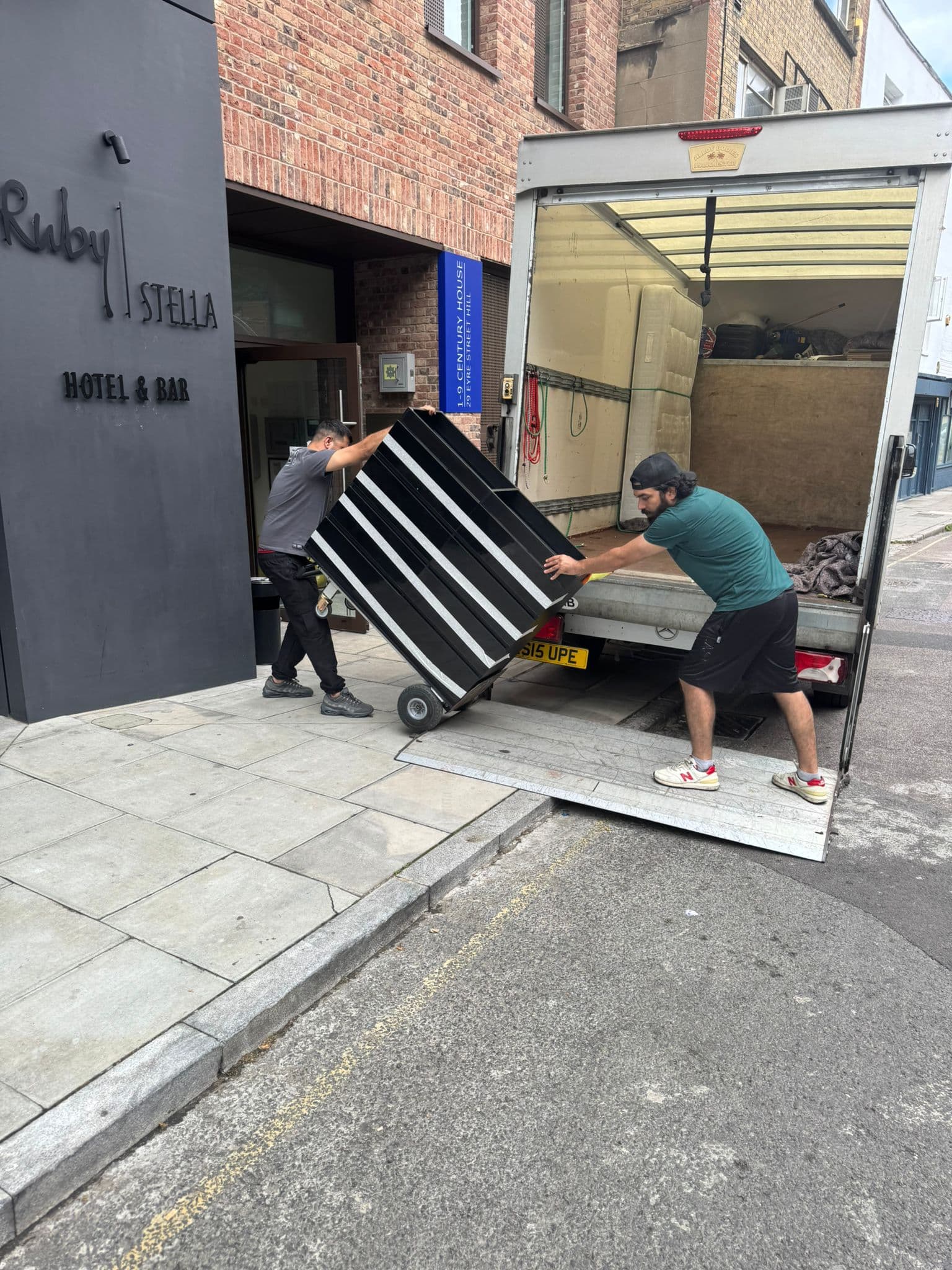
Benefits of professional house clearance in the UK

Hiring a professional house-clearance service saves time, reduces physical risk and ensures your waste is disposed of lawfully. For most homeowners, renters and landlords dealing with a full property, a bereavement clearance or any job involving bulky or hazardous items, professionals are worth every penny. DIY remains reasonable only for very small, non-hazardous loads you can transport yourself to a local household waste recycling centre.
Two facts anchor that verdict. First, a trained team with the right vehicle can clear a three-bedroom house in a single day; the same job typically takes an unassisted homeowner several weekends. Second, under the Waste (Household Waste Duty of Care) (England and Wales) Regulations 2005, you are legally responsible for ensuring your waste goes only to an authorised carrier. Get that wrong and you carry liability even after the van has left.
Table of Contents
- What are the main benefits of professional house clearance?
- What each benefit actually means for you in practice
- What are your legal responsibilities for household waste in the UK?
- What does the house-clearance process look like from start to finish?
- What affects the price of a professional house clearance?
- How do you choose a reputable house-clearance company?
- What does the law actually say about waste carrier verification?
- Key takeaways
- Is professional house clearance always worth it?
- Metro city moves: professional house clearances across London
- Useful sources
- FAQ
What are the main benefits of professional house clearance?
- Legal compliance — Registered carriers hold an upper-tier waste carrier licence, satisfying your duty of care under UK law and protecting you from liability.
- Convenience of additional services — Many providers offer deep cleaning, secure storage, minor repairs or same-day rubbish removal alongside the clearance itself.
What each benefit actually means for you in practice
Time and labour savings
A typical three-bedroom London house clearance, handled by a professional team, is usually completed within a single day. That includes loading, transport and disposal paperwork. The same job, done by a homeowner hiring a skip and making multiple tip runs, routinely stretches across two or three weekends, factoring in skip permit applications, council collection slots and the sheer physical effort of shifting furniture solo.
Safety and insurance reassurance
Heavy lifting is the most common source of injury during a home clearance. Sofas, wardrobes and white goods require correct technique and often two or more people. Beyond muscle strain, certain items carry genuine hazard: asbestos-containing materials in older properties, fluorescent tubes, fridges with refrigerant gas and paint tins all require specialist handling. Peer-reviewed evidence confirms that professional handling of hazardous or sensitive clearances produces measurably better health and safety outcomes than DIY approaches.
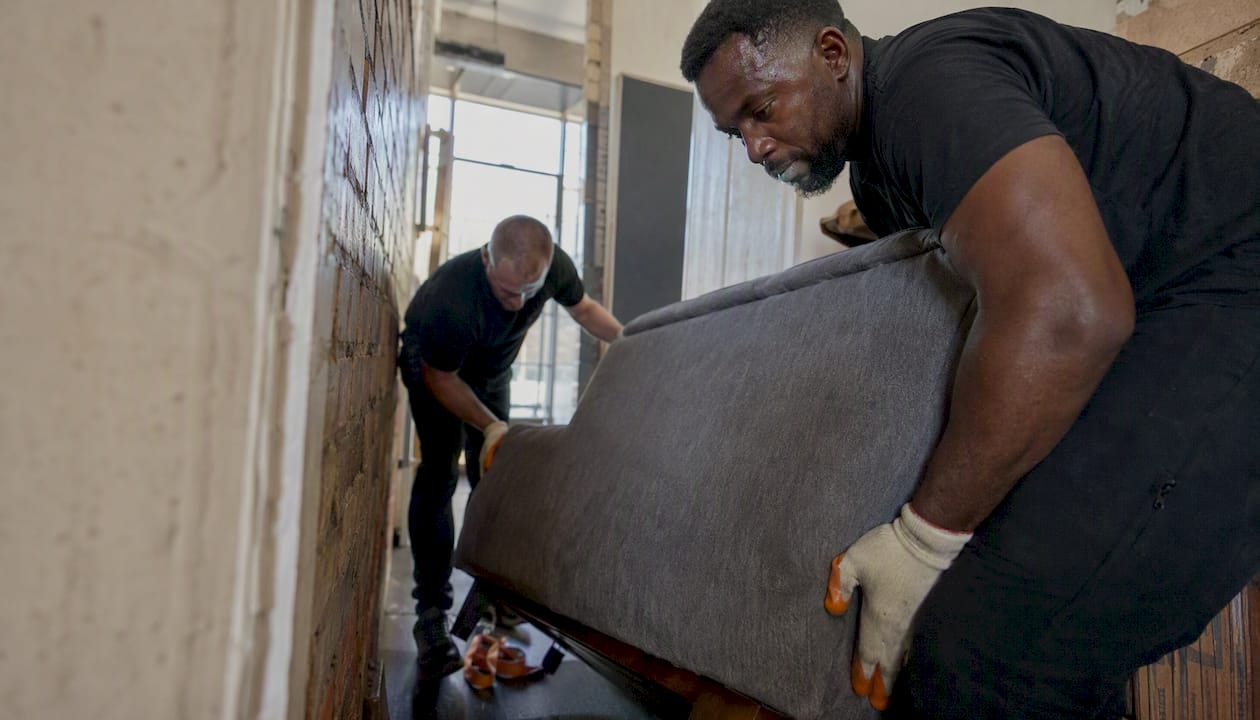
Public liability insurance adds a further layer of reassurance. If a team member accidentally damages a door frame or a neighbour’s vehicle during loading, the company’s policy responds. Without that cover, you absorb the cost.
Value recovery and eco-responsible disposal
Professional clearance companies have established routes to charity shops, furniture reuse networks and online resale platforms. Items that a homeowner might bin out of convenience, a good wardrobe, a working washing machine, a set of dining chairs, can be redirected to a new home. Professional clearances can significantly reduce the amount of waste sent to landfill by diverting goods through donation, resale and specialist recycling channels. Fewer vehicle journeys, better on-site sorting and established donation networks all contribute to a lower carbon footprint compared with multiple DIY tip runs.

Logistics, equipment and access
London properties present specific challenges: narrow Victorian terraces, high-rise flats with lift restrictions, basement flats with awkward stair access and streets where parking a large van requires a permit. Professional teams assess access in advance, arrive with the correct vehicle size and carry the equipment to handle every scenario. See how house removals and clearances work in practice for a fuller breakdown of the logistics involved.

DIY vs professional clearance: a practical comparison
| Factor | DIY clearance | Professional clearance |
|---|---|---|
| Time for a 3-bed property | Multiple weekends | One working day (typically) |
| Physical injury risk | High (heavy lifting, hazardous items) | Low (trained operatives, correct equipment) |
| Legal compliance | Your responsibility to verify disposal | Carrier holds upper-tier registration |
| Eco disposal | Dependent on your knowledge and effort | Established charity and recycling routes |
| Insurance | None (personal liability) | Public liability insurance included |
| Additional services | Not available | Cleaning, storage, repairs on request |
Pro Tip: Before the team arrives, set aside any items you want to keep, sell privately or donate yourself. Clearly labelling these saves time on the day and prevents anything being loaded by mistake.
What are your legal responsibilities for household waste in the UK?
This is where many homeowners are caught out. The Waste (Household Waste Duty of Care) (England and Wales) Regulations 2005 place a legal duty on occupiers to ensure their waste is transferred only to an authorised person. That duty does not end when the van drives away. If waste is later found fly-tipped, authorities can trace it back to the original address, and the occupier can face penalties even if they paid someone else to remove it.
GOV.UK guidance on disposing of household waste recommends using a registered private business (skip hire or house-clearance company) and confirms that carriers must hold an up-to-date upper-tier registration, identifiable by a registration number beginning with CBDU.
Landlords and post-vacancy clearances face an additional consideration. Waste left by tenants may be classified as commercial waste rather than household waste, which affects disposal routes, required licences and costs. If you are clearing a rental property between lets, ask your clearance company directly how they classify and document the waste.
What does the house-clearance process look like from start to finish?
Understanding the typical stages helps you prepare and keeps the job running to time.
- Initial enquiry — Contact the company with basic details: property type, rough volume, access notes and any hazardous or specialist items.
- On-site survey or photo assessment — For larger or complex jobs, a surveyor visits or you send photos. This produces an accurate, written quote.
- Written quote and booking confirmation — A reputable company provides a fixed-price or clearly itemised quote in writing before any work begins.
- Scheduled clearance day — The team arrives at the agreed time with the correct vehicle(s) and equipment.
- On-site sorting — Items are separated into keep, donate, resale and dispose categories, with charity collections arranged where possible.
- Loading and transport — Everything is loaded safely and transported to licensed disposal or recycling facilities.
- Disposal paperwork — You receive a waste transfer note and, where applicable, disposal receipts.
Typical timelines
- Small clearance (one or two rooms, studio flat): half a day
- Medium clearance (two-bedroom flat or house): one full day
- Large clearance (three or more bedrooms, loft, garage, outbuildings): one to two days
Customer preparation checklist
- Confirm parking arrangements and, if needed, apply for a parking suspension permit in advance.
- Ensure keys or access codes are available for all rooms, outbuildings and garages.
- Remove or clearly label any items you are keeping.
- Inform the company of any access restrictions (low ceilings, narrow staircases, lift weight limits).
- Arrange for pets to be elsewhere on clearance day.
For jobs where you want the property left in lettable or saleable condition, book a deep clean, same-day rubbish removal or minor repair service at the same time as the clearance. Coordinating these in one booking avoids a second visit and usually reduces the total cost.
What affects the price of a professional house clearance?
Cost varies considerably depending on several factors. Understanding them lets you interpret quotes accurately and spot anything that looks off.
Main pricing factors
- Volume and property size — The single biggest driver. A studio flat costs far less than a five-bedroom house with a full loft and garage.
- Access and parking — Difficult access (no lift, narrow stairs, long carry distance from property to vehicle) adds labour time and therefore cost.
- Type of items — Hazardous materials (fridges, fluorescent tubes, paint, asbestos) attract specialist disposal charges. Bulky items such as pianos or safes require additional equipment.
- Labour time — The number of operatives and hours on site directly affects the price.
- Disposal and recycling costs — Licensed facility tipping fees vary by local authority area and by waste type.
- Additional services — Deep cleaning, storage, furniture assembly or same-day delivery add to the total but can save a separate booking fee.
Quote comparison checklist
- Is the quote fixed-price or estimated? Fixed-price is preferable.
- Does it include all disposal and tipping fees, or are these added later?
- What is the policy if more items are found on the day than quoted for?
- Is VAT included?
- What is the cancellation or rescheduling policy?
Pro Tip: Get at least two written quotes and ask each company to break down labour, disposal and any additional service costs separately. A quote that bundles everything into one figure with no breakdown makes it impossible to compare fairly or to challenge unexpected additions on the day.
A second way to reduce cost legitimately: donate or sell large items before the clearance date. Fewer items means a smaller vehicle and less disposal cost. The clearance company can often advise which items are most likely to find a charity or resale home.
How do you choose a reputable house-clearance company?
The market includes excellent operators and a minority of unreliable ones. The difference matters legally as well as practically.
Trust signals to verify
- Waste carrier registration — Upper-tier registration is required for any company collecting waste from your property. Ask for the registration number (format: CBDU followed by digits) and check it on the Environment Agency public register.
- Public liability insurance — Ask for the policy number and insurer name. A legitimate company will provide this without hesitation.
- DBS checks — For clearances in occupied properties or involving vulnerable clients, confirm that staff have been DBS-checked.
- Written quotes and clear terms — A reputable company always provides a written quote and clear cancellation terms before work begins.
- Years of operation and local coverage — Longevity and a verifiable local presence (real address, local reviews, named staff) are meaningful signals. Metro city moves has operated across all 32 London boroughs since 2010, giving you a traceable track record and local knowledge of access challenges specific to the capital.
Questions to ask on the call or at survey
- What happens to items that can be donated or resold?
- Which licensed facilities do you use for disposal?
- Can you provide a waste transfer note after the clearance?
- Are disposal and tipping fees included in the quote?
- What is your process for hazardous items such as fridges or fluorescent tubes?
Red flags to walk away from
- Cash-only payment with no receipt or invoice
- No waste carrier registration number, or refusal to provide it
- Unmarked vans and no company address
- Verbal-only quotes with no written confirmation
- Pressure to book immediately without a survey or photo assessment
What does the law actually say about waste carrier verification?
The statutory basis is the Waste (Household Waste Duty of Care) (England and Wales) Regulations 2005, which amended the Environmental Protection Act 1990 to extend duty-of-care obligations to householders. The full code of practice sets out transfer note requirements, carrier checks and examples of what counts as commercial versus household waste.
How to verify a waste carrier in three steps
- Go to the Environment Agency’s public register and search the company name or registration number.
- Confirm the registration is upper-tier (not lower-tier, which only covers a carrier’s own waste).
- Request a signed waste transfer note on or after clearance day and keep it for at least two years.
A common misconception is that your responsibility ends the moment the van leaves. It does not. If a contractor fly-tips your waste, authorities can trace it back to your address. Your protection is the paperwork: a verified registration number and a signed transfer note. Without both, you have no defence.
Key takeaways
Hiring a professional house-clearance service is the most time-efficient, legally compliant and environmentally responsible way to clear a UK property, provided you verify the carrier’s upper-tier registration and obtain a signed waste transfer note.
| Point | Details |
|---|---|
| Legal duty of care | You remain liable until waste is transferred to an upper-tier registered carrier with a signed transfer note. |
| Time efficiency | A professional team typically clears a three-bedroom property in one working day. |
| Eco and value benefits | Professionals divert usable items to charity, resale and recycling, reducing landfill waste. |
| Choosing a provider | Verify waste carrier registration (CBDU number), public liability insurance and written quotes before booking. |
| Metro city moves | Established in 2010, Metro city moves offers insured, legally compliant house clearances across all 32 London boroughs. |
Is professional house clearance always worth it?
The conventional wisdom is that professional clearance is mainly a convenience purchase. That undersells what is actually at stake. The legal exposure alone, the risk of being traced as the originating occupier of fly-tipped waste, makes verification of your carrier’s credentials a non-negotiable step, not a nice-to-have. And for anyone clearing a property after a bereavement, the emotional cost of doing it alone, handling a lifetime of possessions without support, is a real and often underestimated burden.
What I find most overlooked is the environmental argument. Many homeowners assume a clearance means a skip and a landfill run. A well-run professional clearance looks nothing like that: items are sorted on site, charity collections are pre-arranged, and specialist recycling routes handle what cannot be donated. The carbon and landfill reduction compared with multiple DIY tip runs is genuine, not marketing copy.
The one caveat worth stating plainly: not every company operates to this standard. The red flags listed above exist because some operators take your money, dump your waste illegally and leave you holding the liability. Checking the Environment Agency register takes two minutes and removes that risk entirely.
Metro city moves: professional house clearances across London
Metro city moves has been clearing London properties since 2010, covering every borough and every postcode within the M25. The service is fully insured, with public liability cover in place on every job, and the team follows correct waste carrier procedures, providing signed transfer notes as standard so your duty of care is properly documented.
Beyond the clearance itself, Metro city moves offers same-day rubbish removal, end-of-tenancy deep cleaning and secure storage for items you want to keep but cannot immediately accommodate. That means one call can handle the clearance, the clean and the storage, rather than coordinating three separate companies.
To get a fixed-price quote for your clearance, visit the Metro city moves house-clearance page or call to arrange a no-obligation on-site survey. If you also need a full removal alongside the clearance, the house removals service covers both in a single booking.
Useful sources
- Waste duty of care: code of practice (accessible version) - GOV.UK
- Dispose of household waste - GOV.UK
- The Waste (Household Waste Duty of Care) (England and Wales) Regulations 2005
- Waste duty of care: code of practice (PDF) - GOV.UK
- Minimising Waste in UK House Clearances Effectively
- House Clearance Regulations: A Comprehensive UK Guide
- pmc.ncbi.nlm.nih.gov
- House Clearance London | Responsible & Affordable | Metro City Moves | Metro City Moves
FAQ
What are the main benefits of hiring a professional house-clearance company?
Professional house clearance saves significant time, reduces injury risk, ensures legally compliant disposal via an authorised waste carrier, and diverts usable items to charity or resale rather than landfill.
Can you make money from a house clearance?
A clearance company may offset part of the cost by reselling or donating items of value, but most clients pay a net fee; the financial benefit is primarily in time saved and legal protection rather than direct income.
Why is professional house clearance expensive?
Pricing reflects labour, licensed disposal fees, specialist handling for hazardous items, vehicle costs and insurance. A detailed written quote that breaks down each element lets you understand exactly what you are paying for.
Do house-clearance companies take everything?
Most professional companies take the full contents of a property, including furniture, appliances, clothing and general household items, though some hazardous materials such as asbestos require a specialist contractor and should be declared in advance.
How do I verify a house-clearance company is legitimate?
Ask for their Environment Agency waste carrier registration number (upper-tier, beginning CBDU), confirm public liability insurance is in place, and request a signed waste transfer note after the clearance. Two minutes on the Environment Agency public register confirms the registration is current.
Recommended
- House Clearance London | Responsible & Affordable | Metro City Moves | Metro City Moves
- House Clearance Central London | Fast, Responsible & Fully Insured | Metro City Moves
- House Clearance South London | Fast, Responsible & Fully Insured | Metro City Moves
- House Clearance West London | Fast, Responsible & Fully Insured | Metro City Moves