
Home moves
Long distance removals from London, planned as one day or two
Long distance removals go wrong in a way local ones do not: if the day overruns, there is no coming back tomorrow to finish. Everything you own is in a van two hundred miles from where it started. So the planning matters more than the price.
Best for
Leaving London entirely
Settled first
One day, or two with an overnight
We collect
From every London postcode
What it costs
What long distance removals from London actually cost in London
Mileage is the part everyone focuses on and the part that varies least. What actually moves the number is whether the job fits inside a single day, and what the access is like at the end nobody has looked at.
Whether it fits in one day
Load, drive, unload. There is a legal limit on how long a driver can be at the wheel, and past a certain distance the honest answer is two days with an overnight. Quoting one day and delivering two is the most common way this goes wrong.
The access at the far end
A Luton does not turn round in a single-track lane, and plenty of village addresses cannot take a large vehicle at all. Where that is true the load transfers to something smaller, which is time, and it needs deciding before the day.
Whether it is one van or two
Locally, a second trip is an inconvenience. At two hundred miles it is a second job. Getting the volume right at the survey is the single most valuable thing on a long distance move.
How it is packed to travel
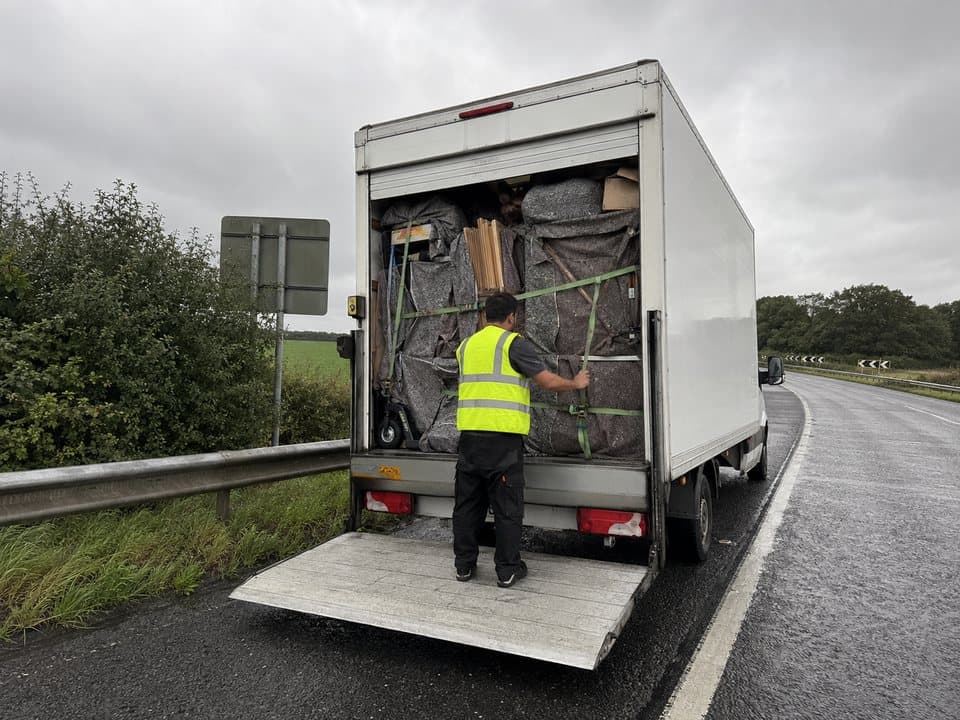
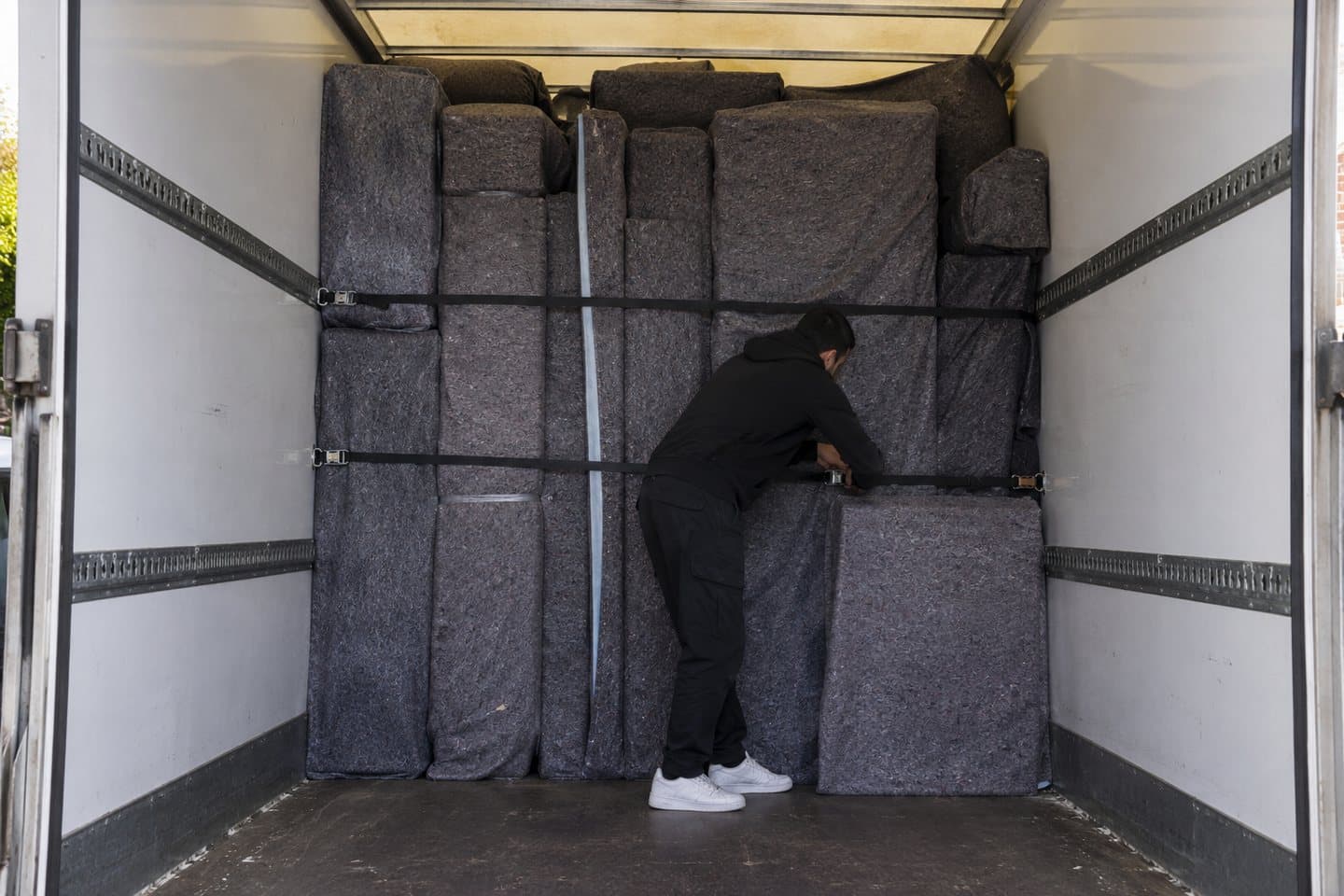
Across town, a loosely stacked van is fine. On a motorway, everything shifts for four hours. Long distance loads are packed tighter and braced more, and that takes longer at the loading end.
The floors at both ends
A second-floor London flat to a house with stairs is two carries, not one. Both get surveyed, because the far end is the half that usually surprises people.
Whether you can share the van
If you are not filling a van and your dates are flexible, a part load going the same way costs a fraction of a dedicated one. It is slower and it is much cheaper. Ask.
So what would yours cost?
Ten minutes on a video call and you will have it in writing. No obligation, and no number invented over the phone.
Before the day
A long distance move cannot be re-run tomorrow
That single fact is why we survey both ends rather than one. A local job that overruns finishes the next morning. A job that overruns in Devon finishes with a van parked overnight, a family in a hotel and a bill nobody budgeted for.
So the questions we ask are unglamorous and they are the right ones. Can the vehicle physically reach the door. Is there anywhere legal to stop. Does the volume fit in one load with the packing a motorway needs. What time can we start, and what time do the keys actually exist at the other end.
Where the honest answer is two days, we say two days and price two days. It is a bigger number on the quote and a smaller one by the end of the week.
On the day
How a long distance move runs
Three things that happen on every job, before and after the lifting.
- 01
Both ends get surveyed
London in person or by video call, and the destination by video call, photographs or a look at the road. Nobody has to drive to Cornwall to plan a move to Cornwall.
- 02
The day is planned backwards from the keys
From when you can actually get in at the other end, not from when we would like to leave. That is what decides whether it is a one-day job.
- 03
You know where the van is
One point of contact for the whole day, and a call if the motorway does something unhelpful. Silence for six hours while your belongings are somewhere on the M5 is not a service.
The quote
What the price covers, and what it does not
Both lists go on the written quote, so there is nothing to discover afterwards.
Included
- A survey of both ends before any number is given
- Packing and bracing built for a motorway rather than for three miles across town
- Blankets, straps and covers on everything, and a trolley for the heavy items
- One point of contact for the whole day, and a call if the plan changes
Not included
- Overnight accommodation for you, if the job is planned across two days
- Parking suspensions or dispensations at either end — we tell you what is needed, you apply
- Anything gas: a cooker or gas appliance needs a Gas Safe engineer
- Storage between the two dates unless you ask for it — we can, but it has to be planned
From our Google profile
What people said about their move
Left on our Google profile. Every card links back to it, so you can read the rest — including any we would rather you did not.
Good experience with Metro City Moves. 4 bedroom house seemed bit difficult to move from London to Liverpool, but they planned well and successfully executed. Thank you.
Saqib AwanRead on Google, opens in a new tab
Before you book
Questions people actually ask
How far do you go?
Anywhere in mainland Great Britain from any London postcode. Past a certain distance the job becomes a two-day plan with an overnight, and we tell you which yours is at the survey rather than on the day.
Will my things be moved into another van on the way?
Not on a dedicated move — the van that loads is the van that unloads. On a shared part load it may be consolidated at a depot, which is exactly why it costs less, and we tell you which one you are buying.
What is a part load?
Your things travelling with somebody else's in the same van, going the same way. It needs flexible dates because it waits for a matching job, and in return it is a fraction of the cost of a van to yourself.
What happens if completion is delayed on the day?
It is the reason we ask about the chain before quoting. Depending on the delay the load either waits or goes into storage overnight, and both have a cost we will have explained beforehand rather than invented at six in the evening.
Do you go to Scotland, Wales or the far south west?
Yes. All three are usually two-day plans from London rather than one, and the quote says so plainly.
Can you take a car or a motorbike too?
Ask when you enquire. It depends on the vehicle and what else is going, and it is a question that has to be answered before the van is loaded rather than at the kerb.
Related reading
The things that catch people out
Parking, vans and packing — the rules read from the source, dated when checked.
- Guide
Moving from London to Birmingham: the only route we do that is charged at both ends
Moving from London to Birmingham crosses into a Class D Clean Air Zone, so the van is charged at both ends of the job. What that means and how we price it.
Read it - Guide
Moving from London to Cambridge: the cheapest long-distance move there is
Moving from London to Cambridge is the cheapest shape of long-distance move: close enough to do in one day, so there is no overnight and no clean air zone.
Read it - Guide
Moving from London to Edinburgh: the overnight, and the zone you cannot pay for
Moving from London to Edinburgh is a two-day job, and Edinburgh's Low Emission Zone cannot be paid for — a non-compliant van is fined rather than charged.
Read it - Guide
Moving from London to Leeds: the day is the cost, not the charges
Moving from London to Leeds costs nothing in emissions charges at the delivery end — Leeds decided against a clean air zone. The cost is the length of the day.
Read it - Guide
Removal van sizes: Luton, 3.5-tonne, and when to go one bigger
How removal van sizes map to homes, what a Category B licence lets you drive, and why a Luton is too tall and too long for Hackney's parking dispensation.
Read it - Guide
Removals marketplace or removals firm: how the two differ
How a removals marketplace and a removals firm differ in practice: who prices the job, who turns up, who carries the claim, and which model suits which move.
Read it
Get it priced properly
A survey first, then the number in writing. Answered at any hour.